You are here
Green News
Big Oil’s Big Methane is still a Big Problem
Updates to the Global Methane Tracker 2026 confirm what Earthworks has been saying for more than a decade – the oil and gas methane problem is worse than companies are willing to admit.
Despite Big Oil’s rhetoric about efforts to reduce methane emissions, the world is still far off track to stave off the worst effects of the climate crisis. Industry’s words may have changed (from climate denial to promises that industry is the solution), but our work in the oil and gas field still shows that actions haven’t. Or as the IEA, more neutrally, puts it: “transparency and reporting on abatement plans still lag the industry’s stated ambitions.”
Here are some big takeaways from the 2026 IEA Global Methane Tracker:Estimates are estimates…which involve little to no actual measurement
For over a decade Earthworks thermographers have been documenting pollution throughout the upstream and midstream sector at an alarming rate – often this pollution is going unreported until we discover it. Over the years it has become clear to us that pollution estimates are just that…estimates, which contain little to no actual measurements. We are happy to see that the IEA has developed new methodologies that incorporate actual measurements to supplement and reconcile company reported estimates and claims.
Detection has improved, yet industry still refuses to act
The IEA Global Methane Tracker also points to another major issue we have been sounding the alarm on for years – even when problems are identified companies rarely take action.
The IEA (via information from the Methane Alert and Response System (MARS)) looked at satellite based methane emissions detections and alerts at both the global and country level and found that globally only 12% of methane detection alerts were responded to in 2025. In the United States, the issue is far worse. According to the Global Methane Tracker, “Since 2022, the Methane Alert and Response System (MARS) has tracked 1,300 super-emitting oil and gas-related events in the United States – about 10% of the global total.” – that makes the United States one of the super-emitting countries. However, according to a 2025 report by the UNEP (the administrators of the MARS system) the United States has one of the lowest response rates at an abysmal 2%.
In other words, US oil and gas companies are massive methane polluters. They claim to have the tools to stop the pollution (just read the methane reductions section of any oil and gas company’s annual climate report – here is TotalEnergies for example). They just don’t seem to take action to actually stop the pollution. What is most puzzling is that the IEA also finds that “around 30% of methane emissions from fossil fuel operations could be reduced at no cost.”
Integrity & Transparency Concerns on Gas Certification Schemes
Furthermore, “actions” that the industry have taken are shrouded in questions. For instance, gas certification efforts from companies like Project Canary, which claim to certify companies’ methane emissions, often don’t hold up under independent scrutiny. Through our field work we even discovered that some of these efforts are little more than greenwashing. The IEA report references our effort (with OCI and the GasLeaks Project) to encourage Senator Markey (D-MA), a member of the Senate Committee on Consumer Protection, Technology, and Data Privacy (which oversees the FTC) to address certification schemes within the FTC.
Although certification typically involves independent third-party verification of emissions (enhancing buyers’ trust in reported emissions), it also faces its own unique challenges. Measurement-based quantification is not always required, raising the risk that methane emissions could be underestimated. Although volumes of certified natural gas reached 320 bcm in 2024 (roughly 7.5% of global output), certification remains concentrated in the North American upstream natural gas sector, with limited uptake outside this segment. Questions have also been raised about the integrity and transparency of some schemes, casting doubt on the reliability of emissions reported under them.
Raising the Bar: Data to Action at Earthworks
Optical gas image of pollution at Shell Plastics Plant in Beaver, County, Pennsylvania. Taken 16 February 2026.Methane detection tools are expanding and improving. Data is becoming more available, often at no cost. Earthworks is expanding its use of satellite technology to guide and strengthen our existing ground-truthing of oil & gas pollution harms using our optical gas imaging cameras. Yet, as the IEA report shows, what was true of industry and pollution before remains true today: without proper accountability, polluters will continue to pollute.
This is especially true now with The the U.S. Trump Administration’s pay-to-play EPA stopped enforcing oil and gas methane regulations on March 12, 2025 and recently reaffirmed its intention to roll back methane standards for new and existing sources as outlined in the 2024 EPA Methane Rule. That rule is one of the best levers that everyday people across the country have currently to hold fossil fuel companies accountable for methane pollution.
We believe the narrative must change to reflect the objective truth about polluters. The obvious discrepancy between industry rhetoric and data must translate into public skepticism of every oil & gas climate claim. The facts must translate into known truth so that the well-earned pressure from the public demands industry actually take action to stop polluting the air we breathe and the climate we depend on.
We believe accountability must be universal and enforced by government policies that put people before polluters.
We believe this industry must be phased out. Detection and significant reductions in methane pollution are essential, but only as a bandaid fix. Cuts to pollution facility-by-facility only buy us time to enact other energy solutions to the climate crisis. But not even those work if the number of facilities continue to expand and total methane emissions increase.
Earthworks Data 2 Action To Date
- Polluter of the Month series with partner Gas Leaks to shine a light on the biggest inconsistencies between the words and actions of the biggest polluters in the US.
- Report on Appalachian Super-emitters found nearly 100 oil and gas emission events in the Appalachian Basin, unknowingly exposing nearby communities to harmful carcinogens.
- Our work has always been covered in a Financial Times article that identified as repeat polluters several companies who advertise themselves as less polluting companies.
Thank You for Signing Up!
There was a problem processing your signup. Please try again. Join Us -->The post Big Oil’s Big Methane is still a Big Problem appeared first on Earthworks.
Restoring the Flow: A Milestone in the Revival of the Everglades
The campaign to restore the Everglades has received a boost with completion of a key project that returns the flow of water to 55,000 acres that had once been drained for development. Experts see it as a major step forward in bringing back South Florida’s River of Grass.
As tick bites surge, conspiracy theories follow
“Tell you what,” Drew Maciel told his Instagram followers in April, “I’m sick of finding dead moose.” He zoomed in on a dead bull moose lying prone on the ground, running the camera over clusters of ticks nestled within every crevice of the corpse.
Maciel is a shed hunter, meaning he collects antlers that have been naturally “shed” by wildlife. But a winter tick feeding frenzy in Maine, driven by rising temperatures, means that this year he kept finding dead animals. Up to 90 percent of the moose calves tracked by scientists in recent years have been bled to death by ticks — an ongoing crisis in a state that prizes these largest of all deer species.
But where scientists see the hand of climate change at work — average temperatures in Maine have risen 3 degrees Fahrenheit since 1985 — others see the designs of a global cabal.
“Human engineered biological warfare,” read a comment on Maciel’s video posted by Dries Van Langenhove, a far-right former member of the Belgian government who was recently convicted of violating the country’s Holocaust denial laws. The comment got 32,000 likes. “It’s Bill Gates,” someone else posted.
Chuck Lubelczyk, a vector-borne ecologist with Maine Medical Center, collects ticks at a site in Cape Elizabeth. John Ewing / Portland Press Herald / Getty ImagesThese posts are part of a wave of tick-related conspiracy theories garnering millions of views online. In April, a self-proclaimed holistic doctor on Instagram claimed to have spoken with multiple farmers in the Midwest who told her that they were finding boxes of ticks dumped on their properties. “Something is happening with ticks right now, and farmers are starting to talk,” she posted alongside a video that got 10 million views across Facebook, Instagram, and TikTok. The MAHA Moms Coalition, a nationwide group inspired by the Trump administration’s Make America Healthy Again agenda, reposted the claim asking affected farmers to come forward.
The theory dates back to 2023, with viral claims that Pfizer and Valneva, pharmaceutical companies developing a vaccine for Lyme disease, were planting boxes of ticks on farms to drum up demand for their product.
A separate theory that gained traction around the same time linked a British research program to genetically modify cattle ticks, funded in part by the Bill and Melinda Gates Foundation, to rising cases of red meat allergies in the U.S. The biggest problem with that theory is that the allergy, Alpha-gal syndrome, is caused by the bite of a Lone Star tick — a completely different species from the cattle ticks in the research program.
While all these conspiracies involve different ticks, different diseases, and different alleged culprits, they are often treated as interchangeable evidence of the same broader claim: that rising tick encounters are a part of a nefarious human plot.
The theories are right about one thing: Ticks are getting worse. Some of the same ecological changes fueling Maine’s winter tick boom are also making tick encounters more common in broad swaths of the U.S. The arachnids are showing up earlier in the year, expanding into new terrain, and biting people more often than they used to. But the force driving those shifts is not a clandestine bioweapons program, a vaccine plot, or Bill Gates — it’s climate change.
A screenshot of an Instagram post furthering the unproven claim that Midwestern farmers are finding boxes of ticks left behind on their properties. InstagramRichard Ostfeld, an ecologist at the Cary Institute of Ecosystem Studies, said a warming world is “bringing ticks out earlier in the year” in states like New York, where he lives. “It used to be we were pretty safe in the month of May,” he said. “Now, not so much.”
Tick season is off to an unusually early start across most of the U.S. this year, the Centers for Disease Control and Prevention, or CDC, said in an alert published late last month. Emergency room visits for tick bites in four of the five geographic regions the agency tracks are the highest they’ve been for this time of year since the CDC started keeping tabs on tick-borne illness rates in 2017.
While the CDC hasn’t said what’s behind the uptick in bites this spring, ample snow cover earlier in the year helped insulate adult ticks from the cold of winter, and an early spring bloom across much of the U.S. likely brought those hungry adults out of the leaf litter earlier than normal. But regardless of the specific dynamics at play this year, rising average temperatures will lead to more robust tick exposure on balance. That’s because warmer temperatures both coax ticks north into territory that was once too cold to host them and also extend the length of time that ticks are active every year.
More tick bites mean more opportunities for infection — and the list of infections doctors are watching for is getting longer. Positive tests for alpha-gal syndrome have increased 100-fold since 2013; nearly half a million people in the U.S. now carry an allergy to red meat. Cases of anaplasmosis, a disease carried by black-legged ticks that hospitalizes roughly 30 percent of the people who contract it, increased 16-fold between 2000 and 2017. Babesiosis, a malaria-like illness also carried by black-legged ticks, has risen roughly 10 percent year-over-year since 2015. It’s not uncommon now for a single tick to carry two or more diseases.
Ecologists who study ticks see an interwoven mix of factors driving these increases. Land-use and wildlife changes are increasing contact between humans and ticks, invasive and expanding tick species are bringing different disease risks to new parts of the country, and better testing and reporting of tick-borne illnesses is making diseases more visible. But there is widespread agreement in the scientific community that those trends are unfolding against the backdrop of climate change.
Ostfeld worries that the complexity of the factors that lead to higher rates of tick-borne disease, paired with the allure of online conspiracies, will make it harder for people to understand why backyards in some parts of the country are getting more dangerous. “The more I read about people actually believing some of these conspiracy theories, the more I worry that even moderately complex explanations or phenomena we care about — like how likely we are to get bitten by a tick — might be too much,” he said.
Scientists collect Lone Star ticks, which can cause an allergic reaction to red meat, for research. Ben McCanna / Portland Portland Press Herald via Getty ImagesIt doesn’t help that conspiracies about ticks have now been legitimized by federal government officials. Robert F. Kennedy Jr., the Secretary of Health and Human Services, has at various times in his career opined that Lyme disease, which now affects an estimated half a million Americans every year, was created as a byproduct of vaccine research and originally used as a military bioweapon. (This flies in the face of genomic evidence that the bacteria causing Lyme has existed in North America for at least 60,000 years.)
Both Kennedy and Tucker Carlson, one of America’s most prominent Republican-aligned media figures, have hosted the writer Kris Newby on their podcasts in recent years. In both cases, Newby espoused debunked claims about the military origins of Lyme.
The idea that Lyme disease and other tick-borne illnesses were created by a U.S. military bioweapons program is so pervasive that a formal initiative to investigate the origin has twice been introduced by lawmakers in the House of Representatives. Chris Smith, a Republican representative from New Jersey who spearheaded those efforts, was successful on his second attempt. A directive in the National Defense Authorization Act for Fiscal Year 2026, signed by President Donald Trump last December, includes a provision requiring the Government Accountability Office, or GAO, to investigate whether the military used ticks as biological warfare agents in the middle of the twentieth century.
“GAO will be fully empowered to leave no stone unturned, and now it’ll have a congressional mandate to get to the bottom of it, because they were weaponizing ticks,” Smith said at a Lyme disease roundtable convened by Secretary Kennedy last year.
But away from the congressional roundtables and viral videos, the plot begins to lose some of its drama. Even in the Midwest, where millions of social media viewers have been told that boxes of ticks are being dumped on unsuspecting farmers, evidence of foul play is hard to find. Terry Hoerbert and her husband Bob own Little Brown Cow Dairy, a small dairy farm in Delavan, Illinois. The lane down to the farm is short, Terry said, so she would have seen someone dropping off packages of ticks. Had the Hoerberts heard of any other farms in the area receiving packages of live ticks?
“We have not,” Terry told me. “You are the first to enlighten us.”
This story was originally published by Grist with the headline As tick bites surge, conspiracy theories follow on May 14, 2026.
First crypto, now data centers: How tech is reshaping this North Carolina community
This coverage is made possible through a partnership between Grist and BPR, a public radio station serving western North Carolina.
In Murphy, North Carolina, a peaceful mountain town once defined by birdsong and swaying trees, a steady electric hum cuts through the calm. The noise from a nearby cryptocurrency mine has intruded on Rebecca and Tom Lash’s lives since it opened in 2021.
“There was nothing in this little pasture but these electric lines,” Rebecca Lash said, as she and Tom stood on the hill overlooking the mine. “And it was just nice and quiet.”
The Lashes came to Cherokee County eight years ago to settle down and enjoy their older age in view of the Blue Ridge Mountains. They grew more and more incensed as three cryptocurrency mines opened near their home within the last five years.
Now, the landscape is shifting again as one of those mines becomes an artificial intelligence data center.
Western North Carolina is seeing a local manifestation of a national trend. Across the country, communities that spent years trying to stop cryptocurrency mines are confronting a new and potentially larger wave of digital infrastructure that powers AI. As profits from crypto mining have fallen, the companies behind it have begun converting their operations into facilities designed to handle the computing that underpins that burgeoning industry.
“The big AI centers and the big data centers, there’s some horror stories about people that live near those,” said Tom Lash.
This transition is triggering a growing backlash. Residents and local officials in Cherokee County and beyond fear that these immense operations — which consume as much electricity and water as small towns — will alter rural communities with few land-use restrictions. Towns and counties across western North Carolina have begun passing moratoriums and considering new regulations as they scramble to respond to an industry many say arrived faster than local authorities could understand or control it.
The shift is possible because crypto mines and AI data centers rely on the same underlying resources: enormous amounts of electricity, industrial-scale cooling systems, and large buildings capable of housing thousands of servers that run constantly. That infrastructure has made crypto operations attractive targets for companies racing to build AI computing capacity.
Political and environmental conditions of Cherokee County are easing the transition, especially in post-industrial communities that need economic invigoration. In Marble, Core Scientific’s cryptocurrency mining site-turned-data-center once housed American Thread, which produced thread for the garment industry until it closed in 2015, taking hundreds of jobs and hundreds of thousands of dollars in annual taxes with it. The region’s abundant water, mild climate, and lack of zoning restrictions make it attractive.
Late last year, Core Scientific announced plans to merge with CoreWeave, which leases computing power to AI companies. Though that deal fell through in October, Core Scientific has publicly said it is still converting facilities like the one in Marble to handle artificial intelligence workloads. That facility consumes as much power as a medium-sized town.
Core Scientific did not respond to a request for comment. CoreWeave declined to comment.
Becoming an AI data center has required quite an expansion. According to Cherokee County commissioners and a public records request filed by commissioner Ben Adams, the company submitted a site plan last year that included more than 170 diesel generators, most of which would provide backup power. Records released by the North Carolina Department of Environmental Quality after an inquiry by Grist showed that they were exempt from air-quality permitting requirements because they were classified as backup systems.
The site spreads across 250,000 square feet, or 7 acres. The company is working with neighboring utilities to meet its water and sewer needs, and it’s digging three wells to tap the local water table. The data center sought a wastewater contract with the nearby town of Andrews, but Mayor James Reid told Grist officials denied the request because the company lacked an environmental plan.
Read Next Data centers are straining the grid. Can they be forced to pay for it? Naveena SadasivamHe’s also not happy that a soccer complex Core Scientific had promised hasn’t materialized. What’s more, he thinks the facility is an eyesore.
“I wouldn’t wish this on any county or entity, ever,” said Reid. “It’s absolutely destroyed Marble.”
Taxes, at least, are back. The county received $268,000 in 2024 from the Marble facility’s last full year of the crypto operation, with a steep drop last year, mostly because of data center construction. In an email, County Tax Assessor Teresa Ricks said her office is working with a contractor to appraise the value of the Marble data center and its equipment in hopes the community will receive every cent it’s entitled to.
Adams doesn’t think the revenue is worth the impact the operation has on the community. He ran on an anti-crypto campaign in 2022. Although he wants to lure new business, he doesn’t want to see the county’s rural nature change and worries the data centers will bring noise and pollution. During a commissioners’ meeting in January, he begged his colleagues to renew a moratorium on crypto mining that expired a year ago and include AI data centers in the restriction.
“If we don’t do something, our little peaceful town’s going to turn into something else and people are going to come here looking to put stuff in our town,” he said at the time.
Another commissioner expressed concern that the Trump administration’s efforts to discourage local regulation of AI would hamstring any county action. “It would require a tremendous amount of resources, money to fight that back,” one commissioner said.
In the end, nothing happened that evening.
But Cherokee County’s circumstance has alarmed communities throughout the region. Since January, officials across western North Carolina — in towns like Boone and Clyde, and counties like Swain and Clay — and the Eastern Band of Cherokee Indians have adopted temporary bans or moratoriums on new data centers. In Canton, where a recently decommissioned paper mill might become a data center, the town council approved a moratorium in February before a crowd so large it couldn’t fit in the town hall building. The temporary bans, like the one that existed in Cherokee County from 2024 to 2025, are meant to give communities breathing room as they consider more permanent limits.
Like Canton’s ordinance, many of the moratoriums were passed before any formal data center proposals emerged. In April, Democratic state representative Lyndsey Prather introduced legislation that would scale back incentives for data centers and require them to pay the full cost of their energy use.
The tide is also beginning to turn against these operations elsewhere in the U.S. Lawmakers in Maine are considering a statewide ban, and similar bills are under consideration from New York to Oklahoma to Michigan. But as Cherokee County shows, a moratorium can come and go without a clear result, even as data center construction continues to hum.
Adams, who is in his final year in office, is reconvening the county planning board to explore ways to limit new data centers without imposing zoning laws. A pro-business conservative, Adams said he has struggled to reconcile his support for economic growth with what he sees as a need to preserve the county’s rural character and manage its rapid transformation.
“I do believe, one, that we are stewards of our property,” Adams said. “Two, I think we can’t possibly keep out all these bad elements coming in. Three, growth is inevitable, but I hope that we can maintain it and keep it more of a peaceful community.”
This story was originally published by Grist with the headline First crypto, now data centers: How tech is reshaping this North Carolina community on May 14, 2026.
The Brazilian government keeps giving out mining licenses in the Amazon – in spite of evidence of gold ‘laundering’
In the kitchen of Alnice Poxo Munduruku, fresh fish keeps the ancestral traditions of those who live along the vast Tapajós River alive. As the fire burns, the family cleans the fish while keeping a close eye on 11-year-old Aleckson. Born with cerebral palsy, which limits his mobility and speech, he has needed continuous care since birth. Like everyone here, he loves fish.
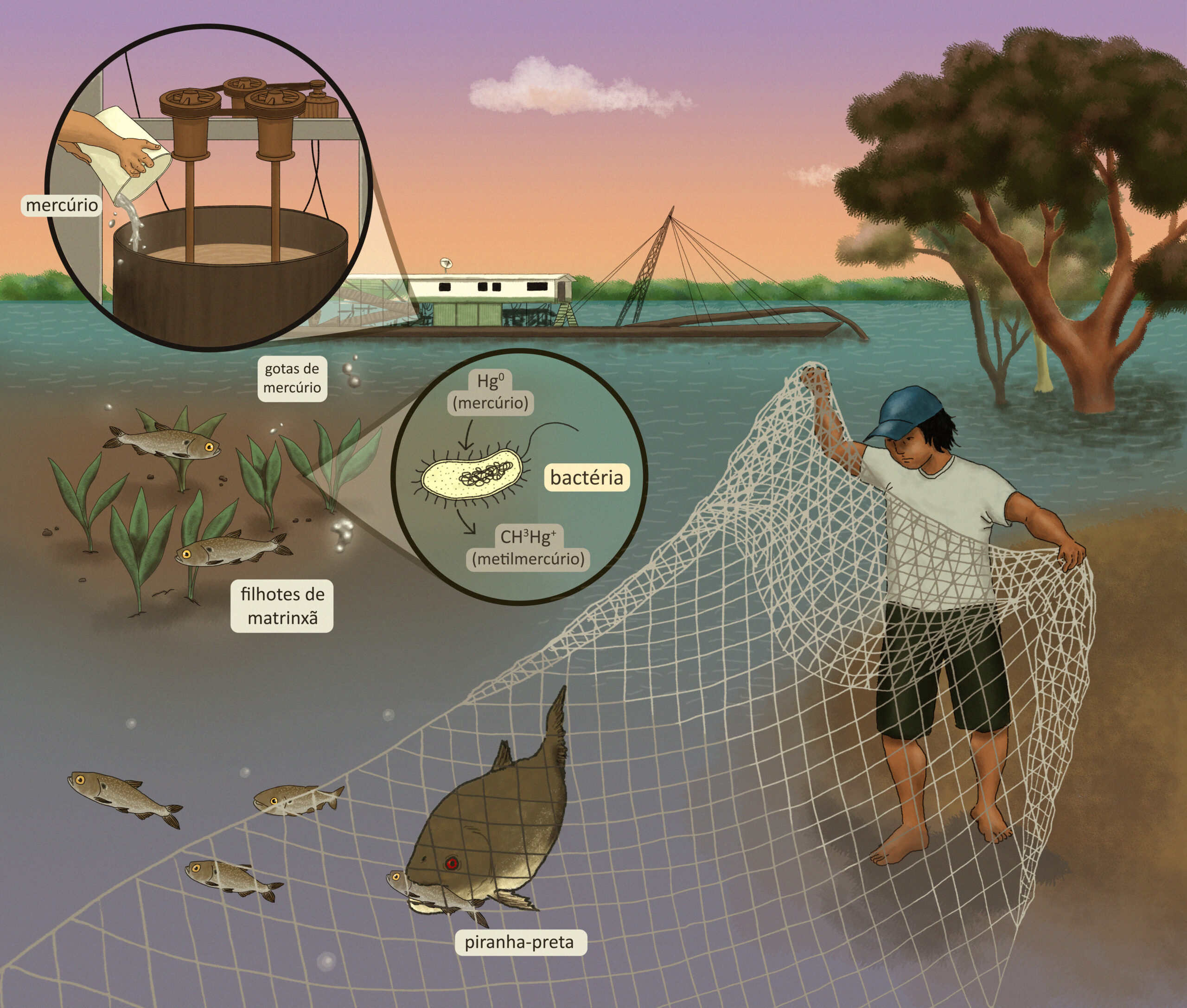
But the village’s food carries an invisible danger. Tests by scientists from the Oswaldo Cruz Foundation, or Fiocruz, show that Aleckson, his parents, and nearly everyone in neighboring communities have mercury levels above the safe threshold. Research by Fiocruz indicates that the contamination stems from gold mining, where mercury is used to separate the metal and then spreads through the rivers into the food chain.
This poisoning results not only from illegal mining but also from decisions and omissions by the Brazilian government. An exclusive InfoAmazonia investigation has found that Brazil’s National Mining Agency, or ANM, still maintains mining permits with signs of irregularities, such as reported gold production with no evidence of extraction consistent with the declared volumes — a practice identified by oversight bodies as illegal gold laundering.
Aleckson has cerebral palsy, a condition that restricts his mobility and speech. He has required continuous care since birth. Luis Ushirobira / InfoAmazoniaCreated in 1989 to regulate mining during the Tapajós gold rush that ran from the late 1970s to the 1990s, Garimpeiro Mining Permits (PLGs) were meant to be a simplified authorization for supposedly small-scale, low-impact operations. Decades later, what began as artisanal mining has become industrial-scale extraction involving heavy equipment, dredges, and mercury. These permits now give a veneer of legality to large-scale illegal mining in Tapajós, sidestepping legal limits.
For more than a decade, oversight agencies have warned the mining authority about the irregular use of PLGs. In 2022, the Comptroller General of the Union uncovered a series of illegalities in an audit. The following year, Operation Sisaque — carried out by Brazil’s Federal Police (PF), Federal Revenue Service, and Federal Public Prosecutor’s Office (MPF) — exposed one of the Amazon’s largest gold-laundering schemes, which relied on PLGs in Tapajós. In 2025, the Federal Court of Accounts reached similar conclusions, identifying structural flaws that enable gold of illegal origin to be legalized.
Even so, our reporting found that between 2022 and 2026, of the 540 PLGs that declared gold sales in the Tapajós River basin, nearly half (263) showed no evidence of extraction consistent with the amounts reported. This suggests these permits may be used to launder gold extracted illegally elsewhere — a practice known as “gold laundering.”
Roughly 70 percent of the mining activity in the region lies within 10 kilometers of the PLGs that declared gold production. This proximity suggests that illegal mining operations, including those operating inside conservation areas and Indigenous lands, may be using these permits to bring their gold into the formal market.
Nearly 60 percent of the gold from legalized mining in Brazil has passed through a Tapajós PLG over the past four years, totaling $2.03 billion (10 billion Brazilian reais) in declared production in the basin during that period.
The information for this investigation comes from the VEIO (Verification and Investigation of Gold Origin) platform, which cross-references mining and deforestation data with mineral production taxes and gold export figures. The tool was developed by InfoAmazonia in partnership with Instituto Dados, with support from the Global Initiative Against Transnational Organized Crime.
The PLG is a “sham document” that sustains this system despite the Brazilian government’s inability to put an end to gold mining in the Amazon, according to Danicley Aguiar, coordinator of Greenpeace Brasil’s Indigenous Peoples Front. “It is environmentally impossible for these permits to meet even minimal conditions. Yet they continue to exist because they are part of a structural problem,” he says.
Gold mining along the Tapajós River impacts the health of communities in the Sawre Muybu Indigenous territory. Here, a dredger operates in an area linked to mercury contamination. Luis Ushirobira / InfoAmazoniaPLGs have become the backbone of illegal mining in Tapajós: Without them, gold would have to be transported through clandestine routes, often across borders, before entering the formal market. With them, gold can be declared as legally sourced and leave the Amazon already carrying a stamp of legitimacy.
Multiple mining frontsGerson Harlei Selzler, president of the Minuano Cooperative of Miners and Prospectors, previously headed the Cooperativa dos Garimpeiros do Brasil, whose members were investigated in Operation Sisaque for “gold laundering.” Among them were his father, Nelson Selzler, accused of supplying gold to the scheme using falsified documents, and Lillian Rodrigues Pena Fernandes, who, according to the PF, owned a company used to launder gold and ran the operation with her husband, Diego de Mello.
Although not indicted in Operation Sisaque, Gerson reported selling $548,780 (2.7 million Brazilian reais) in gold in 2023 through a PLG whose area shows no signs of extraction, such as deforestation characteristic of mining activity. He also jointly administered a PLG with Nelson Selzler in which InfoAmazonia identified declarations of gold unsupported by evidence of exploitation.
Fragmented into seven individual permits, the Minuano Cooperative garimpo authorized inside the Tapajós Environmental Protection Area (APA) reports gold overproduction in only two PLGs, shown in red. Planet Inc. (09/2025). Source: ANMFounded in 2022, Minuano began declaring production only in 2024, coinciding with when the main suspects in Operation Sisaque stopped reporting gold transactions. Since then, the cooperative has declared roughly $9.76 million (48 million Brazilian reais) in gold production linked to two PLGs inside the Tapajós Environmental Protection Area (APA), where it operates without authorization from the Chico Mendes Institute for Biodiversity Conservation, or ICMBio, the office responsible for managing federal protected areas in Brazil. According to VEIO’s analysis, the volume declared in these PLGs exceeds by a factor of 10 the extraction estimates cited in studies, which suggest around 20 grams of gold per hectare explored.
The two PLGs used by Minuano are part of a group of eight permits held by the cooperative inside the Tapajós APA. Seven of them are contiguous, extending along the Creporizinho River, a tributary of the Crepori and Tapajós rivers, which run through the conservation unit.
Satellite images show an operation functioning as an integrated whole, despite being formally divided into parcels of up to 50 hectares, the maximum area allowed for individual mining under an ANM resolution issued in 2025. As a result, the work falls under more permissive environmental rules, since each parcel has its own authorization and environmental license issued by the city government of Itaituba. This arrangement enables large-scale extraction under simplified requirements, and satellite images reveal that the mining has already altered the river’s course.
The February meeting in Brasília regarding PLGs in the Tapajós region brought together, from right to left, Diego de Mello (accused by the Federal Public Prosecutor’s Office of “gold laundering”), Fernando Lucas (president of the Federation of Garimpeiros Cooperatives of Pará), state legislator Wescley Tomáz (Avante), and José Fernando (director of the National Mining Agency — ANM).Minuano holds 15 PLGs in total, including the eight within the Tapajós APA, covering 2,200 hectares. According to ICMBio, the cooperative has requested authorization to operate inside the conservation unit, but the application remains under review.
Beyond Minuano’s PLGs, Gerson also holds mining permits as an individual. He recently obtained from the ANM the transfer of rights to conduct gold prospecting on a 3,200‑hectare area, also within the Tapajós APA. For that area, VEIO found that mining was already underway, yet no production had been reported to the regulator.
Despite mounting evidence and repeated warnings, the ANM continues to engage with suspicious actors in the sector. In March of this year, under the banner of expanding mining legalization in the region, the Pará state government backed the Legal Mining Expedition, an initiative supported by the mining agency and cooperatives.
Itaituba, a city in the Tapajós region, is home to Brazil’s largest mining front. Luis Ushirobira / InfoAmazoniaDiego de Mello, accused by the Federal Police of running the laundering scheme revealed in Operation Sisaque, attended a meeting in Brasília alongside ANM director José Fernando. The expedition held meetings in mining areas and opened channels to help legalize PLGs with applications already filed with the agency.
Mining concentrated in the hands of a fewThere are currently 9,101 mining applications to exploit the Tapajós APA, including 6,255 PLGs. This report found that 21 individuals control more than half (3,382) of these applications. Some have declared gold production in more than 30 different PLGs, a situation the Federal Court of Accounts described as a “real circumvention of the area limits established by law.”
One such figure is lawyer José Antunes, who chairs the Environmental Law Commission of the Brazilian Bar Association in Itaituba and holds 162 PLGs of 50 hectares each within the conservation unit, more than 8,000 hectares in total.
José Antunes holds 162 PLGs in the Tapajós APA, spanning more than 8,000 hectares. In 31 of them, highlighted in red, he has reported production — including in areas with no detectable mining activity. Planet Inc. (09/2025). Source: ANMBetween 2022 and 2023, Antunes reported $13 million (64 million Brazilian reais) in gold sales across 31 PLGs. In several of them, there is no evidence of mining activity; in others, the extraction appears to extend beyond licensed boundaries. In December 2024, inspectors from Ibama, Brazil’s environmental regulator, documented active, unauthorized mining in areas covered by Antunes’s PLGs, including illegal mercury use, river alteration, and deforestation in Permanent Preservation Areas (APPs).
Hot gold on the market, mercury in the bodyAleckson was born already contaminated with mercury. He has never walked, uses a wheelchair, and depends on his mother, Alnice, for nearly every task. Soon after birth, he was diagnosed with spastic tetraparesis, a neurological condition that causes weakness and muscle stiffness in his limbs. The disability was attributed to a lack of oxygen during a long and painful labor.
In his most recent test, Aleckson had 6.9 micrograms of mercury per gram of hair (µg/g) in his system, three times the upper safe limit of 2.3 µg/g defined by the World Health Organization and Brazil’s Ministry of Health.
Indigenous residents prepare fish for a meal in the Sawre Muybu Indigenous territory. Luis Ushirobira/InfoAmazonia
“We eat fish almost every day. It’s very hard to change that, because this is how we were raised,” says Alnice, as her son devours a stew of surubim and barbado prepared by her sisters. In one of her tests, Alnice recorded 9 µg/g of mercury, more than four times the safe limit.
Researcher Isabela Freitas Vaz, from Fiocruz, has followed the case since the first tests. “The signs we’ve observed, not only in Aleckson’s case but in many children, point to a high-risk scenario,” she says.
Although a definitive causal link between mercury exposure and the observed clinical conditions has yet to be proven, researchers say the warning signs are consistent: people with high exposure levels exhibit indicators associated with the potential development of mercury-related diseases.
“The next step is to establish this causal connection between contamination levels and the symptoms we are seeing, so it can guide public policy,” explains Isabela Vaz.
A pregnant woman from the Sawré Muybu Indigenous territory participates in a Fiocruz study with researcher Isabela Freitas Vaz on the effect of mercury on Munduruku health. Luis Ushirobira / InfoAmazoniaThe Tapajós basin lies in western Pará state, extending into northern Mato Grosso and southern Amazonas. It consists of the Tapajós River and major tributaries such as the Jamanxim, Teles Pires, and Juruena, which converge toward Santarém. Mining is concentrated in the Tapajós Gold Province, centered on Itaituba and including Jacareacanga and Novo Progresso. This area is home to Brazil’s largest active mining front.
In February, InfoAmazonia traveled along stretches of the rivers feeding the basin and accompanied Fiocruz researchers as they collected samples from pregnant women and newborns of the Munduruku people.
The researchers are investigating how mercury contamination in the Tapajós may be linked to Minamata disease, a severe neurological syndrome caused by acute exposure to methylmercury, the metal’s most toxic form.
Identified in the 1950s in Minamata, Japan, the disease struck thousands who were acutely poisoned by large volumes of industrial mercury waste dumped into the fishing bay. Many victims were left with lifelong impairments, and more than 900 died.
A sample of a baby’s hair is collected for Fiocruz research into the effect of mercury on Munduruku health. Luis Ushirobira / InfoAmazoniaUnlike the disaster in Minamata, scientists say contamination in the Tapajós occurs slowly and persistently. It is chronic rather than sudden, and its effects can take years to appear.
“The main source of contamination in the Amazon today is fish consumption. The mercury used in mining enters the river, becomes organic [methylmercury], and accumulates in the food chain,” says Pedro Basta, an analyst with the Special Secretariat for Indigenous Health and a member of the Longitudinal Study of Indigenous Pregnant Women and Newborns Exposed to Mercury in the Amazon.
Because the metal accumulates over time, it remains in the environment for decades, even in places where mining has ceased. In the Tapajós basin, it is most concentrated in carnivorous fish such as barbado, surubim, and tucunaré, species widely consumed by local communities.
Since 2019, when studies began in some villages, nearly half of the children examined have shown heavy metal levels above the safe limit. Among pregnant women, concentrations reach up to five times the recommended threshold, passing the substance to the fetus. “Mercury causes irreversible brain damage. It can cause tremors, numbness, muscle weakness, and long-term neurological problems,” says Basta.
The most significant harm may not be visible deformities but progressive neurological impairment, including delayed development, cognitive difficulties, and reduced learning capacity. For those with levels above 6.9 µg/g, considered high risk, the recommendation is to reduce fish consumption. In practice, that means altering the dietary foundation of entire communities.
Pedro Basta, an analyst with the Special Secretariat for Indigenous Health and a member of the Longitudinal Study of Indigenous Pregnant Women and Newborns Exposed to Mercury in the Amazon.Luis Ushirobira / InfoAmazonia
In the Tapajós between the Sawré Muybu and Sawré Bap’in Indigenous lands, the water no longer retains its natural color. When we visited in February, a dozen mining rafts churned the river’s emerald green into a murky brown, five operating within a 6,700-hectare PLG authorized by the National Mining Agency (ANM) for the Cooperativa dos Garimpeiros da Amazônia, or Coogam. One raft worked less than a kilometer from the Daje Kapap village.
The area Coogam exploits along this stretch of the Tapajós forms a kind of barrier between the two territories, where the noise and movement of the mining barges are nearly constant. According to ANM records, the cooperative’s PLG authorization (850.796/2009) expired in January 2025; its environmental license expired in June 2024 and was resubmitted only early this year. Even so, the barges continued operating. ANM scheduled a task force to inspect this and other PLGs on the Tapajós, but says the inspection never occurred because of a lack of funds.
A mining dredger releases sediment into the Tapajós River during gold extraction near the Sawré Muybu Indigenous territory. Luis Ushirobira / InfoAmazoniaBetween 2022 and 2026, this PLG reported $5.49 million (R$27 million) in gold sales. Coogam holds 32 PLGs in the Tapajós region and has declared $22.97 million (R$113 million) from seven of them over the past five years.
‘Regulatory permissiveness’In December 2024, the Federal Prosecutor’s Office (MPF) filed a public civil action seeking to suspend all mining permits within the Tapajós Environmental Protection Area (APA). According to Federal Prosecutor Gilberto Batista Naves Filho, who filed the lawsuit, the permits were issued without prior ICMBio analysis, a requirement explicitly stated in Article 17 of Law 7.805/1989 for activities in conservation units.
“We are facing an evident lack of mercury control, an unacceptable risk for rivers and public health, especially for Indigenous and vulnerable populations who depend on the region’s rivers for their survival,” Naves Filho states in the civil action.
ICMBio told InfoAmazonia that mining activities within the Tapajós APA require prior authorization from the environmental agency, which has not been granted in most cases.
While gold miners use mercury, Indigenous communities in the Tapajós basin consume fish contaminated by it. Luis Ushirobira / InfoAmazoniaThe result, according to the MPF, is an ongoing environmental collapse. With 83,000 hectares already affected, an area larger than New York City or Chicago, the Tapajós APA has become Brazil’s federally protected area most heavily degraded by mining, according to MapBiomas data compiled by Greenpeace at InfoAmazonia’s request.
ICMBio reports that at least 829 PLGs have been authorized by ANM within the Tapajós APA without any review by the management body. ANM interprets the law differently and argues in the MPF lawsuit that environmental authorization is required only when exploration begins, not when permits are issued.
For the MPF, this interpretation nullifies environmental oversight and turns mining permits into tools that give a veneer of legality to illegally extracted gold. The agency describes ANM’s actions as “merely notarial,” issuing permits without assessing environmental feasibility or the cumulative impacts of hundreds of mining fronts.
The lawsuit seeks $20.33 million (R$100 million) in collective moral damages from the ANM. After an unsuccessful conciliation hearing in March, the case awaits a ruling from the Federal Court.
The Federal Court of Accounts reached similar conclusions. In an audit completed in July 2025, the court identified “regulatory permissiveness” and systemic failures in oversight of the gold supply chain. The report notes that ANM’s omissions enable PLGs to launder illegal gold and artificially fragment areas, making large-scale operations viable under rules intended for small-scale mining.
Children play in the Sawré Muybu village. Luis Ushirobira / InfoAmazoniaThe court ordered ANM to cancel irregular authorizations within 90 days. That deadline has passed.
On the ground, the pattern repeats. Between December 2024 and January 2025, Ibama ordered the suspension of 342 PLGs in the Tapajós APA after an operation against illegal mining. Inspectors found multiple violations, including lack of ICMBio authorization, destruction of vegetation, mining in permanent preservation areas, and extensive mercury use.
For Ibama’s director of environmental protection, Jair Schmitt, the issue goes far beyond isolated violations. Even permits considered “regular,” he says, contain structural illegalities, from municipal-level licensing, contested by the federal agency and MPF, to lack of meaningful environmental oversight.
“There is no mercury legally available for mining in Brazil today,” Schmitt says. “For this reason, even PLGs considered regular are not, because there is likely no lawful mercury available for their operations.”
Ibama estimates that producing one gram of gold requires roughly one gram of mercury. But after the Minamata Convention took effect in 2017, Brazil stopped importing the substance and sharply restricted its use. According to Schmitt, this means the current scale of mining cannot be reconciled with any legal scenario.
Although the agency claims it has no authority over the need for prior authorization for exploration in the Tapajós APA, it has begun notifying PLG permit holders within the conservation unit that they must secure ICMBio approval before starting exploration. Still, there is no news of any permits operating within the conservation unit being revoked.
The management plan for the Tapajós APA, in development since 2020, is expected to be completed this year. The proposal includes creating zoning areas within the territory, including an urban-industrial zone, the largest in the unit, to organize landscapes already heavily degraded by mining and deforestation, where ICMBio says there may still be potential for mining. The plan’s drafting has been marked by pressure from groups linked to the mining sector, pushing to formalize the activity within the conservation unit, a move environmentalists criticize because of its environmental and social impacts.
‘Water becomes like milk’In September 2025, the Public Prosecutor’s Office in Santarém recommended annulling 15 PLGs granted in areas adjoining the Sawré Muybu, Sawré Bap’in, Munduruku, and Sai-Cinza territories, including the Coogam PLG documented during our February reporting trip.
According to the MPF, these permits were issued without prior consultation with Indigenous communities, as required by International Labor Organization Convention 169. The agency also notes that barge and mining operations near the villages violate measures ordered by the Inter-American Court of Human Rights to contain mercury contamination. “It is unacceptable for state-licensed projects to inflict the same harm on Indigenous people as illegal mining,” prosecutor Thais Medeiros da Costa wrote in a recommendation sent to ANM in September 2025.
Chief Juarez Saw Munduruku from the Sawré Muybu Indigenous territory. Luis Ushirobira / InfoAmazonia“When the prospectors arrive and start working, the water becomes like milk,” said Chief Juarez Saw Munduruku of the Sawré Muybu Indigenous Land. “We can’t bathe anymore; it causes itching. It used to be joyful; children played along the riverbank. Today that’s over,” he says.
According to the chief, mercury exposure has become part of daily life for families, with symptoms resembling those researchers are investigating as possible effects of poisoning.
“My son’s contamination level has reached the limit. He already feels numbness in his legs and arms. We keep wondering … could this be what’s causing these symptoms?” the chief asks.
Deivison Saw Munduruku, the chief’s son, is among the cases with the highest contamination levels recorded by researchers, nearly 10 times above the safe threshold.
Aldira Akai Munduruku, deputy coordinator of the Pariri Indigenous Association and a teacher in Sawré-Muybu village, believes contamination may be linked to some children’s learning difficulties. “We notice that some children struggle to learn, and this is not normal,” she says.
A classroom at the Sawre Ba’ay school in the Sawré Muybu village. Luis Ushirobira / InfoAmazoniaIn 2019, the Pariri Association approached researcher Paulo Basta — the father of analyst Pedro Basta and coordinator of Fiocruz’s “environment, diversity, and health” research group — after the death of environmentalist Cássio Beda, who had lived among the Munduruku and developed a severe neurological condition. While mercury poisoning has not been confirmed as the cause, the physician who treated him noted the possibility of “secondary motor neuron disease and mercury intoxication” in a July 2017 report, as reported by Repórter Brasil.
“We monitor the results and try to warn people. But it’s not only the Munduruku who can change this. We need more effective public policies,” Aldira says.
Among the Indigenous residents interviewed, suspected miscarriages, numbness in the limbs, memory lapses, and tremors appeared frequently, symptoms the medical literature associates with high mercury levels.
Aldira Akai Munduruku, vice coordinator of the Pariri Indigenous Association and a teacher in the Sawré-Muybu village. Luis Ushirobira / InfoAmazoniaFor Paulo Basta, who coordinates research in the region and is working to determine which symptoms are linked to mercury exposure, one conclusion is clear: continual exposure, combined with precarious living conditions in the villages, creates extreme vulnerability. In this setting, he says, mercury exacerbates existing inequalities, hindering child development and shaping the entire life trajectory of affected populations.
“A child with mental deficits today becomes an adult with mental deficits tomorrow. They will struggle in school and later in the job market,” Basta explains.
Paradoxically, when the Tapajós River swells during the Amazon’s winter rains, access to water becomes even more limited. As the river floods, contamination spreads into the streams supplying the villages, bringing mud and mercury.
Indigenous residents swim, bathe, fish, and wash clothes in the Tapajós River. Luis Ushirobira / InfoAmazoniaOn February 13, a federal court ruling underscored the severity of the health crisis in the Tapajós, ordering the federal government to provide drinking water to Indigenous communities and recognizing the structural abandonment aggravated by mining-related contamination.
The National Mining Agency (ANM) stated that PLGs with environmental licenses are considered valid and that it is not the agency’s role to “question the validity of the documentation submitted,” saying it relies on licenses issued by other authorities. Regarding the Tapajós APA, the agency acknowledged the requirement for ICMBio approval and said it is working to identify and regularize permits lacking it. The agency maintains it is not responsible for identifying illegalities because it received the licenses “in good faith.”
On the issue of irregularities, ANM said it does not authorize mercury use in PLGs. It acknowledged knowing of evidence of the laundering of gold, a practice linked to weaknesses in the self-declaration system, and said it uses inspections, data cross-checking, and satellite monitoring to detect inconsistencies between explored areas and reported production.
The Sawré Muybu village. Luis Ushirobira / InfoAmazonia“There are ongoing administrative investigations, some confidential, others public, into indications of irregularities in the gold production chain, including possible cases of laundering,” the ANM stated.
The agency also said it has discussed prior consultation with Indigenous peoples but noted there is no automatic ban on mining within 10 kilometers of Indigenous lands, considered a direct-impact zone. In a statement to InfoAmazonia, it said it had no knowledge of the so-called “Legal Mining Expedition,” supported by the Pará state government, and did not comment on the meeting between representatives of the initiative and one of its directors.
The report also contacted Coogam president Tânia Oliveira Sena, who declined to be interviewed. We also reached out to the defense of Nelson Selzler, who declined to comment on his mention in the Federal Police investigation and the activities of the Minuano Cooperative in the Tapajós APA. The report was unable to reach Gerson Harlei Selzler, Diego de Mello, or his wife, Lillian Rodrigues Pena Fernandes.
Lawyer José Antunes has contested oversight authorities’ findings that no signs of mining were present in the PLGs where he declared production. He argues that the satellite images used to reach this conclusion “are not reliable for the Tapajós biome.” He also disputes the irregularity arising from lack of ICMBio authorization, saying his operations were licensed by Pará’s state environmental agency. Regarding the concentration of PLGs, Antunes claims it “represents almost nothing compared to the area of the Tapajós APA” and insists they “are all fully up to date.”
Aerial view of the Tapajós River beside the Sawré Muybu village. Luis Ushirobira / InfoAmazoniaResponding to Ibama’s citations for illegal mercury use in the area of his PLGs, Antunes said in a statement that the violations “were committed by miners who have no link to me, as they themselves stated.” He also criticized what he called sweeping generalizations in the investigations and argued for greater legal certainty for the sector, insisting he acts in good faith and within the law.
For Danicley Aguiar of Greenpeace, the state’s failure to address the region’s economic dependence on mining ensures the activity will continue to thrive, even under a veneer of legality, while inflicting ongoing environmental and social harm.
“Mining violates human rights in a widespread and systematic way. How can the state tolerate such an activity? How can it claim this is essential for regional development?” he asked. For the Munduruku, the distinction between “legal” and “illegal” areas does little to change daily life. Mining continues to contaminate the river, and the river remains the center of their existence.
Methodology1 of 1Translated from the Portuguese original by Matt Sandy.
This investigation was carried out with support from the Global Initiative Against Transnational Organized Crime (GI-TOC).
This story was originally published by Grist with the headline The Brazilian government keeps giving out mining licenses in the Amazon – in spite of evidence of gold ‘laundering’ on May 14, 2026.
The power of fungal networks
COP30 roadmap to end deforestation will invite countries to draft domestic plans
A Brazil-led initiative that is pulling together a global roadmap to end deforestation will invite countries to produce their own voluntary pathways to halt and reverse forest loss by 2030, experts managing the process said this week.
At last year’s COP30 climate summit in the Brazilian Amazon city of Belém, a group of around 80 countries led a failed push to start developing two new global roadmaps – one to stop deforestation by 2030 and another to transition away from fossil fuels. All countries signed up to these commitments in a landmark deal at COP28 in Dubai, but little progress has been made to implement them since then.
As a bridging alternative, Brazil’s COP30 presidency agreed to draft two voluntary versions of these roadmaps. COP30 officials said a final version of the deforestation roadmap will be published by September this year, after receiving more than 130 written submissions from countries.
This Monday, Juliano Assunção, executive director of Climate Policy Initiative/PUC-Rio in Brazil and an advisor to the COP30 presidency on deforestation, presented a first outline of the roadmap to countries at the United Nations Forum on Forests in New York (UNFF21).
Assunção said the roadmap “will not prescribe a single model”, but would rather invite countries to translate commitments they have already made to halt and reverse deforestation by 2030 – which is a longstanding global goal – “into forest roadmaps grounded on regional and national diagnosis”.
In 2025, the world lost 4.3 million hectares of tropical primary rainforest, an area roughly the size of Denmark, according to annual data published by Global Forest Watch. While that was 36% lower than in 2024 when climate-fuelled fires pushed forest loss to a record high, deforestation was still 70% higher than it should to be to meet the 2030 international pledge to end it, the report said.
What will be in the roadmap?Assunção said the COP30 team “were positively surprised by the level of depth and how comprehensive” the contributions from countries and experts were in the consultation phase for the global roadmap, noting that these served to inform the current outline.
The plan is for the global roadmap report to be structured in two parts: one on the social, economic and environmental risk of continued forest loss; and a second presenting a menu of options to tackle deforestation by 2030.
“The roadmap will be practical, based on countries’ experiences. It will help identify the key challenges, and understand their drivers, which vary quite differently among different countries. It’s going to be drawing on existing policy tools,” Assunção told countries at the UN forests meeting this week.
The COP30 advisor said that, while countries can draft national plans, there’s also “a lot of room for international co-operation”, which governments themselves requested as part of the consultation.
The roadmap will include a sub-section on international co-operation, which will include how countries can share tools such as satellite platforms to improve monitoring systems, how to improve the finance architecture to channel more resources for forests, and how to align international regulations on trade, crime and due diligence to protect forests.
Indigenous groups warn Amazon oil expansion tests fossil fuel phase-out coalition
Marco Tulio Cabral, a diplomat at Brazil’s Ministry of Foreign Affairs who leads the deforestation roadmap process, told governments that, while the document is not a negotiated outcome, the COP30 presidency is “investing a lot of time and effort” in talking with countries to “make as good a text as we can” that represents a range of views.
He noted that, while the COP30 initiative for a fossil-fuel phase-out roadmap led to a coalition of countries that gathered for a first landmark conference in Santa Marta last month, a similar dedicated push is not necessarily expected for a deforestation roadmap.
“The supportive actors and those who oppose it are very different, so there are limits to what we can do together or associate one thing with the other,” Cabral said.
Cattle graze on deforested areas of the Ituxi ranch near Kaxarari Indigenous land, in Porto Velho, Rondonia State, Brazil August 12, 2024. (Photo: REUTERS/Adriano Machado) Cattle graze on deforested areas of the Ituxi ranch near Kaxarari Indigenous land, in Porto Velho, Rondonia State, Brazil August 12, 2024. (Photo: REUTERS/Adriano Machado) Forest nations seek focus on local realitiesCountries at the UN event were supportive of the roadmap, but also expressed the need to offer real alternatives to rural communities.
Joseph Malassi, climate advisor at the Ministry of Environment of the Democratic Republic of Congo (DRC), said that in the Congo basin – the planet’s second-largest rainforest – deforestation “is not caused by vast industrial or infrastructure projects, but rather by extreme poverty” as local people cut down trees for firewood, minerals or crops.
“The roadmap will be confronted with these realities,” Malassi said, adding that it should avoid competing with other UN forest initiatives already working at the intersection of conservation and development.
Nicholas Suryobasuindro of Indonesia’s Ministry of Forests, which manages another mega-diverse rainforest basin, welcomed the Brazilian roadmap, adding it will need to address the “complex interaction between land use chains, economic pressure, spatial planning challenges and development needs”.
Finance will be key to dealing with these realities, according to Carolyn Rodrigues-Birkett, Guyana’s permanent ambassador to the UN. She said the roadmap should take into account an existing six-point plan to scale up forest finance launched last year by 34 countries.
Two options in that plan in particular have potential to drive up funding for forest protection and “must immediately receive strong international support”, she added. They are a new rainforest fund called the Tropical Forest Forever Facility (TFFF) – launched last year by Brazil and supported by several donor governments – and “high-integrity jurisdictional” carbon markets, which refers to government-led sales of carbon credits from large forested areas.
“Both approaches can support countries with different forest and deforestation profiles, including countries with historically low deforestation rates achieved with sustainable forest management,” Rodrigues-Birkett said.
The post COP30 roadmap to end deforestation will invite countries to draft domestic plans appeared first on Climate Home News.
Dr. Green: What If Your Job Doesn’t Align with Your Eco-Values?
We’ve all been stuck in jobs we’ve hated for one reason or another — for example, when a workplace doesn’t share our values. It’s a tough job market right now, but we can still take back our agency. Let’s explore how to move past feelings of bitterness and alienation and find the vocational niche that supports our beliefs and sense of morality.
Dr. Green,
In my workplace, an alien from outer space would fit in better than I do. My soul is hurt every day by the wanton waste and disregard for natural resources I see. For example, despite having a full galley with sinks for dishwashing, the company springs for disposable plates, cups, plastic cutlery, and even those godawful plastic coffee stirrer straws! Toilet paper rolls are tossed way before they’re empty. The same goes for detergent bottles, soap containers, and more. Good, usable products end up in the trash for no discernible reason and don’t get me started about food waste. I try to set an example by never using the disposables and practicing efficiency, but nobody has ever followed suit. I’m sure I’m also the only vegetarian within a 15-mile radius of our home port.
I’m desperately looking for another job, gritting my teeth (dentist told me I have bruxism), communicating as little as possible (They’ll never listen. They already think I’m a freak. Guess which news channel they watch?), using the “un-empty” items myself, invoking the “environmentalist curse” (May you live next to a landfill.) silently on them and trying my best to not explode in eco-rage. Anything else I can do for myself?
Breathing exercises and meditation are not going to cut it. After nearly a year of trying, they’re not helping. I’m just too high-energy. Any research vessels or companies involved in trying to REPAIR the environment rather than destroy it need to hire a great mariner?
Hello Friend,
I certainly understand your frustration — it’s clear you’re unhappy and want to find a position that’s a better cultural fit. This can be difficult in a soft job market. On the other hand, if you expend too much energy on eco-rage, you’ll have little left over to seek a better-fit position and workplace with clarity.
Musicians go where there are other musicians and musical opportunities, engineers go where there’s engineering, and environmentalists gravitate toward where environmentalism is cultivated and upheld in practice and deed. Let’s see if we can help make that happen for you.
What Is Eco-Rage?
You may not have realized it when you used the phrase, but “eco-rage” is a very real and common feeling — though not always productive.
Eco-rage is an intensely negative emotional response to the lack of other people’s concerns for the environment — an overwhelming feeling of helplessness when others around you don’t seem to share your urgent concern. That can elevate antisocial aggression and even result in you lashing out at coworkers, family and friends, or strangers. You become isolated because you can’t control your emotions or actions, and an increasing fatalism can cause you to lash out further or shut down in depression. This is related to climate doomism.
At the same time, because you’re overwhelmed with negativity, your brain begins to release chemicals that physically and mentally further degrade your system.
Rage can be a destructive force, but it can also be a powerful catalyst for positive change. A desire for a better world and an anger over natural destruction lie at the heart of environmentalism. Try to refocus of your rage into finding a new job, career, or avocation; cultivate intelligent control over runaway emotions. Get out of your own way.
Here are some suggestions for working with your eco-rage to develop skills in self-possession and inner strength so that you can more fruitfully explore new opportunities and feel validated and supported. (And see the resource guide below for more information.)
Talk to a Therapist
To identify and organize your overwhelming feelings, it’s a great idea to seek the help of an objective person trained in one-on-one sessions where you can slow your feelings down a bit and separate each bad feeling into an item for exploration on how to cope.
Psychologists and psychiatrists are trained in this and bound by law and The Ethics Code (the equivalent of The Hippocratic Oath for medical professionals) to maintain confidentiality. Make sure only to work with psych professionals who are legally licensed and certified. Most health insurance plans cover therapy (at least, in network and in your home state). And some remote or distance psychological services will accept health insurance, too. See The Revelator’s “Dr. Green: The Therapist-Patient Relationship” for more resources on finding help.
I highly recommend engaging a psych professional to make sense of your current state of mind and learn coping skills. While you search for that new job, the one you feel stuck at job may be a good place to challenge yourself by practicing your newfound self-regulation techniques.
Cultivate Emotional Intelligence
Emotional intelligence refers to the ability to identify and manage your own emotions, as well as the emotions of others. This skill requires awareness, an ability to identify your own feelings, and an effort to redirect those emotions toward strategic and creative thinking to solve problems.
Stop cleaning up after your coworkers or “educating” them. When people perceive that they’re being scolded or preached at — especially in a pervasive culture like the one you describe — they get defensive and dig in. Simply let it go, stop monitoring them, and work on yourself instead. Set an example through your silent deeds (which can be more effective than we think, since people who respond to them also often do so silently). In the workplace, address your own feelings and behaviors. Rage is wasted energy that will be best used in strategic planning for future employment.
Consider Stoicism
Stoicism is a philosophy focused on developing emotional regulation and inner fortitude, regardless of external circumstances. It emphasizes distinguishing what is within our control from what is not in our control, exercising self-discipline, and accepting what comes. It’s excellent for gaining and projecting inner strength, focus, and resilience.
All philosophies are imperfect, but taking a bit of wisdom from each can help you define yourself clearly in self-empowerment. My personal mix of humanism, nihilism, and stoicism has been invaluable in both my personal and professional life.
Here are a few ideas from stoicism:
“Any person capable of angering you becomes your master; he can anger you only when you permit yourself to be disturbed by him.” — Epictetus
“If you want to improve, be content to be thought foolish and stupid.” — Epictetus
“Whenever you are about to find fault with someone, ask yourself the following question: What fault of mine most nearly resembles the one I am about to criticize?” — Marcus Aurelius
“You have power over your mind — not outside events. Realize this, and you will find strength.” — Marcus Aurelius
A Few Words of Advice on Job-Hunting
If you’re applying for jobs now, make sure that your resume and cover letter are objective and dispassionate. Remove any editorial comments that may reflect negative feelings you have about your current job. If you land an interview, don’t say even one negative thing about your current or previous employers and coworkers. Simply say you’re seeking a new position because you’re ready for new challenges and leave it at that.
I tell you this because I once got the best job of my life by not complaining about my previous employers. The hiring manager didn’t know that I was being brutally bullied by two managers at the job I held while HR did nothing and coworkers looked the other way so they wouldn’t get bullied too. I focused on my strengths and what I could bring to the new job — not what was holding me back.
Now stop wasting your energy on the actions of others and get to work on finding a job where you feel appreciated for the values you hold dear.
Cheers,
Dr. Green
What are you struggling with in your job as a dedicated environmentalist? Let us know by sending your questions and success stories in the text box below.
All participants are anonymous. Even Dr. Green has no idea who you are.
Send Dr. Green your questions and stories below:
All questions are intended for publication; published questions will be kept anonymous. Individual replies are not possible.
See you next time!
Disclaimer: This column is not a replacement for therapy, and the advice given is educational in nature, not a replacement for professional psychological or psychiatric therapy. This is a peer-driven support effort by The Revelator to inform and build community with environmental and wildlife defenders.
If you are feeling critically depressed and suicidal, it’s time to immediately find professional help. Go to your closest emergency room or call the following numbers to get immediate help in your area:
SUICIDE HOTLINES
Worldwide: http://www.befrienders.org/support/
United Kingdom: http://www.samaritans.org
USA: http://www.suicidepreventionlifeline.org
1-800-273-TALK
Resources:
Jobs in environmental mariner fields (though I don’t know what type of mariner you are):
Search engine term: environmental mariner jobs
Conservation Job Board – https://www.conservationjobboard.com
Environmental Jobs – https://environmentaljobs.com
Green Jobs Network – https://greenjobs.net
United Nations Environment Programme (UNEP) – https://www.unep.org/work-with-us
Conservation International – https://www.conservation.org/conservation-international-jobs
Environmental Career Center – https://environmentalcareer.com
EnableGreen – https://enable.green
(These should get you started!)
Emotional Intelligence – a good resource to start with: https://www.psychologytoday.com/us/basics/emotional-intelligence
Eco-Grief and Psychotherapy Support Resources: Many of these groups are donation-based or free, or will take your insurance, offering a crucial outlet for those feeling isolated in their climate anxieties.
Stoicism Resources
How to Be a Stoic: 9 Stoic Exercises to Get You Started
The post Dr. Green: What If Your Job Doesn’t Align with Your Eco-Values? appeared first on The Revelator.
Warmer Waters Bring Great White Sharks to Southern California
Southern California has seen a spike in great white shark sightings amid a spate of unseasonably warm spring weather. Experts expect to see more unusual heat, and more sharks, in the months ahead.
Wall Street is betting big on clean energy tech
When the NASDAQ opens on Wednesday morning, the exchange will include a new ticker symbol: FRVO. The company, Fervo Energy, is in the geothermal electricity business and aims to raise $1.8 billion. An initial public offering of that magnitude would be one of the biggest Wall Street debuts for renewable energy in U.S. history and a promising sign for clean tech’s future.
“This is a very, very big deal,” said Gernot Wagner, a climate economist at Columbia Business School. “Money speaks.”
At the simplest level, geothermal generation is the process of harnessing the heat within the earth to produce steam, which then spins turbines to generate much-needed electricity. But locating suitable geology and getting deep enough to make power on a utility-scale isn’t easy. Fervo uses horizontal drilling and fiber-optic sensing to tap previously out-of-reach sources.
“Innovation is allowing these technologies to cover a wider variety of sites,” said Zainab Gilani, a geothermal analyst with research firm Cleantech Group. Fervo, she noted, is using some of the same techniques that the oil and gas industry uses, with the hope of cutting the price of geothermal from $7,000 to $3,000 per kilowatt as it grows. This initial public offering, or IPO, could prove a bellwether for not only that technology, but cleantech more broadly.
“If Fervo demonstrates that there is money to be made for investors,” said Wagner, that “is going to draw a lot of attention well beyond just the narrow advanced geothermal community.”
Fervo has successfully deployed its technology in Nevada, producing enough clean energy to power about 2,600 homes. It is building a much bigger facility, Cape Station, in Utah that would produce more than 100 times that amount of electricity and is slated to go online later this year. The prospect has attracted a slew of high-profile investors, including Bill Gates’ Breakthrough Energy Ventures, and Alphabet, the parent company of Google, which has also signed contracts with the company to supply power to its data centers.
Now it’s the public’s turn to weigh in.
When Fervo announced it was going public earlier this year, it said it would sell 55.6 million shares at around $21 to $24 each. Its debut comes as electricity demand is rapidly rising in the U.S. The race to build the data centers needed to sustain the artificial intelligence boom has strained grids nationwide, and has made the appetite for reliable energy seem insatiable. The Iran war has only exacerbated high energy prices, and this week Fervo boosted its target to 70 million shares, at around $25 or $26, which would value the company at $7.4 billion. The line has reportedly been out the door.
Still, the road ahead won’t be easy, and bringing the price of geothermal down will take time. “They’re just not here yet on any large scale,” said Rob Gramlich, president of Grid Strategies, a power sector consultant. “They are great 2040 and 2050 options.”
Regardless of whether Fervo’s stock sinks or sails in the coming months or years, some see its initial offering as a promising sign for a clean energy industry that has faced political whiplash in recent years. The Inflation Reduction Act that President Joseph Biden signed in 2022 was the nation’s most ambitious climate legislation ever and included billions for solar, wind, geothermal, and other green technologies. But, since returning to office, President Donald Trump and Congress have largely dismantled that legislation, rolled back much of the nation’s wind development, and pushed fossil fuel as the answer to the country’s energy woes.
While many major projects were canceled in the wake of those changes, Fervo has secured hundreds of millions of dollars in additional financing for Cape Station, and could be about to have a blockbuster IPO. “You’re in this situation where it is very obvious that the oil and gas sector is doing the best it can,” said Jigar Shah, a former senior official at the Department of Energy under Biden. “But the climate sector is the one that’s surging.”
Earlier this year, Amazon-backed nuclear reactor developer X-Energy raised $1 billion with its public offering and is valued at more than $9 billion. Shah, who is a managing partner at the investment firm Multiplier, says IPOs like these bode well for clean tech.
“There is a level of confidence coming to our sector, which I think is great,” said Shah. “For a long time, our space has acted as if we’re alternative energy. But when you’re 90 percent of everything that gets added to the grid every year, you’re no longer alternative.”
toolTips('.classtoolTips7','A powerful greenhouse gas that accounts for about 11% of global emissions, methane is the primary component of natural gas and is emitted into the atmosphere by landfills, oil and natural gas systems, agricultural activities, coal mining, and wastewater treatment, among other pathways. Over a 20-year period, it is roughly 84 times more potent than carbon dioxide at trapping heat in the atmosphere.');This story was originally published by Grist with the headline Wall Street is betting big on clean energy tech on May 13, 2026.
The EPA wants to shift monitoring of toxic coal ash to states
All across Georgia, on the banks of the Coosa, Chattahoochee, and Ocmulgee and other rivers, sit large lagoons filled with coal ash, the toxic residue left behind after coal is burned. These massive impoundments hold millions of tons of toxic stew, and most are unlined. As a result, heavy metals in the coal ash — such as arsenic and mercury — quietly leach into the ground and nearby water bodies.
In 2015, the Obama administration passed rules requiring utilities to clean up the ponds and implement monitoring requirements, transforming the Environmental Protection Agency into the chief regulator overseeing these sites. States were also given the opportunity to assume this regulatory role — as long as they met minimum federal requirements.
Georgia was among the first to do so. In 2019, the EPA approved the state’s authority to oversee coal ash management. But in their first official act — a “bellwether” for future decisions — regulators at the state’s Environmental Protection Division approved a permit to leave coal ash partly submerged in groundwater at one of Georgia Power’s plants. Despite outcry from communities and a rebuke by the EPA, the agency continues to hold its regulatory authority and has approved another 20 permits for coal ash ponds at roughly a dozen coal plants across the state.
The Trump administration is now signaling it wants to transfer coal ash oversight to even more states and roll back federal protections. Five states currently have approved coal ash programs, including Georgia, Oklahoma, Texas, North Dakota, and Wyoming. Oklahoma and Georgia were approved during Trump’s first term, Texas received approval during the Biden administration, and North Dakota and Wyoming were approved in the last year. The Trump administration is also in the process of approving Virginia for local coal ash permitting.
“The state agencies that have programs where they can issue permits, we’ve seen, unfortunately, that they’ve not been rigorous in enforcing standards,” said Nick Torrey, a senior attorney with the Southern Environmental Law Center. “We know that they are underfunded, underresourced. The utilities are often the most powerful entity in the state and call the shots.”
A spokesperson for the EPA stressed that the agency maintains “backstop authority and will use it” if states fail to meet federal standards. The agency can conduct reviews as necessary, and state programs are only approved if they are at least as protective of public health and the environment as the federal requirements, the spokesperson noted. “If state staffing or funding proves inadequate — or if implementation is otherwise deficient — EPA will address it through these reviews,” they said.
The coal ash decision is part of a broader campaign to shift environmental regulation to the states. During Trump’s first term, the EPA handed over wetlands permitting in Florida to state regulators — the first state to apply for and receive the authority in 25 years. In January, the administration began the process of accepting so-called “Good Neighbor Plans” from eight states. These plans had previously been rejected by the Biden administration for failing to prevent ozone emissions from crossing state lines. And over the past year, the administration has expanded state authority over underground carbon sequestration, giving West Virginia, Arizona, and Texas supervisory authority of carbon injection wells.
According to the EPA, there are more than 670 coal ash ponds across the country. The lagoons range in size from a few acres to a thousand or more. Over the years, many of these ponds have repeatedly spilled coal ash into waterways. One of the worst accidents took place in 2008 when a dike at a Tennessee Valley Authority pond failed, releasing more than a billion gallons of coal ash. The flood buried homes, and residents are still reporting health issues. Similar incidents have occurred on the Dan River in North Carolina and in eastern Kentucky.
The Obama administration’s 2015 rules — the first oversight of coal ash — required utilities to monitor groundwater near coal ash ponds for contamination and for new ponds to be lined. In cases where there was evidence coal ash was leaching into water, the companies were required to close the ponds, either by draining them or excavating the ash and moving it elsewhere.
But the rule had major loopholes and didn’t cover all coal ash disposal sites. Lagoons that weren’t actively receiving new material and located at retired coal plants weren’t covered. And crucially, dump sites — where coal ash is collected before being moved into lagoons — were not included in the rule. As a result, when testing indicated heavy metals were leaching into groundwater, utilities could point to the dump sites and claim they were to blame.
“Utilities would point to these areas and say, ‘We don’t have to clean up our groundwater pollution because we think the pollution is coming from these exempt areas. Therefore, the pollution is exempt,’” said Torrey.
About six years ago, the Altamaha Riverkeeper, a local nonprofit, tested groundwater near the coal-fired Plant Scherer in Monroe County, Georgia, and began notifying residents that their well water was contaminated with compounds found in coal ash. The county eventually ran water lines, but some low-income residents unable to afford water bills still rely on church waterfilling stations, said Fletcher Sams, executive director of the Altamaha Riverkeeper. “This is an area where the median household income is $30,000,” said Sams. “It’s pretty rural, and some people can’t afford to run pipe from the road and the hookup and the monthly fee for the water.”
Sara Lips, a spokesperson for the Georgia Environmental Protection Division, said that the agency has a long history of overseeing coal ash in the state prior to the passage of the Obama-era rules. Their oversight has allowed for “timelier permitting process, quicker response to compliance issues, better understanding of community and environmental needs, and the ability for our permits to be more stringent than the federal requirements.” Lips said the agency added five staff members to help oversee coal ash permitting and that the state’s permits comply with federal regulations. “Georgia’s state rules reference and incorporate the federal rules,” she said. Lips also defended the permit at Plant Hammond, which the EPA noted was deficient, saying Georgia Power installed a cover system that “minimizes infiltration, promotes runoff, and collects precipitation to prevent future impoundment of surface water, sediment, or slurry” at the coal ash pond.
In 2024, the Biden EPA attempted to close these loopholes by expanding coverage with a new rule that applied to all coal ash disposal sites, including so-called “legacy ponds.” But the Trump administration is now attempting to unwind these protections. In April, the EPA proposed exempting older or inactive coal ash disposal sites from the rules and granting state officials more leeway in overseeing coal ash monitoring plans. In press releases announcing these plans and the EPA’s intent to overhaul how coal ash is managed, administrator Lee Zeldin said that the agency “will advance cooperative federalism to allow states to lead the charge on local issues, with federal support. This is just one of many examples where this agency can and will work with our state partners to deliver for the American people.”
“State environmental agencies know their communities, their geology, their utilities, and their facilities better than any federal regulator in Washington, and empowering them to run their own permit programs, under a federal floor of protection that cannot be lowered and with continuing EPA oversight, delivers stronger, faster, and more accountable results for the people and resources at stake,” the EPA spokesperson said.
This move comes at a time when state legislatures have slashed budgets for environmental agencies. According to an analysis by the Environmental Integrity Project, a nonprofit founded by former EPA enforcement officials under both parties, more than half of states have cut funding for environmental agencies in the last 15 years. Mississippi’s budget has dropped by more than 70 percent during this time period, while South Dakota had its budget slashed by 61 percent. Three of the five states overseeing coal ash disposal — Texas, Georgia, and Wyoming — have had budget cuts of at least 20 percent over this time. Georgia has reduced its staffing by about 16 percent.
Not all states that have applied for coal ash authority have received it. In 2024, the EPA rejected Alabama’s application to manage its coal ash ponds because it did not meet standards set in federal law. “Alabama’s permit program does not require that groundwater contamination be adequately addressed during the closure of these coal ash units,” the agency noted in its decision.
Torrey said the Trump administration appears poised to rubber stamp state requests, putting public health and the environment at risk.
“There’s a real retreat from the EPA doing the job it was created to do,” Torrey said. “When you combine that with the weakening and choking of funds for state agencies, it means that people are getting dramatically less protection from pollution.”
This story has been updated with comments from the EPA and Georgia Environmental Protection Division.
This story was originally published by Grist with the headline The EPA wants to shift monitoring of toxic coal ash to states on May 13, 2026.
Scotland and Wales: Momentum for Independence?
The 7 May elections in the UK have added further proof to the pile of evidence that suggests Westminster’s two-party system is a thing of the past. Where Labour and the Conservatives languished, the Greens and Reform saw their vote shares soar. But the elections also point to another, less discussed shift: the growing support for independence among the Union’s smaller members.
Edinburgh is a city of tenements. Where urban England is generally built from winding rows of terraced houses, each with their own front door, we Scots are more often stacked in blocks of low-rise flats. The streets of our metropolitan centres are lined by four-to-five-storey façades with symmetrical rows of living-room and kitchen windows.
Wandering through those streets in recent weeks – in central Edinburgh or Glasgow – a particular flash of colour would repeatedly catch the eye: a lurid green, standing out against the soft sandstone shades which characterise these buildings. And looking closely, you would have seen words written across them in bold black ink: “Vote Green”.
At the previous Scottish Parliament election, in 2021, the Scottish Green Party (which is independent from but friendly with the one Zack Polanski leads in England and Wales) got 8.1 per cent of the vote and eight seats – a record result. On 7 May this year, the Greens got 14 per cent, and 15 of the 129 members of the Scottish Parliament (MSPs). They won only two fewer MSPs than Labour and the far-right Reform, which came second equal, and finished ahead of both the Conservatives and Liberal Democrats.
As well as winning a record number of seats, mostly through the proportional “list” system, the Scottish Greens won their first ever constituencies. They got the most votes in Edinburgh Central, where they unseated a prominent minister of the Scottish National Party (SNP), and in Glasgow Southside, which was previously represented by former first minister Nicola Sturgeon (she decided not to run this time).
A block of flats in Glasgow’s Waverley Street, with Vote Green posters in multiple windows. May 2026. Credit: ©John Smith
Scotland wants outThis exceptional result for the Greens was matched by another extraordinary success. The SNP – a centre-left party which supports independence and a return to the EU, and, before Brexit, sat alongside the Green group in the European Parliament as part of the European Free Alliance – won 58 seats, and so a fifth consecutive term in government.
The SNP’s critics point out that turnout was down, enthusiasm has waned, and the party looks tired and out of ideas as it limps towards its third decade in power. These things are all true: the SNP’s constituency vote fell from nearly 1.3 million in 2021 to less than 900,000 this time. But it’s also true that it has achieved an astonishing run of victories since 2007, despite broad opposition from the press and the British establishment. These results are all the more impressive since, in the middle of a cost-of-living crisis, this isn’t exactly an era when incumbency has been an electoral advantage. The SNP is, surely, the most successful centre-left party in Europe this century.
The relationship between the Greens and the SNP is generally as convivial as two groups of competing politicians can be. For much of the SNP’s time in power, it has been a minority government, often relying on Green votes to pass budgets. The Green complaint about the SNP isn’t usually that it is taking the country in the wrong direction, but that it is ambling in the right direction far too slowly, and is too often nudged off course by powerful vested interests. Scottish voters get two ballot papers – one for their local constituency MSP, and one for a proportional regional list. Greens don’t run in many constituencies, and their voters usually lend support to the SNP on that ballot.
Perhaps most significantly, both parties support Scottish independence and a return to the EU. Together, at this election, they won the biggest pro-independence majority in Scotland’s history, and so a clear mandate for a referendum. Should such a vote take place, most recent polls suggest a narrow victory for Yes, with the overwhelming majority of younger voters supporting independence. As it has been for a decade now, this generational divide is remarkable. One recent poll by the agency Survation (which predicted the recent election most accurately) showed that around two-thirds of Scots under 35 support independence, with only 20 per cent saying they would vote No, and the rest undecided. The majority persisted through the 45-55 age bracket, where Yes support was at 55 per cent, compared to 33 per cent opposing independence. However, only 40 per cent of those aged between 55 and 65 supported independence, and two-thirds of Scots over 65 wanted to stay in the Union.
Most worryingly for supporters of the Union, there is now strong evidence that this split is about generation rather than age. In other words, as younger voters have got older, they have continued to support independence. Millennial support for independence hasn’t dropped off as we’ve become parents and got mortgages – it’s embedded.
Securing such a referendum legally, however, requires the consent of the UK government, which it has so far refused to give since Scotland’s last independence vote in 2014. In Britain’s ancient and uncodified constitution, Westminster ultimately has absolute authority to legislate as it pleases, and no prime minister wants to be the one to have lost Scotland.
The whispers of separationStill, as John Swinney – the re-elected first minister – argues for a new referendum, he will have some new, powerful allies. Wales held an election to its parliament – the Senedd – on the same day as Scotland. The result there was even more extraordinary: Labour had won every major election in the country for more than a century. But it was thrashed by the SNP’s sister party, Plaid Cymru, which came first with 43 of 96 seats. The far-right Reform, which had hopes of coming first, got second place with 34 seats, while Labour was reduced to nine. The Greens, who had never had a member of the Senedd before, managed to break through and win two – a remarkable achievement given that many progressive voters scrambled to back Plaid Cymru at the last minute, for fear of Reform coming first.
As in Scotland, both Plaid Cymru and the Welsh Greens support Welsh independence. Likewise, in Northern Ireland, Sinn Féin, which supports Northern Ireland leaving the UK to unite with the rest of Ireland, is now the largest party. First minister Michelle O’Neill has been quick to align with the Scottish and Welsh independence movements. While the Good Friday Agreement peace deal – which ended the civil war known euphemistically as “The Troubles” in 1998 – requires that parties from each side of Northern Ireland’s old constitutional and cultural divide share political power, O’Neill’s election in 2024 marked the first time ever that the resultant government has been led by a first minister who supports leaving the UK and joining Ireland.
Though there isn’t yet majority support for either Welsh independence or Irish unity, polls show rapid growth in favour of separating from the UK over the decade since the Brexit referendum. Majorities of young people in both places are consistently in favour, and a desire to leave the UK is now the standard position on the Left in both Northern Ireland and Wales.
Notably, support for independence is not limited to the three smaller countries in the Union. The Green Party of England and Wales has long supported the constitutional aspirations of its northern sister party, and been in favour of Welsh independence since 2020 (I am told that the Welsh Greens becoming their own party is now a matter of “when, not if”). When I interviewed English Green leader Zack Polanski about independence last year, he was an enthusiastic supporter.
The astonishing rise of the English Greens under Polanski has been well documented, and the 7 May English local elections were another profound milestone for the party. The Greens came second to Reform in the national vote share, winning hundreds of new local councillors and securing their first two elected mayors.
What has been less discussed is that this result means England now has a large and powerful party which supports the break-up of the UK. The very fact that this isn’t headline news is, in itself, remarkable. Over the last few months, Labour, Reform, and the UK’s famously right-wing press have attacked Greens on almost every plausible subject. The party’s positions on drugs, sex work, Palestine, and peace have been twisted into moral panics smeared across endless front pages of oligarch-owned newspapers. Yet there’s barely been a word about the fact that the Greens back the Break-up of Britain – presumably because these opponents know that most voters in England are, at most, ambivalent about the subject.
Resisting ReformJust as significant for the UK’s future is the rise of Reform. While the far-right party finished in second place in Scotland (with Labour) and Wales, it came first in England. Like many of its counterparts across Europe, Reform doesn’t exactly have a coherent programme. But one thing which is clear is that it is a loud proponent of what I would call Anglo-British nationalism: the party has openly flirted with the idea of shutting the Welsh parliament, and has proposed reducing the size and power of the Scottish parliament, imposing more direct rule from Westminster. In England, Reform is aligned with the racist movements which have been tying English flags to lampposts across the country as part of a wider anti-immigration backlash. A fandom for Britain’s colonialist past, the party is obsessed with the old imperial institutions of the British state.
For many in Scotland, the desire for independence is bound up with the fear of being governed by that sort of right-wing, Anglo-British nationalism. Shortly after his re-election as first minister, John Swinney sought to tap into that concern, saying that Scotland must achieve independence before Reform leader Nigel Farage likely becomes British prime minister at the next UK general election.
In Scotland, many people feel that the country is trapped. Supporters of independence feel stuck in a Union they want to leave, and which they can see is careering towards a far-right government Scotland is very unlikely to have voted for (every single local authority area in the country opposed Brexit in 2016, and Reform didn’t win a single constituency in this Scottish parliament election, implying they may fail to win any MSPs at the next UK general election). For these people, there is a lingering, as-yet unanswered question: what is the mechanism for Scotland to leave the UK, should most Scots want to do so? Under the Good Friday Agreement, UK government ministers are required to hold a referendum on Irish unity if they have reason to believe it would pass. Scotland, however, has no such exit route.
On the other hand, for opponents of independence, there is a parallel frustration at being trapped in what they see as an endless, pointless conversation about our constitutional future.
A broken systemIt’s not clear what the escape route from this trap might be. But one thing is obvious: this is only one part of a much larger constitutional crisis in the UK. The rise of both the Greens and Reform renders the first-past-the-post electoral system used at Westminster obsolete. The system, whereby the candidate with the most votes in each constituency wins the election regardless of whether this produces nationally proportional results, can’t possibly express voters’ views sensibly. Worse still for the Scots and Welsh, over the last two hundred years, first-past-the-post has disproportionately delivered Conservative governments for which we haven’t voted.
At the same time, the monarchy – long the ideological guardrail for the Westminster system – has been bruised both by the death of Elizabeth II and by the revelations about her son Andrew Mountbatten-Windsor’s relationship with Jeffrey Epstein. The default pro-Americanism of British foreign policy has been profoundly damaged by Trump; and millions have turned against it because of British complicity in Israel’s genocide of Gaza.
While faith in representative structures has corroded across the Western world, polls consistently put Britain towards the very bottom of international rankings for trust in our politics. This isn’t surprising: Britain doesn’t have a “normal” political set-up. Where almost every other European country had a revolution or independence moment at some point, after which people gathered and wrote a constitution, Britain has a medieval system with multiple democratic features retrofitted. We have one of the most centralised systems of state power in the Western world, with almost all major decisions made at the core (particularly in England). Despite its theoretical sovereignty, our parliament has remarkably little capacity to hold that core to account. And, with the House of Lords’ entrenching cronyism, the inadequacy of the first-past-the-post system, the power of millionaire- and corporate-funded cliques, and tight control of our traditional parties through the whipping system, voters have surprisingly little influence over who sits in our parliament and what our government does, leaving a flood of corporate cash to shape the policies of our state.
In the past, British voters were willing to accept a relatively less democratic state than our European neighbours, because its imperialism delivered us all (to differing degrees) the wealth which came from the plunder of empire. Now, with the empire gone, the British state staggers from crisis to crisis, and voters feel little sense that we even have control over the direction of the staggering. Inequality is rampant, the economy is – for all but the hyper-rich – stagnant. The centres of towns across the UK are rotting.
Ultimately, it is this dysfunctionality of the Westminster system which drives the desire to leave the UK, and that problem isn’t about to be resolved. There may not be any obvious mechanism for Scotland to get its referendum, but the pressure to allow one isn’t going anywhere. And with the real risk of a Faragist government on the horizon, the demands will become increasingly desperate.
Walk through those streets in Edinburgh and Glasgow, and look up at those flats. The majority of people who live in them don’t want to live under Westminster rule, and are eager to return to the EU. How will that desire express itself over the next five years? The answer to that question could have profound implications for British – and European – politics.
Report: Nevada’s lithium boom comes at the expense of Indigenous rights
As the Trump administration continues its push to secure critical minerals like lithium, the U.S. government and private corporations have ignored Indigenous peoples’ rights in Nevada. That’s according to a report released today by Amnesty International, which is calling for the suspension of federal permits for all lithium mines in the state.
The Silver State has emerged as a key source of lithium, the main component in electric vehicle and other batteries. About 85 percent of the country’s known reserves are in Nevada, and several Indigenous nations and organizations, alongside environmentalists, have been fighting for years against its extraction and the environmental risks that creates, including water contamination and biodiversity loss. “This is our land,” said Fermina Stevens, a member of the Te-Moak Tribe of Western Shoshone and the executive director of the Western Shoshone Defense Project. “We should have a say in what happens. But I know that they don’t want us there because Nevada is so rich in all of these minerals.”
The three projects Amnesty International highlights in its report are Thacker Pass Lithium Mine, Nevada North Lithium Project, and Rhyolite Ridge Lithium-Boron Project. Each is located primarily on public land that the Western Shoshone and Paiute people consider unceded territory. Thacker Pass is under construction and Rhyolite Ridge is slated to begin construction this year, while Nevada North is in the exploratory phase.
Amnesty International’s report says all three are violating Indigenous peoples’ right to free, prior, and informed consent. That principle, known as FPIC, is an international standard that affirms Indigenous peoples’ right to approve or deny projects that impact their land and communities. Although the projects were approved by federal agencies, Amnesty International argues the review processes fell short of FPIC and the United Nations Declaration on the Rights of Indigenous Peoples, or UNDRIP.
“They’ve got to come down on the right side,” Mark Dummett, the organization’s head of business and human rights, said of the mining companies. “They’ve got to come down on the side of human rights, rather than getting the minerals at all costs.” He added that, regardless of domestic laws in the countries in which they operate, these firms must follow international human rights standards. The report also highlights the impact of the Trump administration’s push for deregulation, including fast-tracked permits and limited environmental review, which reduces the ability of Indigenous peoples to offer full consent.
In a statement, a spokesperson from the U.S. Department of Interior said, “The climate crazed activists behind this report are notorious for making baseless claims, repeatedly rejected by courts, as part of their pathetic rage against energy production that is not only bipartisan, but proven to benefit the American people.” They also said that a review of lithium projects in Nevada by the federal Bureau of Land Management included extensive environmental review and opportunity for tribal engagement.
Nevada is experiencing a lithium boom that has seen more than 20,000 claims filed. The report also comes amid global resistance by Indigenous peoples to “green transition” mining that they say comes at the expense of their land and rights. Given the increasing demand for minerals like lithium, cobalt, and copper, Dummett said that mining companies around the world are taking advantage of gaps in regulation and human rights enforcement. “The way that this mining has always taken place has been incredibly damaging to the environment and people,” Dummett said. “We don’t want to see the mistakes of the past repeated.”
Stevens said that although her people have experienced a long history of land theft and abuse by the U.S. government and corporations, consultation has grown even more perfunctory amid the worldwide drive for lithium, which has surged since the war in Iran. “War and the military complex is all that they can see,” she said. “And so they’re blinded to the things that are sacred, that are more important for human survival. And I just don’t think that they care about those things.”
Lithium Americas, the owner of the Thacker Pass mine, disputed many of the report’s claims in a response submitted to Amnesty International, including inadequate consultation, environmental risks, and violation of Indigenous rights. Its reply also noted that UNDRIP is not binding in the United States, but argued that the project complies with it anyway. “The Thacker Pass Project has the potential to significantly advance America’s electrification efforts, reduce carbon emissions, and strengthen domestic supply chains for critical minerals — strengthening America’s energy future. LAC has made stakeholder engagement, including with Tribes, an important part of the development of the Project,” its response reads.
A spokesperson for Ioneer, the owner of the Rhyolite Ridge project, said the company “respectfully but firmly disagrees with the findings released by Amnesty International,” and highlighted the company’s engagement with tribes. “We take great pride in our compliance with all U.S. legal requirements and remain committed to a transparent process that respects tribal sovereignty while delivering a reliable and secure domestic supply of critical minerals,” the spokesperson said.
Surge and Evolution, the owners of the Nevada North Lithium Project, did not respond to a request for comment, but in a response to Amnesty International, Evolution said, “We take all reasonable efforts to conduct proactive and ongoing engagement with Indigenous peoples.”
Indigenous leaders said they do not expect the mining companies to change, but will continue the fight to protect their land. “We can survive without technology, but we can’t survive without water,” Stevens said. “We can’t save the Earth through the energy transition while we’re simultaneously destroying biodiversity.”
toolTips('.classtoolTips8','A lightweight, silvery-white alkali metal with properties that allow it to store large amounts of energy. Lithium is a key component of many batteries, including those that store renewable energy and power electric vehicles.'); toolTips('.classtoolTips11','A scarce blue metal that helps battery cathodes store large amounts of energy without overheating or collapsing. It is a key component of lithium-ion batteries. ');This story was originally published by Grist with the headline Report: Nevada’s lithium boom comes at the expense of Indigenous rights on May 12, 2026.
Lessons from a Children’s Story: If You Give the Oil and Gas Industry a Wellpad
Have you ever read the children’s story, If You Give a Mouse a Cookie? It’s a tale that shows how one event can lead to another before escalating into an uncontrollable chain of events – all starting with a single cookie.
Unfortunately, this principle doesn’t just apply to mice, cookies, and milk. It’s also at work when governments allow polluting infrastructure into communities. And, it’s one of the many reasons Earthworks opposes the permitting of well pads close to homes, schools, and other vulnerable locations.
Each new piece of equipment on the pad lowers air quality and can worsen health.
Last month, Earthworks submitted comments to the Allegheny County Board of Health in Pennsylvania. The comments opposed an air quality permit for adding yet another piece of equipment to a fracked well pad that is already polluting backyards in West Deer Township. The well pad, called Leto, is located just 650 feet from homes – a few minutes walk from families’ front porches.
The Leto pad already included polluting equipment when initially approved. Now, Leto’s operator, EQT, is asking the county to approve the addition of a new piece of equipment on the pad: a tri-ethylene glycol dehydration unit.
While the name is complex, the concept is simple: a dehydration unit has the potential to add tons of additional pollution into the air of the surrounding community. Nearly 70 tons, to be exact.
This includes about 40 tons of volatile organic compounds (VOCs), more than 18 tons of carbon monoxide, around 8 tons of nitrogen oxides, almost 4 tons of hazardous air pollutants, and just over 1 ton of particulate matter. Breathing in this toxic pollution can increase cancer, heart disease, respiratory illness, birth defects, and other serious health impacts.
Signage for the Leto Well Pad and Leto Compressor Station stands at the facility entrance in Allegheny County, PA.Neighbors in West Deer have been breathing in pollution from the Leto well pad since drilling began last year. They have already been exposed to noxious fumes from an unreported chemical spill in the fall. And the impacts add up – each new piece of equipment on the pad lowers air quality and can worsen health. And other wells built nearby have a combined effect.
Unfortunately, Pennslylvania treats polluting infrastructure in isolation.
PennEnviroScreen data shows that the Leto well pad is located in a community that is already in the 90th percentile for cancer diagnoses and the 78th percentile for heart disease diagnoses in the state of Pennsylvania. It is also home to a large population of seniors, at the 98th percentile for residents age 65 and older. This is a vulnerable population that is already breathing in toxic air emissions (72nd percentile), but the combined effects of air pollution are not considered in Pennsylvania’s laws.
That’s why Earthworks has been fighting for years to increase setback distances, or “protective buffers” – the minimum distance required between well pads, compressor stations, and other equipment, and homes, schools, hospitals, and other vulnerable locations. It’s why we support policies that take into account cumulative impacts, or the combined effects of pollution from the total of all facilities that lower air quality in a community.
Other states, like Colorado, have adopted a 2,000 foot setback distance; and just a few weeks ago, regulators there acknowledged that this distance may not even be enough. In Pennsylvania, the minimum setback distance is just 500 feet – the length of a football field. And even that distance can be easily waived – meaning wells are built even closer to homes.
A plume of partially combusted emissions from the EQT Caton well pad moves in the direction of a house directly next to the site in Washington County, PA.As part of Protective Buffers PA, we are pushing for a 1km distance between fracked well pads and homes, and greater distances for schools, hospitals, and other vulnerable locations.
Back in December, Pennsylvania’s Environmental Quality Board voted for our coalition’s petition to advance to the next stage in Pennsylvania’s regulatory process, requiring the Department of Environmental Protection to produce a report studying the petition. Thousands of Pennsylvania residents have signed petitions and sent postcards to the Shapiro administration asking the Governor to take action to increase setbacks based on his own 2020 Grand Jury Report recommendations. Understandably, many residents feel they have waited long enough.
Tired of waiting, some townships are taking action on their own.
Communities like Cecil Township in Washington County are standing up and creating their own rules, enacting a 2500-foot setback ordinance to protect their residents. Others, like West Deer in Allegheny County, are pushing back – well pad by well pad and dehydrator by dehydrator – until setback distances are increased. And Earthworks is standing with them.
Because we’ve seen how the industry works. First, it’s one well pad; then, a request for more polluting equipment; then another pad, and another, and more permits for more equipment. Without guardrails, an entire community can be overrun with polluting oil and gas infrastructure.
So we’ll keep submitting comments, permit by permit, and keep pushing for policy change at the township and state level. Because we know that if you give a polluter a well pad, they’ll want more. And we think communities like West Deer have already experienced enough.
The post Lessons from a Children’s Story: If You Give the Oil and Gas Industry a Wellpad appeared first on Earthworks.
Climate Change and Increased Risk from Vale’s Mines
Communities impacted by mining in the Brazilian state of Minas Gerais and their allies in civil society raising the alarm about the risks posed by climate change to Brazilian mining giant Vale’s operations. Climate change is leading to more frequent heavy rainfall in Brazil. That rainfall is putting additional stress on the storage facilities that Vale uses to manage toxic mine waste. The concerns have also risen to the level of the company’s investors.
Mining creates huge amounts of toxic waste, or tailings. This waste remains toxic forever, so storing it safely is an important part of any mining operation. Tailings storage facilities must be able to withstand changing climate conditions in order to protect people and the environment, including future generations. When they fail, polluted water or toxic mud can endanger lives, drinking water, and ecosystems downstream.
Courts suspend Vale’s mining license due to climate concernsBased on climate change concerns, in December of 2025, a federal court ordered the suspension of the environmental license for an expansion of the Germano complex at the Samarco mine, a joint venture between Vale and BHP, in the municipality of Mariana.
Mariana was the site of the tailing dam failure that is considered to be the worst ecological disaster the country has ever seen. On November 3, 2015, a 40 million cubic meter avalanche of mine waste killed 19 people and contaminated 668 km of rivers and watersheds before finally reaching the Atlantic Ocean. The waste spread across 39 municipalities, displaced 500 families and ultimately affected 3 million people living in the contaminated watersheds.
Vale and BHP have proposed expanding mining operations at the site, which would include new tailings dams. A class action lawsuit filed by residents of the community of Bento Rodrigues, one of the towns destroyed in the 2015 failure, alleged the mining company did not adequately consider the likelihood that future rainfall will exceed historical levels due to climate change. The Instituto Cordilheira, a Brazilian organization working with communities impacted by mining, claims this is the first time that a legal decision has suspended mining activity in the state of Minas Gerais on the basis of the lack of information about climate change.
The Samarco mine’s expansion license was revoked because of concerns around climate change. Two Vale mine facilities overflowConcerns around the impacts of climate change on Vale’s operations escalated in January of 2026 when two mining structures overflowed and flooded at Vale’s Mina de Fábrica and Mina de Viga in the municipalities of Congonhas and Ouro Preto. This flooding started exactly six years to the day after the catastrophic tailings dam failure at Vale’s mine in Brumadinho, which killed 272 people. In Congonhas, 262,000 cubic meters of sediment and water flowed into the surrounding area. These overflows flooded another mine downstream owned by CSN, and ran into rivers and streams. The company was fined by the state government of Minas Gerais and the municipal government of Congonhas.
A sign in front of a ruined building in Bento Rodrigues reads “So you’ll never forget.” Experts and investors question safety as rainfall increasesOrganizations monitoring Vale’s operations are worried that Vale is not prepared for climate events associated with increased rainfall. Daniela Campolina from the research group Grupo de Ensino, Pesquisa e Extensão: Educação, Mineração e Território (EduMiTe), said “It is crucial that Vale S.A. review its tailings dams in light of climate change and strictly adhere to dam classification legislation—a basic requirement for risk management and transparency. The events of January 25, 2026 occurred without extreme rainfall, which indicates inadequate safety measures and heightens the sense of insecurity in the affected areas. Many of the tailings dams in the state are old, built before national environmental and dam safety policies were established. Poor safety standards create risks for long stretches of rivers that are critical for densely populated regions of Minas Gerais and Brazil.” EduMiTe has catalogued the number of tailings dams and their associated risks in the State of Minas Gerais.
Climate change resilience is also a serious concern for Vale’s investors. The Local Area Pension Fund (LAPFF), a UK based investor group representing local governments whose members’ assets exceed £425bn, has questioned Vale’s preparedness to address the impacts of unpredictable weather patterns resulting from climate change on their mining operations.
According to Cllr. Doug McMurdo, LAPFF Chair, “The January 2026 water overflows at Vale’s Fábrica and Viga sites in Minas Gerais, which authorities said caused environmental damage after reaching the Maranhão River, were deeply concerning. The timing, coinciding with the anniversary of the 2019 Brumadinho disaster, was particularly difficult. Alongside recent legal and regulatory scrutiny of proposed expansion at Samarco’s Germano Complex in the Mariana region, these events raise serious questions about how climate adaptation and physical risk are being governed and managed across Vale’s operations. As long‑term investors, LAPFF expects Vale to clearly demonstrate how it is strengthening the climate resilience of its assets and infrastructure, embedding weather and water‑related risks into project approvals and expansion decisions, and ensuring these risks, and importantly their implications for communities, the environment, and human rights, are subject to robust, transparent, and accountable Board‑level oversight.”
Vale’s mines create ongoing risk and contribute to climate changeA report published by Earthworks in 2025 highlighted ongoing risks to the environment, communities and workers associated with Vale’s operations in Minas Gerais. It also pointed out that Vale’s operations contribute to worsening climate change. Vale S.A. is on the list of the 20 largest greenhouse gas emitting companies in the world, according to the MSCI Sustainability Institute Net-Zero Tracker — the only Brazilian company on the list.
The post Climate Change and Increased Risk from Vale’s Mines appeared first on Earthworks.
Mudanças climáticas e riscos aumentados nas minas da VALE S.A.
As comunidades atingidas pela mineração no estado brasileiro de Minas Gerais e seus aliados da sociedade civil alertam sobre os riscos que as mudanças climáticas representam para as operações da gigante mineradora do Brasil, VALE S.A. As mudanças climáticas estão causando chuvas intensas cada vez mais frequentes no Brasil. Essas chuvas sobrecarregam ainda mais as instalações de contenção que a VALE S.A utiliza para gerenciar resíduos tóxicos da mineração. As preocupações também alcançaram os investidores da empresa.
A mineração gera enormes quantidades de resíduos tóxicos, ou rejeitos. Esses resíduos tóxicos permanecem no sítio para sempre; portanto, sua contenção segura é uma parte importante de qualquer operação de mineração. As instalações de contenção de rejeitos devem ser capazes de resistir às mudanças nas condições climáticas, a fim de proteger as comunidades e o meio ambiente, incluindo as gerações futuras. Quando essas instalações falham, a água poluída ou a lama tóxica podem colocar em risco vidas, o abastecimento de água potável e os ecossistemas a jusante.
Tribunal suspende licença de mineração da VALE S.A. devido a preocupações climáticasCom base em preocupações relacionadas às mudanças climáticas, em dezembro de 2025, um tribunal federal determinou a suspensão da licença ambiental para a ampliação do complexo Germano na mina da Samarco, uma joint venture entre a VALE S.A. e a BHP, no município de Mariana, Minas Gerais.
Mariana foi o local do rompimento da barragem de rejeitos, considerada o pior desastre ecológico registrado no país. Em 3 de novembro de 2015, uma onda de 40 milhões de metros cúbicos de rejeitos de mineração matou 19 pessoas e contaminou 668 km de rios e bacias hidrográficas antes de finalmente chegar ao Oceano Atlântico. Os rejeitos se espalharam por 39 municípios, desalojaram 500 famílias e, no total, afetaram 3 milhões de pessoas que viviam nas bacias hidrográficas que foram contaminadas.
A VALE S.A e a BHP propuseram a expansão das operações de mineração no local, o que incluiria novas barragens de rejeitos. Uma ação popular movida por moradores da comunidade de Bento Rodrígues, uma das cidades destruídas pelo rompimento de 2015, alegou que a empresa de mineração não levou em consideração de forma adequada a probabilidade de que chuvas futuras excedam os níveis históricos devido às mudanças climáticas. O Instituto Cordilheira, uma organização brasileira que trabalha com comunidades impactadas pela mineração, afirma que esta é a primeira vez que uma decisão judicial suspende atividades de mineração no estado de Minas Gerais com base na falta de estudos a respeito das mudanças climáticas.
A licença de expansão da mina da Samarco foi revogada devido a preocupações relacionadas às mudanças climáticas. Duas instalações de mineração da VALE S.A. sofrem vazamentosAs preocupações em torno dos impactos das mudanças climáticas nas operações da VALE S.A. se intensificaram em janeiro de 2026, quando duas estruturas de mineração vazaram e inundaram a Mina de Fábrica e a Mina de Viga da VALE S.A., nos municípios de Congonhas e Ouro Preto, Minas Gerais. Essa enchente começou exatamente seis anos depois da catastrófica ruptura da barragem de rejeitos na mina da VALE S.A. em Brumadinho (MG), que matou 272 pessoas. Em Congonhas (MG), 262,000 metros cúbicos de sedimentos e água fluíram para a área ao redor. Esses vazamentos inundaram outra mina, propriedade da CSN, a jusante e se espalharam por rios e córregos. A empresa foi multada pelo governo estadual de Minas Gerais e pela prefeitura de Congonhas.
Prédio destruído em Bento Rodrigues Especialistas e investidores questionam a segurança à medida que as chuvas aumentamOrganizações que monitoram as operações da VALE S.A. têm receio de que a empresa não esteja preparada para eventos climáticos associados ao aumento das chuvas. Daniela Campolina, do Grupo de Ensino, Pesquisa e Extensão: Educação, Mineração e Território (EduMiTe), afirmou “É imprescindível que a VALE S.A. revise suas estruturas de contenção de rejeitos considerando as mudanças climáticas e cumpra rigorosamente a legislação de enquadramento— condição básica para a gestão de riscos e a transparência. Os eventos de 25 de janeiro de 2026 ocorreram mesmo sem a caracterização de chuvas extremas, o que indica uma insuficiência dos parâmetros de segurança adotados e amplia a sensação de insegurança nos territórios. Muitas das barragens são antigas, construídas antes mesmo de políticas nacionais de meio ambiente e de segurança de barragens. Padrões de segurança deficientes geram riscos para longas extensões de rios estratégicos para regiões densamente povoadas de Minas Gerais e do Brasil.” O EduMiTe catalogou o número de barragens de rejeitos e os riscos associados a elas no Estado de Minas Gerais.
A resiliência às mudanças climáticas também é uma grande preocupação para os investidores da VALE S.A. O Local Area Pension Fund (LAPFF), um grupo de investidores sediado no Reino Unido que representa governos locais e cujos membros possuem ativos que ultrapassam 425 bilhões de libra esterlinas, questionou a preparação da VALE S.A. para lidar com os impactos dos padrões climáticos imprevisíveis decorrentes das mudanças climáticas em suas operações de mineração.
Segundo o vereador Doug McMurdo, presidente da LAPFF, “Os vazamentos de água ocorridos em janeiro de 2026 nas instalações da VALE S.A. em Fábrica e Viga, em Minas Gerais, que de acordo com as autoridades causaram danos ambientais após atingirem o rio Maranhão, foram motivo de grande preocupação. O momento, que coincidiu com o aniversário do desastre de Brumadinho em 2019, foi particularmente difícil. Além do recente escrutínio jurídico e regulatório sobre a proposta de expansão do Complexo Germano da Samarco na região de Mariana (MG), esses eventos levantam sérias questões sobre como a adaptação climática e os riscos físicos estão sendo governados e gerenciados nas operações da VALE S.A. Como investidores de longo prazo, o LAPFF espera que a VALE S.A. demonstre claramente como está fortalecendo a resiliência climática de seus ativos e infraestrutura, incorporando riscos relacionados ao clima e à água nas aprovações de projetos e decisões de expansão, e garantindo que esses riscos — e, principalmente, suas implicações para as comunidades, o meio ambiente e os direitos humanos — sejam sujeitos a uma supervisão robusta, transparente e responsável por parte do Conselho de Administração.”
As minas da VALE S.A representam um risco contínuo e contribuem às mudanças climáticasUm relatório publicado pela Earthworks em 2025 destacou os riscos contínuos para o meio ambiente, as comunidades e os trabalhadores associados às operações da VALE S.A. em Minas Gerais. O relatório também apontou que as operações da VALE S.A. contribuem para agravar as mudanças climáticas. A VALE S.A. está na lista das 20 maiores empresas emissoras de gases de efeito estufa do mundo, de acordo com o MSCI Sustainability Institute Net-Zero Tracker — a única empresa brasileira na lista.
The post Mudanças climáticas e riscos aumentados nas minas da VALE S.A. appeared first on Earthworks.
Los disidentes de Chernóbil: cómo la catástrofe soviética moldeó el movimiento ecologista en Europa del Este
Cuarenta años después de la catástrofe nuclear de Chernóbil, Bulgaria sigue profundamente marcada por el suceso. Al ser el único país del bloque socialista que no tomó ninguna medida de protección, lo pagó muy caro. La lluvia radiactiva sacó a la luz el cinismo del régimen comunista y marcó profundamente el despertar ecológico y democrático del país.
A la 01:23 del 26 de abril de 1986, el reactor n.º 4 de la central nuclear de Chernóbil, entonces en la URSS, sufrió una avería catastrófica antes de explotar y hacer volar por los aires parte de las instalaciones, dejando el emplazamiento destrozado. El núcleo del reactor quedó al descubierto y liberó grandes cantidades de sustancias radiactivas a la atmósfera. En los meses siguientes, más de 200 000 personas fueron evacuadas de las zonas circundantes.
Impulsada por los vientos, la nube radiactiva contaminó vastas regiones de Europa, con lluvias radiactivas especialmente importantes en Ucrania, Bielorrusia y Rusia. Las emisiones, formadas por nubes de cesio-137 y otros isótopos, continuaron hasta el 5 de mayo. Si bien es cierto que su concentración iba disminuyendo con la distancia, afectaron a territorios muy extensos. La nube llegó a los Balcanes el 1 de mayo.
En aquella época, Dimitar Vatsov era un estudiante de secundaria de 15 años en Sofía. “Justo después de las lluvias radiactivas, el Komsomol [las juventudes del Partido Comunista Soviético] envió a mi clase a trabajar al campo”, recuerda. “Cada mañana, un autobús venía a recogernos para recolectar espinacas y cebollino”.
Las autoridades búlgaras no informaron públicamente sobre la catástrofe hasta el 7 de mayo. Las declaraciones oficiales posteriores afirmaban que la contaminación ambiental era mínima y no requería ninguna medida especial. Cuatro compañeros de clase de Vatsov murieron de cáncer en los años siguientes.
Esta experiencia lo marcó profundamente. El ahora filósofo y profesor de la Nueva Universidad Búlgara de Sofía puso en marcha el pasado otoño un seminario dedicado exclusivamente a las consecuencias de la catástrofe de Chernóbil en Bulgaria, que reunió a historiadores, periodistas y físicos nucleares.
El ahora filósofo y profesor de la Nueva Universidad Búlgara de Sofía organizó el pasado otoño un seminario que reunió a historiadores, periodistas y físicos nucleares dedicado exclusivamente a las consecuencias de la catástrofe de Chernóbil en Bulgaria.
“Bulgaria fue el único país del bloque socialista que no tomó ninguna medida tras la catástrofe”, explica. Aunque el país solo ocupa el octavo puesto entre los más expuestos a la radiación según un informe de la ONU, registró la tasa más alta de cáncer de tiroides infantil fuera de la antigua URSS. “Como filósofo, esta singularidad me llevó a reflexionar sobre la verdad, la ética del discurso político y, en un sentido más amplio, el cinismo del régimen comunista de la época”.
El bloqueo informativo búlgaroTras el accidente de Chernóbil, en los países del bloque del Este se filtró la información con rigurosidad con el fin de minimizar los riesgos de contaminación y preservar al mismo tiempo el prestigio de la URSS. Por ejemplo, en Checoslovaquia, la palabra katastrofa se evitó cuidadosamente en las primeras fases, mientras que el término havárie (”accidente”) se utilizaba sin calificativos.
Los informes oficiales destacaban la pericia y el heroísmo soviéticos, el rápido control del incidente y la supuesta exageración de los hechos por parte de los “medios imperialistas occidentales”. Sin embargo, Bulgaria fue el país donde se produjo la censura más estricta y donde no se emprendió ninguna acción significativa.
“Ceaușescu (uno de los dictadores más autoritarios de la época) advirtió a los rumanos del riesgo de contaminación el 2 de mayo. En Yugoslavia, se pidió a las mujeres embarazadas y a los niños que permanecieran en interiores y se recomendaron precauciones básicas, como lavar los alimentos frescos. En Bulgaria, el bloqueo informativo fue total”, cuenta Vatsov.
“No nos decían nada, simplemente teníamos que obedecer. No fue hasta años más tarde cuando comprendí la verdadera magnitud de la catástrofe” – Petko Kovachev
El físico nuclear Georgi Kaschiev, que entonces trabajaba en la central de Kozloduy, en el noroeste de Bulgaria, recuerda muy bien aquellos días: “La única información que recibimos fue que se había producido un incendio en Chernóbil y que había sido extinguido”. Sin embargo, gracias a una gran antena instalada en su edificio, Kaschiev captaba la televisión yugoslava.
“Las noticias procedentes de Suecia y Finlandia permitieron comprender rápidamente que el incidente era mucho más grave de lo que se reconocía oficialmente. Los medios occidentales difundían imágenes de satélites estadounidenses que mostraban el reactor destruido, mapas que trazaban la nube radiactiva y reportajes que indicaban que Yugoslavia había enviado aviones para evacuar a los nacionales que estudiaban en Kiev”.
A finales de abril, Kaschiev y sus colegas comprendieron que la nube se dirigía hacia Bulgaria. Entre el 1 y el 2 de mayo, los niveles de radiación alcanzaron hasta diez veces los niveles naturales, especialmente tras las lluvias. Ante el mutismo de las autoridades, la información se difundió en privado: los ingenieros pidieron a sus familiares que tomaran precauciones básicas, unas advertencias que a menudo fueron recibidas con incredulidad. Varios análisis de muestras de alimentos posteriores, en particular de leche procedente de granjas búlgaras, confirmaron una contaminación extrema.
Los documentos de archivo a los que se pueden acceder actualmente muestran que el Gobierno búlgaro seguía de cerca la evolución de la catástrofe y el alcance de la contaminación en Europa y en Bulgaria. Para ello, analizaron la prensa extranjera, los informes de inteligencia y las mediciones diarias de radiación en todo el territorio. Según Vatsov, el Politburó del Partido Comunista Búlgaro temía que revelar la verdadera magnitud de la contaminación sembrara el pánico y provocara disturbios políticos, como había ocurrido en Polonia: “Aparte de eso, tan solo puedo calificar esta actitud como una forma de flaqueza moral por parte de las élites gobernantes, que demostraron un profundo desprecio hacia el resto de la población.”
Petko Kovachev, activista medioambiental que entonces cumplía el servicio militar obligatorio, recuerda que el ejército reaccionó rápidamente: “De la noche a la mañana, dejamos de consumir productos frescos y solo comíamos conservas en el comedor. Se cancelaron las actividades al aire libre y se nos ordenó medir los niveles de radiación alrededor de la base con contadores Geiger”.
Sin embargo, las medidas no vinieron acompañadas de ninguna explicación. “No nos decían nada, simplemente teníamos que obedecer. No fue hasta años más tarde cuando comprendí la verdadera magnitud de la catástrofe”.
El cinismo de la nomenklaturaLa gestión de las repercusiones de Chernóbil en Bulgaria puso de manifiesto flagrantes desigualdades en el acceso a la información y a la protección sanitaria. En la cúspide se encontraba la nomenklatura: altos cargos del partido, policía política, directivos administrativos y oficiales militares. Durante la crisis, disfrutaron de un acceso privilegiado a comidas y provisiones distribuidas a través del hotel estatal Rila, situado en el centro de Sofía. El Politburó recibía agua mineral procedente de manantiales profundos y alimentos importados (cordero australiano, verduras de Egipto e Israel) para evitar cualquier contaminación.
Según Vatsov, la élite de esta nomenklatura —unas 300 personas— nunca estuvo en peligro, ya que se tomaron medidas especiales para garantizar su seguridad y bienestar: “El ejército adoptó medidas menos estrictas, pero suficientes para reducir la exposición. Al resto de la población, en cambio, permaneció en la ignorancia absoluta”.
Un símbolo de este cinismo fue la decisión de mantener el desfile del 1 de mayo de 1986, en el que numerosos niños desfilaron por Sofía a pesar del riesgo de lluvia radiactiva. Por suerte, la manifestación comenzó a las 11:00, mientras que la nube radiactiva no llegó al territorio búlgaro hasta la tarde, como muy pronto hacia las 14:00.
También se organizaron numerosos eventos deportivos de propaganda en todo el país, así como trabajos forzados supervisados por brigadas juveniles, compuestas principalmente por jóvenes de entre 15 y 25 años. Estos “voluntarios” estaban obligados a realizar tareas físicamente exigentes, como trabajos agrícolas o de construcción al menos dos veces al año. Se estima que unos 365 000 jóvenes se vieron expuestos de esta manera.
El 10 de mayo, tras una reunión en el Ministerio de Energía en Sofía, Kaschiev visitó a su cuñada. Los niños jugaban fuera, delante del edificio, mientras los adultos charlaban tranquilamente. Cuando les instó a que no les dejasen salir ni jugar en el arenero, desoyeron su advertencia. “Me acusaron de querer sembrar el pánico”, cuenta. “Alguien incluso insinuó que seguramente era un agente occidental y amenazó con denunciarme a las autoridades.”
A pesar de unas medidas a menudo insuficientes, se mantuvieron los desfiles del 1 de mayo en todos los países del bloque del Este. Incluso en Polonia, las celebraciones tuvieron lugar según lo previsto, mientras el Gobierno negaba públicamente cualquier riesgo sanitario. Mientras tanto, las autoridades polacas distribuían yodo y limitaban la venta de leche.
La rápida distribución de yodo, que comenzó la tarde del 29 de abril, se cita a menudo como una respuesta ejemplar ante una emergencia radiactiva: en tres días, 18,5 millones de personas (adultos y niños) recibieron una pastilla de yodo.
Científicos y activismo medioambientalJusto después de la caída del régimen, Kovachev conoció más a fondo la catástrofe de Chernóbil y sus consecuencias gracias a una exposición organizada por físicos de la Universidad de Sofía. Ya en la época del comunismo, algunos de ellos formaban parte de redes ecologistas informales que más tarde se convertirían en Ecoglasnost, organización a la que Kovachev se unió cuando era estudiante.
Fundada en la primavera de 1989, unos meses antes de la caída del comunismo, Ecoglasnost era un movimiento cívico centrado en la protección del medioambiente, nacido del clima de liberalización política inspirado por la glasnost soviética. En otoño, Ecoglasnost organizó peticiones y manifestaciones públicas, entre ellas la concentración del 3 de noviembre en Sofía, considerada una de las primeras movilizaciones cívicas abiertamente contra el régimen comunista.
El movimiento amplió rápidamente sus reivindicaciones a las libertades civiles y las reformas democráticas. En diciembre de 1989, Ecoglasnost se convirtió en la primera organización política no comunista reconocida oficialmente en Bulgaria y desempeñó posteriormente un papel esencial en la estructuración de la oposición democrática al unirse a la Unión de Fuerzas Democráticas (un partido político que unía varias organizaciones opuestas al Gobierno comunista). También inició las primeras inspecciones de la central de Kozloduy.
El compromiso de la comunidad científica con las luchas medioambientales contribuyó al debilitamiento del régimen en sus últimos años. Ya se había manifestado en Ruse, en el norte del país, donde la contaminación atmosférica procedente de una fábrica química situada al otro lado de la frontera rumana desencadenó amplias protestas en 1987. De este movimiento surgió el Consejo Público para la Protección del Medioambiente de Ruse, la primera organización informal tolerada bajo el comunismo, que desempeñó un papel decisivo en las primeras movilizaciones nacionales y en la transición democrática.
En esa misma época, el descubrimiento de materiales radiactivos en forma de “partículas calientes” en Bulgaria (una prueba de la magnitud de la catástrofe de Chernóbil) incitó a varios físicos a seguir de cerca la crisis y a estudiar sus consecuencias. La exposición de la Universidad de Sofía que visitó Kovachev en diciembre de 1989 fue fruto de ese trabajo.
En otros países del bloque socialista, como Hungría o Checoslovaquia, surgieron algunos movimientos similares que combinaban el compromiso científico con la toma de conciencia ecológica y democrática.
Las preocupaciones medioambientales se convirtieron en el motor que expresaba las reivindicaciones de responsabilidad y transparencia. Este fenómeno alimentó las redes reformistas que posteriormente contribuyeron a configurar la transición de Hungría hacia la democracia
Mientras los niveles de radiación aumentaban a finales de abril y principios de mayo de 1986, los científicos y profesionales sanitarios húngaros documentaron la contaminación e intercambiaron información de manera informal, mientras que la comunicación oficial seguía siendo limitada y con ánimos tranquilizadores.
La creciente brecha entre el conocimiento de los expertos y el discurso público creó una disonancia moral en estos profesionales, divididos entre su integridad científica y su lealtad al Estado. En este contexto, las preocupaciones medioambientales se convirtieron en el motor que expresaba las reivindicaciones de responsabilidad y transparencia. Este fenómeno alimentó las redes reformistas que posteriormente contribuyeron a configurar la transición de Hungría hacia la democracia.
En la antigua Checoslovaquia, la catástrofe de Chernóbil también contribuyó a galvanizar los movimientos ecologistas, que posteriormente se convirtieron en actores clave de la Revolución de Terciopelo de 1989. Aunque el régimen era uno de los más represivos del bloque del Este, toleraba más el activismo medioambiental que la disidencia política abierta, pues consideraba que las preocupaciones relacionadas con la contaminación atmosférica e hídrica o la degradación del paisaje eran relativamente inofensivas y difíciles de censurar.
Los disidentes de ChernóbilSegún Vatsov, en Bulgaria no había disidentes antes del accidente de Chernóbil. “Saber que habían sido engañados por las autoridades y expuestos a graves riesgos para la salud marcó el compromiso político de toda una generación, especialmente dentro de la comunidad científica.”
Kaschiev es un ejemplo emblemático. La catástrofe de Chernóbil determinó tanto su compromiso político como su trayectoria profesional. Su indignación ante las deficiencias morales y políticas del régimen le llevó a especializarse en seguridad nuclear. A finales de la década de 1980, pasó de la física de reactores a la evaluación de riesgos, primero como empleado dentro de la central, y luego como profesor universitario e inspector nuclear. En 1997, fue nombrado director del laboratorio nacional de regulación nuclear de Bulgaria.
En otros países socialistas, la catástrofe de Chernóbil también se convirtió en un catalizador de la oposición al régimen. En Polonia, dio lugar a un poderoso movimiento antinuclear. Los temores relacionados con la catástrofe se transformaron rápidamente en oposición al proyecto de la central nuclear de Żarnowiec, y desencadenaron protestas a nivel nacional en las que participaron grupos ecologistas, activistas locales y disidentes como Lech Wałęsa, futuro primer presidente del país elegido democráticamente.
En un referéndum organizado en 1990, coincidiendo con las elecciones locales, más del 86 % de los votantes rechazó el proyecto de Żarnowiec, lo que provocó su abandono definitivo. Como señala el politólogo Kacper Szulecki, estas movilizaciones reflejaron y aceleraron profundas transformaciones sociales y generacionales, al tiempo que socavaron aún más la legitimidad de Moscú en Polonia.
Si bien dejó una huella duradera en la sociedad búlgara, la catástrofe no dio lugar a un movimiento antinuclear amplio. La central de Kozloduy, modernizada y aún en funcionamiento, es considerada en gran medida una fuente de orgullo nacional y una garantía de independencia energética. La catastrófica gestión de Chernóbil puso sobre todo de manifiesto la indecencia y el cinismo del régimen comunista, así como la irracionalidad de su ideología.
La catastrófica gestión de Chernóbil puso sobre todo de manifiesto la indecencia y el cinismo del régimen comunista, así como la irracionalidad de su ideología
En diciembre de 1991, tras la caída del régimen, el Tribunal Supremo de Sofía condenó al exministro de Sanidad Lyubomir Shindarov y al ex viceprimer ministro Grigor Stoichkov por negligencia criminal, por haber engañado deliberadamente a la población. Tras un largo proceso de apelación, sus penas se redujeron a dos y tres años de prisión, respectivamente. Siguen siendo los únicos altos cargos del régimen búlgaro que realmente fueron procesados y condenados por la gestión de la catástrofe de Chernóbil.
El físico nuclear Atanas Krastanov, joven investigador en la década de 1980 y testigo de la mala gestión de la catástrofe por parte de las autoridades, considera que la energía nuclear en sí misma no es el problema.
Subraya que “el accidente de Chernóbil fue ante todo el resultado de un error humano” y precisa “que en un principio no se trató de una explosión nuclear, sino de una explosión térmica debida a una acumulación de presión”. En la actualidad, Krastanov trabaja como experto en el Centro de Prevención de Catástrofes, Accidentes y Crisis del Ayuntamiento de Sofía. Recientemente participó en la realización de un documental sobre el tema, cuyo estreno está previsto para otoño.
Este artículo se ha realizado dentro de una Thematic Network de PULSE, una iniciativa europea que apoya las colaboraciones periodísticas transnacionales. En su elaboración han colaborado Andrea Braschayko, Martin Vrba y Daniel Harper.
Translated by Raquel Alonso | Voxeurop
I dissidenti di Černobyl’: come il disastro nucleare sovietico ha segnato l’opposizione democratica nel blocco orientale
Oltre a provocare gravi problemi sanitari, la catastrofe di Černobyl’ contribuì alla nascita di movimenti ambientalisti e alla delegittimazione dei regimi nei paesi socialisti. Quarant’anni dopo l’incidente, la Bulgaria resta il paese più segnato dal disastro, l’unico del blocco socialista a non adottare alcuna misura di protezione, Sofia pagò un prezzo altissimo che mise a nudo il cinismo del regime comunista.
All’1:23 del 26 aprile 1986, il nocciolo del reattore numero quattro della centrale nucleare di Černobyl’ – nei pressi del confine tra le repubbliche sovietiche di Ucraina e Bielorussia – si fuse ed esplose, distruggendo parte dell’impianto. Enormi quantità di sostanze radioattive furono liberate nell’atmosfera, e oltre 200mila persone dovettero essere evacuate dalle aree circostanti. Trasportata dal vento, la nube radioattiva contaminò vaste zone d’Europa, con le ricadute più pesanti in Ucraina, Bielorussia e Russia. Nelle popolazioni esposte si registrarono aumenti di malattie tiroidee e tumori; altri effetti sanitari a lungo termine restano difficili da quantificare.
Il silenzio delle autorità bulgare“Mi sono interessato alle conseguenze dell’incidente di Černobyl’ in Bulgaria per una questione personale. All’inizio di maggio 1986 avevo quindici anni ed ero studente di liceo a Sofia. Subito dopo le piogge radioattive, la mia classe venne mandata a lavorare nei campi. Ogni mattina un autobus ci portava a raccogliere spinaci ed erba cipollina. Quattro miei compagni sono poi morti di cancro”, racconta Dimitar Vatsov.
Vatsov insegna alla New Bulgarian University di Sofia, e sostiene che “la Bulgaria fu l’unico paese del blocco socialista a non adottare misure dopo il disastro. Per questo, sebbene un rapporto Onu la classifichi all’ottavo posto tra gli stati più colpiti dalle radiazioni, la Bulgaria registra il più alto tasso di tumori alla tiroide tra i bambini al di fuori dell’ex Urss”.
La nube radioattiva raggiunse i Balcani già il 1° maggio, ma fino al 7 maggio le autorità bulgare non fecero alcun annuncio. Nelle successive comunicazioni ufficiali si sostenne che la contaminazione ambientale era minima e non richiedeva misure speciali.
“Per fare un confronto, Ceaușescu avvertì i romeni del rischio di contaminazione già il 2 maggio. Lo stesso accadde in Jugoslavia, dove alle donne incinte e ai bambini fu chiesto di restare in casa e furono raccomandate precauzioni di base, come lavare il cibo fresco. In Bulgaria, invece, si verificò un blackout informativo totale”, commenta Vatsov.
Nel 1986 il fisico nucleare Georgi Kascev lavorava alla centrale di Kozloduj, nel nord-ovest della Bulgaria, tuttora l’unico impianto nucleare del paese. Ricorda bene quel giorno: “L’unico comunicato che ricevemmo diceva che c’era stato un incendio a Černobyl’, ma era stato spento”. Grazie a un’antenna installata al nono piano del suo palazzo, però, Kascev riceveva la televisione jugoslava: “Le notizie suggerivano che l’incidente era molto più grave. Si vedevano immagini del reattore distrutto e mappe della nube radioattiva, e si diceva che la Jugoslavia aveva inviato aerei per evacuare i propri studenti da Kiev”. Mentre il silenzio ufficiale continuava, in privato gli ingegneri invitavano i parenti a prendere precauzioni di base, spesso senza essere creduti.
I documenti d’archivio oggi accessibili mostrano che il governo bulgaro monitorava in realtà con attenzione l’evoluzione del disastro e la contaminazione in corso in Europa e nel paese. “L’unica spiegazione plausibile [del silenzio] è che le autorità bulgare temevano che rivelare la reale portata della contaminazione avrebbe causato panico e possibili disordini politici. Oltre a questo, posso solo parlare di una forma di debolezza morale delle élite al potere, che mostrarono disprezzo per il resto della popolazione”, spiega Vatsov.
Nel 1986 l’attivista ambientale Petko Kascev stava svolgendo il servizio militare obbligatorio. Ricorda che l’esercito reagì con rapidità: “All’improvviso smettemmo di mangiare cibo fresco, in mensa ci servivano solo scatolette. Le attività all’aperto furono cancellate e ci ordinarono di misurare i livelli di radiazione attorno alla base, ma non ci spiegarono mai cosa stesse succedendo”.
Liliana Prodanova era invece una scienziata che lavorava presso l’Istituto di fisica dello stato solido: “Mio marito era prorettore dell’Università tecnica di Sofia. Anch’io ero fisica, quindi capivamo molto bene le implicazioni della contaminazione. Prendemmo precauzioni in silenzio, come lavare il cibo. Rimuovemmo anche il terreno contaminato attorno alla nostra casa di campagna. Quell’anno non piantammo nulla”.
Gli scienziati e l’attivismo ambientaleSecondo Dimitar Vatsov, “prima dell’incidente di Černobyl’ non c’erano veri dissidenti in Bulgaria. Ma la consapevolezza di essere stati ingannati dalle autorità e di essere stati esposti a gravi rischi sanitari ha plasmato l’impegno politico di un’intera generazione, soprattutto all’interno della comunità scientifica”.
In particolare, nel 1989 nacque Ecoglasnost, un movimento civico per la tutela dell’ambiente in Bulgaria. Organizzò petizioni e manifestazioni, tra cui un raduno a Sofia che è considerato una delle prime mobilitazioni civiche aperte contro il regime comunista. Il movimento ampliò presto le proprie richieste alle libertà civili e alle riforme democratiche e giocò poi un ruolo nella transizione.
Il coinvolgimento della comunità scientifica nelle lotte ambientali fu uno dei tratti distintivi degli ultimi anni del regime bulgaro. Si era già manifestato nella città di Ruse, dove l’inquinamento provocato da un impianto chimico aveva scatenato proteste diffuse e aveva portato alla nascita di un comitato per la protezione dell’ambiente, la prima organizzazione informale tollerata sotto il comunismo. Anche in altri Paesi del blocco sovietico, come l’Ungheria, l’impegno degli scienziati contro l’inquinamento e le devastazioni della natura contribuì a rendere la critica ambientale una forma legittima – seppur attentamente delimitata – di partecipazione pubblica nel tardo socialismo.
Reazioni in Polonia, Ungheria e CecoslovacchiaIn Polonia la catastrofe di Černobyl’ fece da catalizzatore per la mobilitazione politica e contribuì alla nascita di un movimento antinucleare di massa, in particolare contro il progetto della centrale di Żarnowiec, che avrebbe dovuto diventare nel 1990 il primo impianto nucleare del paese. A partire dal 1986 gruppi ecologisti locali e nazionali organizzarono manifestazioni, campagne di informazione, blocchi stradali e persino scioperi della fame, coinvolgendo ampi settori della società e figure pubbliche di primo piano come Lech Wałęsa, leader di Solidarność. Le autorità si trovarono costrette a indire un referendum, in cui oltre l’86 per cento dei votanti si espresse contro il progetto della nuova centrale, che nel 1990 fu effettivamente interrotto.
Come rileva lo studioso Kacper Szulecki nel libro The Chernobyl Effect (“L’effetto Černobyl’”), le lotte ambientaliste degli anni Ottanta riflettevano trasformazioni generazionali e culturali più profonde. La gestione sovietica dell’incidente di Černobyl’ delegittimò in modo definitivo il già fragile controllo di Mosca sulla Polonia, galvanizzando l’opposizione.
In Ungheria Černobyl’ invece non diede origine a un movimento antinucleare di massa, né mise in discussione il programma nucleare del paese. Mentre la comunicazione ufficiale riguardo all’incidente nucleare restava limitata e rassicurante, scienziati e professionisti della sanità iniziarono a registrare gli effetti della contaminazione e a scambiarsi informazioni in modo informale.
Questo scarto tra la consapevolezza degli esperti e le comunicazioni delle autorità accelerò l’erosione della legittimità del regime. Le tematiche ambientali divennero un canale per sollevare temi più ampi di responsabilità e trasparenza, e così entro la fine degli anni Ottanta emersero reti e iniziative ambientaliste che avrebbero poi intersecato la transizione alla democrazia.
Anche in Cecoslovacchia la catastrofe di Černobyl’ influenzò i movimenti ecologisti locali, che sarebbero diventati attori importanti nella rivoluzione del 1989. Poiché quei movimenti erano in larga parte concentrati su temi come l’impatto sanitario dell’inquinamento industriale, la contaminazione dell’acqua o i danni al paesaggio causati dall’attività mineraria, il regime li considerava relativamente innocui rispetto ad altri dissidenti. Dopo Černobyl’, però, quelle che prima erano preoccupazioni ecologiche locali si trasformarono in sfiducia sistemica.
Il cinismo della nomenklaturaLa gestione delle conseguenze di Černobyl’ in Bulgaria mise in luce disuguaglianze profonde nell’accesso alle informazioni e alla protezione sanitaria. Secondo Dimitar Vatsov, “la fascia più alta della nomenklatura non fu mai in pericolo, perché furono adottate misure speciali. Il cibo veniva importato dall’estero e testato, e i suoi membri venivano riforniti con acqua minerale da falde profonde. L’esercito applicò misure meno rigorose, ma comunque tali da ridurre l’esposizione. Il resto della popolazione fu tenuto nella totale ignoranza”.
Un simbolo di questo cinismo fu la decisione di mantenere le tradizionali parate del 1° maggio anche nel 1986. A Sofia molti bambini marciarono sotto una pioggia radioattiva e in tutto il paese si svolsero numerosi eventi sportivi di propaganda, tra cui le cosiddette “maratone della salute”. Le brigate giovanili, composte da ragazzi tra i 15 e i 25 anni, erano obbligate a svolgere lavori fisici in campagna o nei cantieri almeno due volte l’anno: si stima che circa 365mila giovani siano stati esposti alle radiazioni in questo modo.
Anche in Polonia le autorità decisero di mantenere le celebrazioni del 1° maggio. Giornali e media di Stato invitarono i cittadini a partecipare, insistendo sull’assenza di pericoli per la salute pubblica. D’altronde, il primo riferimento ufficiale all’incidente di Černobyl’ era comparso solo tra il 29 e il 30 aprile, limitandosi ad affermare: “C’è stato un incidente nella centrale nucleare in Ucraina. Le vittime sono state assistite. Tutto è sotto controllo”. Allo stesso tempo, però, il governo polacco distribuì in silenzio milioni di dosi di iodio protettivo e limitò la vendita del latte, segno che i rischi di contaminazione erano ben noti.
Dieci anni dopo, un’indagine medica rivelò che circa il 22 per cento dei giovani polacchi soffriva di disturbi alla tiroide, con una percentuale vicina al 40 per cento nelle regioni nord-orientali.
Anche in Ungheria le autorità si mossero con cautela, privilegiando la tutela della calma pubblica e l’osservanza delle celebrazioni del 1° maggio. Non furono emessi comunicati pubblici, i media ufficiali ridimensionarono la portata dell’incidente, e le celebrazioni si svolsero come previsto. Dietro le quinte gli scienziati registravano valori di radioattività elevati e rilevavano l’arrivo di piogge radioattive, ma le misure protettive rimasero limitate e disomogenee. La Cecoslovacchia seguì inizialmente lo stesso schema.
Il nucleare in Bulgaria dopo il 1989La gestione catastrofica di Černobyl’ mise a nudo l’indecenza del regime comunista. Nel dicembre 1991, dopo che il regime era caduto, la Corte suprema di Sofia condannò l’ex ministro della Sanità Ljubomir Scindarov e l’ex vice primo ministro Grigor Stoičkov per negligenza criminale, per aver ingannato l’opinione pubblica. Furono gli unici alti funzionari del regime a essere processati e condannati a pene detentive.
Benché l’incidente di Černobyl’ abbia avuto un serio impatto sulla società bulgara, non produsse un movimento anti nucleare su larga scala. La centrale di Kozloduj, ristrutturata e ancora operativa, è oggi percepita come una fonte di orgoglio nazionale. L’attivista ambientale Petko Kovačev, vicino all’Ong Za Zemiata e alle reti antinucleari, sostiene che il sostegno popolare al nucleare in Bulgaria è trainato dalle preoccupazioni per l’indipendenza energetica e per il basso costo dell’elettricità, più che da valutazioni scientifiche o etiche.
In questo contesto, sta procedendo il progetto per costruire una nuova centrale nucleare a Belene, approvato anche da un referendum nazionale. In aggiunta, sono previsti due nuovi reattori a Kozloduj. Entrata in funzione nel 1970, la centrale oggi opera solo con i due reattori più recenti; i più vecchi sono stati abbandonati sotto la pressione dell’Unione europea, che ne fece una condizione per l’adesione della Bulgaria.
Un tempo descritta come la centrale più pericolosa del mondo, Kozloduj oggi rispetta tutti i requisiti di sicurezza fissati dall’Aiea, anche se gli attivisti denunciano una mancanza di trasparenza sulla governance e sugli incidenti che coinvolgono l’impianto.
Questo articolo fa parte del progetto collaborativo PULSE ed è stato pubblicato nell’ambito dei Thematic Networks. Hanno contribuito al progetto Andrea Braschayko, Martin Vrba e Daniel Harper.
By Fueling Drought, El Niño Raises the Risk of Violent Conflict
A study of hundreds of armed conflicts around the world finds that severe drought raises the risk of violent clashes. The study is the latest addition to a growing body of evidence showing that climate shocks spark conflict.
Paris Agreement committee snubbed over missing NDC climate plans
At least fifty countries have yet to submit a nationally determined contribution (NDC) climate plan to the United Nations, even though the latest set of plans was due in 2025 – and among them, around half have failed to provide information on why they have not met the deadline.
More than a year past an initial deadline of February 2025, the Paris Agreement’s Implementation and Compliance Committee (PAICC) met this March and said 55 countries had yet to communicate an NDC to the UN climate body. According to the UN’s registry, two have since submitted their plans.
A key requirement of the landmark 2015 Paris Agreement is that governments publish a more ambitious NDC every five years, setting targets to reduce their planet-heating emissions and outlining their policies to adapt to climate change, in order to meet the accord’s goals on limiting global warming and protecting people from its effects.
The latest set – the third round of plans, with new targets for 2035 – was due in 2025.
After India’s recent submission, the countries yet to publish their new NDCs are mostly poorer and smaller nations, with few emissions. The biggest emitters in the group are Egypt, Vietnam, Argentina and the Philippines. The US and Iran are not signed up to the Paris Agreement, although the US submitted a 2035 NDC under the Biden administration before Donald Trump pulled the US out of the UN climate accords.
Some nations have argued that they cannot put together an NDC – which requires a significant amount of work in tracking emissions and consulting on how to curb them across the economy – because of exceptional circumstances. For example, a letter from a Sudanese official to the PAICC committee, seen by Climate Home News, says that the country’s civil war has led to the suspension of its NDC preparation.
No information from some nationsBut others have failed to communicate with the PAICC, which is tasked with encouraging governments to respect their commitments under the Paris Agreement.
In a report on its March 27 meeting, the PAICC board said it “noted with concern” that 28 countries had not provided information about either their NDCs or their biennial transparency reports on the climate action they are taking, or both. This was “despite several reminders”, it said.
Despite a push from some board members, the committee did not agree at this meeting to name these 28 countries. But it may do so at a meeting in September.
One source who has seen the list of countries told Climate Home News it was a “mixed crowd” of developing nations, including least developed countries, small island developing states, emerging economies and at least one government with a representative on the PAICC board.
The PAICC decided to send individual letters to these governments requesting that they engage with the committee and “reminding them that it shall take appropriate measures with a view to facilitating implementation and promoting compliance” with the Paris Agreement.
Non-punitive systemThe PAICC’s rules of procedure state that it should be “non-adversarial and non-punitive” and the strongest measure it can take is to issue a formal public finding naming a government that has breached the Paris Agreement rules – something it has yet to do. In 2023, it opted for a softer response in a report, noting that the Vatican had not filed an NDC and that Iceland had not told the UN how much climate finance it planned to provide.
Joanna Depledge, a historian of the UN climate process and research fellow at the University of Cambridge, said that “any measures stronger than naming and shaming would have been unacceptable” to some governments when they were negotiating the Paris Agreement.
She added that “naming and shaming in the international arena is not trivial” because governments do not like to be exposed as non-compliant. “But if the PAICC cannot even name, then that is a serious problem,” she warned.
Avoiding Kyoto’s mistakes?Tejas Rao, who is researching the PAICC as part of a doctoral thesis at Cambridge, said the architects of the Paris Agreement made it less enforceable so as to try and prevent countries leaving or staying out of the agreement as happened with its predecessor, the Kyoto Protocol.
While the Paris Agreement asks all governments to set their own emissions-reduction targets, the 1997 Kyoto Protocol set specific targets for developed countries.
When in 2011 it became clear that Canada was not going to meet those targets, it quit the agreement rather than face formal non-compliance proceedings and a multibillion-dollar obligation to buy carbon credits to cover the shortfall, Rao said.
Japan and Russia also declined to endorse some of their emissions reduction targets and the US never ratified the Kyoto agreement. “Enforcement proceedings became politically toxic,” exposing “the limits of punitive compliance regimes”, Rao said.
The idea of the Paris Agreement’s less stringent compliance system is to engage with governments and keep them within the system rather than threaten them with sanctions and potentially push them out, he added.
Rao said this was “the right trade-off” because governments comply when they feel they have chosen to sign up to the rules rather than having them imposed. He noted that back in April 2025, 171 governments had yet to submit their NDCs and this figure is now down to just over 50.
“We’ve got countries that are at least reporting NDCs,” he said, adding that PAICC is “working as it was designed to”. “It is issuing findings of fact and non-compliance, it’s initiating discussions with parties and, as a result of those discussions, the non-compliance figures are coming down every time.”
This article was amended after publication, on May 13, to clarify that the PAICC has yet to issue a formal public finding naming countries that do not comply with the Paris Agreement.
The post Paris Agreement committee snubbed over missing NDC climate plans appeared first on Climate Home News.
Pages
The Fine Print I:
Disclaimer: The views expressed on this site are not the official position of the IWW (or even the IWW’s EUC) unless otherwise indicated and do not necessarily represent the views of anyone but the author’s, nor should it be assumed that any of these authors automatically support the IWW or endorse any of its positions.
Further: the inclusion of a link on our site (other than the link to the main IWW site) does not imply endorsement by or an alliance with the IWW. These sites have been chosen by our members due to their perceived relevance to the IWW EUC and are included here for informational purposes only. If you have any suggestions or comments on any of the links included (or not included) above, please contact us.
The Fine Print II:
Fair Use Notice: The material on this site is provided for educational and informational purposes. It may contain copyrighted material the use of which has not always been specifically authorized by the copyright owner. It is being made available in an effort to advance the understanding of scientific, environmental, economic, social justice and human rights issues etc.
It is believed that this constitutes a 'fair use' of any such copyrighted material as provided for in section 107 of the US Copyright Law. In accordance with Title 17 U.S.C. Section 107, the material on this site is distributed without profit to those who have an interest in using the included information for research and educational purposes. If you wish to use copyrighted material from this site for purposes of your own that go beyond 'fair use', you must obtain permission from the copyright owner. The information on this site does not constitute legal or technical advice.
 This site is not the official webpage of the Industrial Workers of the World.