You are here
Southern Utah Wilderness Alliance


September 2026 Redrock Report
SUWA Files Lawsuit, Mining Claims Begin as Backlash Grows Over Attack on National Monuments
SUWA and Partners Sue Over Monument Reductions
On September 2, SUWA and longtime partners Earthjustice and the Natural Resources Defense Council (NRDC) jointly filed litigation in U.S. District Court in Washington, DC against Trump’s illegal reductions of Grand Staircase-Escalante and Bears Ears National Monuments (Earthjustice is representing several other conservation groups in the case). We have asked the court to reopen our previous lawsuit against President Trump’s 2017 monument rollbacks (which was put on hold following President Biden’s restorations) and have updated the case to challenge both sets of illegal proclamations. Two additional coalitions also filed to reopen their litigation defending the monuments, and we expect Tribal Nations to file their own litigation soon.
First Mining Claims Filed on Lands Cut from Bears Ears
Lands cut from both national monuments became subject to mining claims on September 11 (60 days after Trump slashed them by 90%). By noon of that day, 16 new claims were filed on lands previously protected as part of Bears Ears National Monument, and another seven have been filed since. The 23 new claims are in three general areas: Lockhart Basin; Cheese and Raisins Hills near the old, reburied Easy Peasy Mine; and near Natural Bridges National Monument (see our press release). As of today, there have been no claims filed in Grand Staircase-Escalante.
SUWA is committed to defending both landscapes against new mining activity within the monuments’ original boundaries. Stay tuned for future updates.
Members of Congress Sign Letters Opposing Trump’s Actions
Earlier this month, 71 members of the U.S. House of Representatives signed onto Rep. Jared Huffman’s (D-CA-02) letter opposing the illegal reductions of Grand Staircase-Escalante and Bears Ears. A similar letter was signed by 37 senators in August, led by Senators Ben Ray Luján (D-NM), Martin Heinrich (D-NM), and Dick Durbin (D-IL).
The letters argue that the Trump administration’s removal of national monument protections from nearly three million acres of public land threatens irreplaceable cultural, historical, ecological, and recreational resources and undermines the Antiquities Act. They also raise serious concerns about the lack of consultation with Tribal Nations and the termination of the Bears Ears Commission (composed of five Tribal Nations), which works collaboratively with federal agencies to manage and steward Bears Ears.
New Poll Shows Two-Thirds of Utah Voters Support Restoration of Monuments
According to a recent poll conducted by public opinion research firm New Bridge Strategy, two-thirds of Utah voters say greater protections should be restored to all of Bears Ears and Grand Staircase-Escalante National Monuments. Additionally, 73% support the ability of presidents to protect public lands as national monuments, and 82% believe it’s important for Native American Tribes to have a strong role in managing public lands containing sacred or culturally significant sites.
The survey is consistent with results from the firm’s 2024 poll, which revealed overwhelming support for both monuments. Yet Utah’s elected officials remain so completely out of touch with their constituents that they stood behind President Trump and applauded as he slashed the monuments’ boundaries by 90%.
Grand Staircase-Escalante Turns 30!
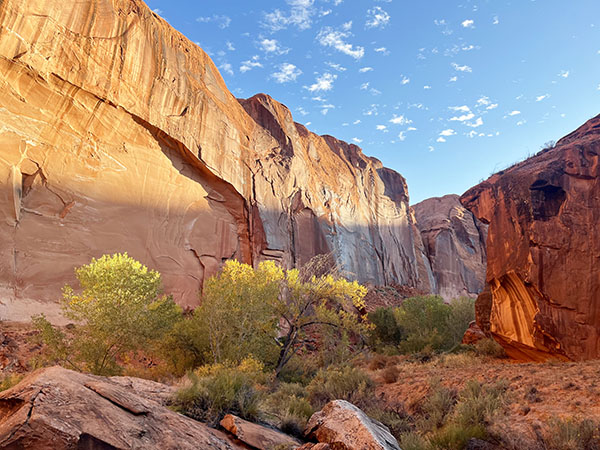
Amid the turmoil and uncertainty caused by Trump’s actions, it’s important that we pause to celebrate the 30th anniversary of Grand Staircase-Escalante National Monument. Its original designation by President Bill Clinton on September 18, 1996 was the culmination of decades of grassroots action to protect this magnificent landscape from drilling, coal mining, and other threats. The first national monument to be managed by the Bureau of Land Management, it soon became world-renowned for its remarkable paleontological discoveries, stunning scenery, and diverse natural ecosystems. Though the entrance signs have been dismantled by the Trump administration, love for “the science monument” remains strong, and so does our resolve to see its protections fully restored.
Photo © Mark Teague
Deadline Alert: Submit Your Comments in Support of Quiet, Roadless Forests!
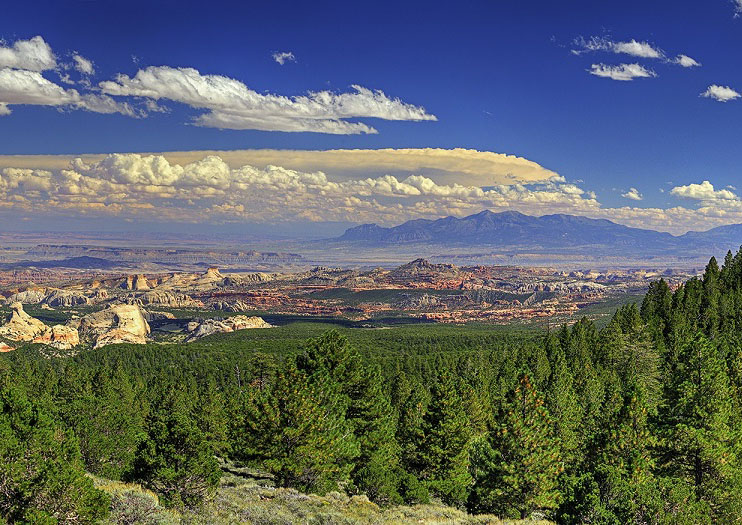
As part of its systematic dismantling of America’s public lands, the Trump administration is proposing to rescind or revise two separate rules that affect the health and safety of national forest lands nationwide. In Utah, this includes the important watersheds of the Manti-La Sal, Dixie, Fishlake, Ashley, and Uinta-Wasatch-Cache National Forests.
The U.S. Forest Service’s Travel Management Rule determines where off-road vehicles (ORVs) can travel across national forests and grasslands. The administration’s proposed revision places a heavy thumb on the scale to prioritize ORV use at the expense of all other uses and values, including the protection of wildlife, cultural sites, healthy streams, and the solitude of wild places. The deadline for submitting public comments is TODAY, Wednesday, September 23. Please tell the Forest Service to keep the Travel Management Rule intact!
A separate proposal to rescind the Roadless Rule puts nearly 45 million acres of roadless public land nationwide (including roughly 4 million acres of Forest Service land in Utah) at greater risk of logging, roadbuilding, mining, and other industrial development. The comment deadline for this one is Tuesday, October 6. Please tell the Forest Service to preserve the Roadless Rule!
Photo © Tim Peterson
Support Continues to Grow for America’s Red Rock Wilderness Act
The latest cosponsors of America’s Red Rock Wilderness Act (HR 2467/S 1193) are Rep. Gabe Amo (D-RI-1), Rep. Becca Balint (D-VT-At Large), Rep. Robin Kelly (D-IL-2), and Rep. Rick Larsen (D-WA-2). If any of these legislators represent you, please thank them for their support! The full list of cosponsors in the 119th Congress can be found here.
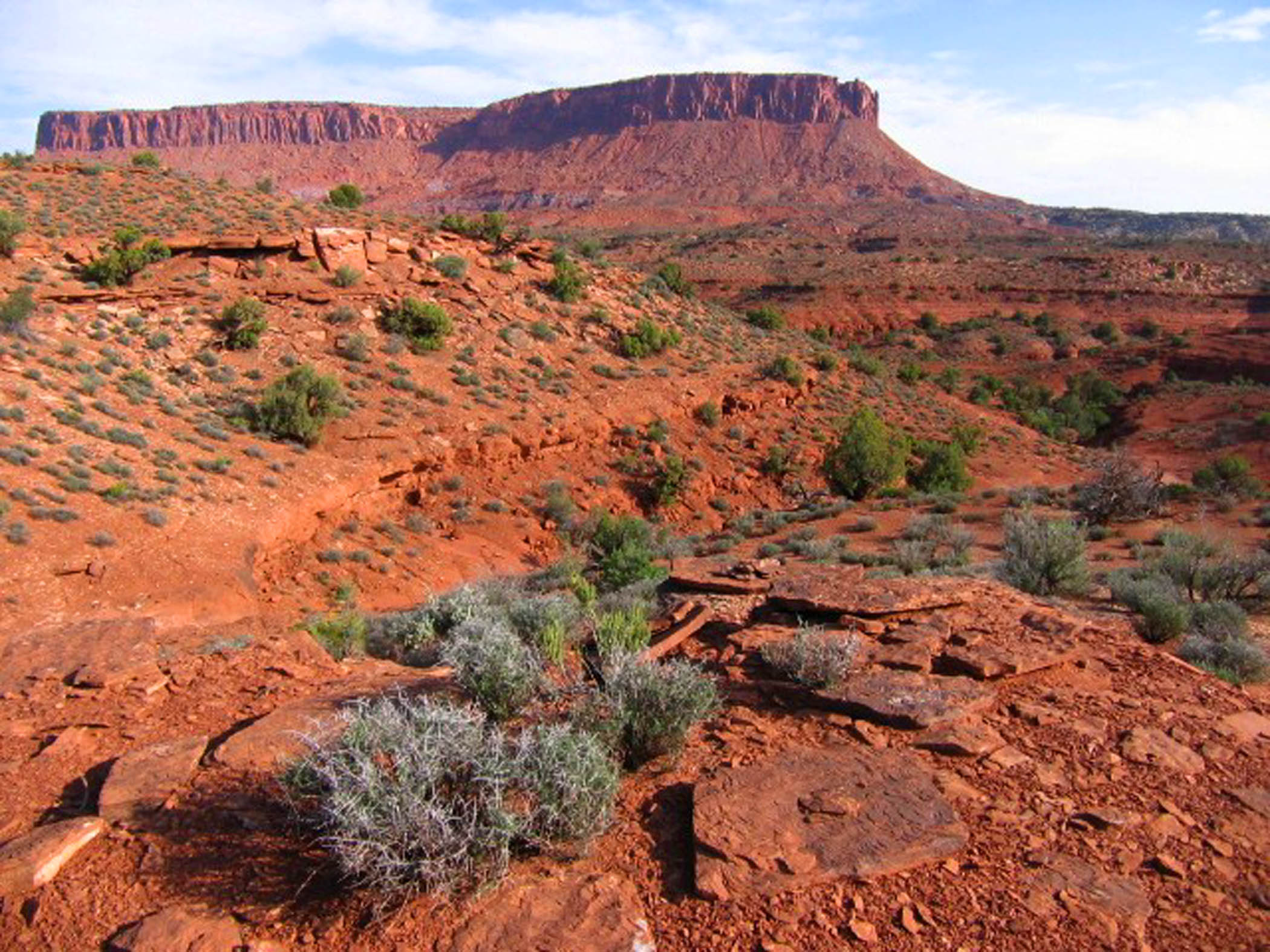
America’s Red Rock Wilderness Act aims to permanently protect over 8 million acres of Bureau of Land Management land in Utah as federally designated wilderness. Congressional support for this visionary legislation provides a powerful counterweight to the political forces seeking to develop and privatize public lands in Utah. If your representative and/or senators have not signed onto the bill, please ask them to cosponsor today!
Photo © Ray Bloxham/SUWA
What We’ve Been Reading
We wanted to share with you some interesting perspectives on politics and public lands the SUWA staff has been reading (and listening to) lately.
- What Are We Doing to Our World of Wonder? – A New York Times Op-Ed on the Trump administration’s defanging of the Endangered Species Act by author and SUWA Board Member Emerita Terry Tempest Williams.
- What’s the Matter with Utah? How a state trapped by its own history became Congress’ most aggressive threat to public lands—and suddenly out of step with a changing conservative West – A Re:Public piece by freelance journalist Christopher Solomon.
- The quiet process that protects Utah’s heritage is under threat – A Salt Lake Tribune Op-Ed by Brandy Strand and Tina Hart, leaders of Preservation Utah and the Utah Professional Archaeological Council.
- On Common Ground: An American Inheritance – A podcast episode on the Trump administration’s public land giveaways, hosted by Bill Hedden (former executive director of the Grand Canyon Trust) and John Leshy (former Interior Department Solicitor).
The post September 2026 Redrock Report appeared first on Southern Utah Wilderness Alliance.
Senator Lee formally begins process to fast-track the destruction of Bears Ears National Monument in Utah – 9.17.26
FOR IMMEDIATE RELEASE
September 17, 2026
Contacts:
Grant Stevens, Communications Director, Southern Utah Wilderness Alliance (SUWA); (319) 427-0260; grant@suwa.org
Keri Gilliland, The Wilderness Society, (KGilliland@tws.org)
Chaitna Sinha, Conservation Codirector and Staff Attorney, Grand Canyon Trust; (970) 399-9565 (csinha@grandcanyontrust.org)
Amy Dominguez, Sierra Club, amy.dominguez@sierraclub.org, (385) 355-4631
Kris Deutschman, Conservation Lands Foundation, kris@conservationlands.org, (505) 498-0212
Andrew Scibetta, NRDC, (202) 289-2421, ascibetta@nrdc.org
Daniel Hernandez, National Parks Conservation Association, dhernandez@npca.org, (202) 573-2201
Washington, DC – Anti-public-lands crusader Senator Mike Lee (R-UT) has taken a significant step towards fast-tracking the destruction of Bears Ears National Monument in Utah, and all the things that make it a national treasure. This week, Lee added the recently issued Government Accountability Office (GAO) opinion regarding the Monument’s Management Plan to the Congressional Record. Under the Congressional Review Act (CRA), following the entry of the opinion into the Congressional Record, a “resolution of disapproval” may be introduced (anticipated to occur soon), and then both chambers of Congress can expedite their votes and pass the measures by simple majority votes. If that happens and the resolution is signed into law by the President, the Bears Ears Monument Management Plan – which sets expectations for how the land will be managed for wildlife, outdoor access, dark night skies, grazing, and other uses – will be undone. This could undo the management plan developed through years of Tribal-federal collaboration and speed up the destruction of the landscape, while also blocking a “substantially the same” plan from being enacted in the future.
Sen. Lee’s move comes just days after 16 mining claims were filed in Bears Ears National Monument. The mining bans in both Bears Ears and Grand Staircase-Escalante only lifted on Friday, September 11, and mining companies are already staking claims in the landscape. Since Trump’s proclamations in July, the Bears Ears Inter-Tribal Coalition, Grand Staircase-Escalante Inter-Tribal Coalition, The Navajo Nation Council, the Navajo-Utah Commission, Native American Right Fund – NARF, The National Congress of American Indians (NCAI) and the National Association of Tribal Historic Preservation Officers (NATHPO), Paiute Indian Tribe of Utah, Hopi Tribe, Southern Ute Indian Tribe, 37 U.S. Senators, 330 organizations, faith communities, veteran groups, businesses, and conservation organizations have opposed oppose the evisceration of protections for Bears Ears and Grand Staircase-Escalante national monuments. Additional information appears below, along with quotes from conservation groups.
“Senator Lee’s vision for Bears Ears National Monument is a landscape dominated by exploitation – mining, grazing, logging – if not outright sold to the highest bidder. We’re going to do everything we can to stop that from happening,” said Steve Bloch, Legal Director at the Southern Utah Wilderness Alliance. “Bears Ears is a national treasure, and the monument management plan put the guardrails in place to make sure its remarkable cultural resources, unique plants and animals, and stunning, silent redrock canyons are there for current and future generations to enjoy. All of that is at risk if Lee’s attack succeeds and the monument management plan is undone.”
“Senator Lee is at it again,” said Thomas Delehanty, senior attorney with Earthjustice’s Rocky Mountain Office. “After failing to eliminate the Grand Staircase-Escalante management plan earlier this year, Lee is now going after the Bears Ears plan instead. This plan, developed through years of public input and collaboration with Tribes, provides essential guidelines on activities that can occur in the monument. Its loss, coupled with Trump’s recent attack on the monument’s boundaries, would be a major blow to these irreplaceable public lands.”
“Bears Ears was already unlawfully reduced by 90%, but that is not enough for Senator Lee. Now he wants to eliminate the Bears Ears management plan, developed through years of public input and close collaboration with the Bears Ears Commission,” said Chaitna Sinha, Staff Attorney and Conservation Codirector at the Grand Canyon Trust. “This is despite the fact that, just last month, polling showed that a majority (66%) of Utahns said protections should be restored to all of Bears Ears and 82% say Native American tribes should have a strong role in managing their ancestral lands, including 76% of Republicans. Senator Lee needs to start listening to his constituents and stop his relentless attacks on our public lands. Utahns want Bears Ears protected.”
“This is a shameful attempt to erase decades of partnership between the U.S. government and the Tribes, the original stewards of this land,” said Charlie Luke, Utah state director at The Wilderness Society. “Instead, Senator Lee wants to open our public lands to the highest bidders, putting cultural resources, clean water and wildlife at risk while threatening our freedom to experience Bears Ears and hand it down intact to future generations.”
“Bears Ears is a living cultural landscape and an irreplaceable part of Utah’s public lands. Its management plan reflects years of public input and historic collaboration with the Tribal Nations that have stewarded this landscape since time immemorial,” said Franque Bains, Director of the Sierra Club’s Utah Chapter. “Senator Lee’s effort would throw that work aside and put Bears Ears at even greater risk. Utahns have made clear that they want our public lands protected and Tribal Nations to have a strong voice in caring for their ancestral lands. Congress should listen to them and leave this plan in place.”
“This is yet another attack on Bears Ears,” said Bobby McEnaney, Senior Land Analyst at NRDC. “The Trump administration is already attempting to decimate the monument. Now Utah’s congressional delegation wants to erase the collaborative management plan that remains. The theme is clear: disregard for the Tribes, the science, and the public consensus that built Bears Ears’ protections. Congress should reject this effort outright.”
“Senator Lee’s irrational quest to annihilate Bears Ears and every other acre of public land goes against the values and priorities of the majority of Utahns and the rest of the country,” said Chris Hill, CEO of the Conservation Lands Foundation. “A real leader listens to what the people want and stands up to corporate interests. That’s clearly not the case with Senator Lee and we trust the rest of Congress will oppose this madness and waste of attention and get to the business of protecting the public’s access to the national monuments, national parks, and other landscapes that Americans want.”
“After the president shrank Bears Ears National Monument by 91 percent, Sen. Mike Lee and other Utah leaders are now attempting to overturn the management plan of the 9 percent of what is left,” said Patagonia CEO Ryan Gellert. “This is a deliberate undermining of Tribal sovereignty in one of the most culturally significant places in the country, and the recently filed mining claims give us a glimpse of what the future of the monument might be. Patagonia stands with the Tribal Nations, conservationists, activists and local communities speaking up to protect Bears Ears.”
“No one in D.C. is more obsessed with tearing apart our public lands than Mike Lee,” said Melissa Cain at the Center for Biological Diversity. “His latest attack on Bears Ears is a pathetic insult to the five Tribal Nations and everyone else who worked tirelessly to secure protections for this national monument. These lands are a cherished part of our national and cultural heritage and they belong to every American. We’ll do everything in our power to ensure his cynical effort fails as spectacularly as his previous attempts have.”
Additional information about Senator Lee’s Attack:
In April 2026, Senator Lee requested an opinion from the Government Accountability Office (GAO) about whether Congress can overturn the current Bears Ears Monument Management Plan; on August 17, the GAO released its opinion that Congress can undo the plan. Earlier this year, using the same mechanism, Utah’s federal delegation, led by Senator Lee and Representative Celeste Maloy (R-UT-02), attempted to undo the Grand Staircase-Escalante National Monument Management Plan. Tribal Nations, hunters and anglers, recreationists, local businesses, scientists, faith leaders, and members of the public from across Utah and the country spoke out loudly against this unfounded attack on one of the nation’s public lands gems. Lee and Maloy’s fast-track attack failed on June 12, 2026.
Just a month later, on July 13, 2026, President Trump illegally decimated both Bears Ears and Grand Staircase-Escalante national monuments by reducing each of them by over 90%. Significantly, until new management plans are finalized, the existing plans for each National Monument remain in place. That means the current plans will still manage activities in the monuments, with at least one major exception: mining. Trump’s proclamations directed that on September 11, 2026, the lands he cut out of both monuments be opened to new mining claims. Conservation groups challenged Trump’s illegal reductions of both Monuments on Tuesday, Sept. 9 in Federal Court.
Additional information about Bears Ears National Monument
Beloved by Utahns and Americans, Bears Ears National Monument is a region of extraordinary cultural significance and natural diversity. On December 28, 2016, President Obama used his authority under the Antiquities Act to establish Bears Ears National Monument, protecting both a cultural landscape that has been home to Tribal Nations from time immemorial and some of the wildest redrock country in the nation. The proclamation elevated the voices of Tribal Nations that have ancestral ties to the region. Nearly 100,000 archaeological and cultural sites were protected by the proclamation, including House on Fire and Moon House.
The Bears Ears proposal was led by the five Tribal Nations that would later comprise the “Bears Ears Commission:” the Navajo Nation, the Hopi Tribe, the Pueblo of Zuni, the Ute Mountain Ute Tribe, and Ute Indian Tribe. On December 4, 2017, President Trump ignored millions of public comments and in a brazenly illegal act repealed Bears Ears National Monument, replacing it with two much smaller, non-contiguous units totaling around 200,000 acres (an 85% reduction). His unprecedented action left rare archaeological sites, unique flora and fauna, and stunning wildlands without protection from looting, uranium mining, oil and gas drilling, and off-road vehicle damage.
Thankfully, on October 8, 2021, President Biden signed a proclamation restoring Bears Ears National Monument to its full, original boundaries—plus an additional 11,200 acres added to the Trump-era Indian Creek unit. National monuments are overwhelmingly popular. In 2022, the BLM and U.S. Forest Service, in collaboration with the Bears Ears Commission, began the process of developing a management plan to govern the Bears Ears National Monument. This was a crucial partnership to ensure that the monument is managed for its unique and extraordinary values, including the wealth of sacred objects and places of importance to the Tribal Nations of the Commission.
The Bears Ears Commission played a central role in developing the 2025 Bears Ears Resource Management Plan, an unprecedented collaborative framework that brings Traditional Indigenous Knowledge and western science together to guide stewardship of Bears Ears National Monument. Following passage of the Resource Management Plan, the Commission worked with the agencies to implement the Resource Management Plan, up until President Trump purported to eliminate the Commission in his July 2026 proclamation.
About the Congressional Review Act (CRA)
The CRA is a federal statute enacted in March 1996 that requires federal agencies to submit “rules” to Congress for a mandatory review period “before they may take effect.” If Congress votes to overturn, or “disapprove,” the rule, it “may not be reissued in substantially the same form. . . .” The BLM has long maintained that its land management plans are not “rules” subject to the CRA. Other federal land management agencies, including the USFS, and National Park Service, have similarly not submitted their land management plans to Congress under the CRA.
However, emboldened by a series of non-binding Government Accountability Office (GAO) opinions, Republican members of Congress have embraced the novel theory that federal land management plans are in fact “rules” subject to the CRA. The 119th Congress has passed seven CRA resolutions overturning previously finalized land management plans or other types of public lands management decisions. The GAO issued a decision regarding the Bears Ears Monument Management Plan on August 17, 2026.
###
The Southern Utah Wilderness Alliance (SUWA) is a nonprofit organization with members and supporters from around the country dedicated to protecting America’s redrock wilderness. From offices in Moab, Salt Lake City, and Washington, DC, our team of professionals defends the redrock, organizes support for America’s Red Rock Wilderness Act, and stewards this world-renowned landscape. Learn more at www.suwa.org.
The post Senator Lee formally begins process to fast-track the destruction of Bears Ears National Monument in Utah – 9.17.26 appeared first on Southern Utah Wilderness Alliance.
First Mining Claims Filed in Lands Cut from Bears Ears National Monument – 9.16.26
FOR IMMEDIATE RELEASE
September 16, 2026
Contacts:
Grant Stevens, Communications Director, Southern Utah Wilderness Alliance (SUWA); (319) 427-0260; grant@suwa.org
Keri Gilliland, The Wilderness Society, (KGilliland@tws.org)
Chaitna Sinha, Conservation Codirector and Staff Attorney, Grand Canyon Trust; (970) 399-9565 (csinha@grandcanyontrust.org)
Amy Dominguez, Sierra Club, amy.dominguez@sierraclub.org, (385) 355-4631
Kris Deutschman, Conservation Lands Foundation, kris@conservationlands.org, (505) 498-0212
Andrew Scibetta, NRDC, (202) 289-2421, ascibetta@nrdc.org
Daniel Hernandez, National Parks Conservation Association, dhernandez@npca.org, (202) 573-2201
SAN JUAN COUNTY, UT – 16 new mining claims (see map) have been filed in previously protected land in Bears Ears National Monument. These lands became subject to mining claims on Friday, September 11 – 60 days after President Trump decimated Bears Ears and Grand Staircase-Escalante by shrinking these national monuments by over 90%. All 16 claims were recorded on September 11 by noon; it took until Tuesday, September 15 for them to appear in the San Juan County Recorder’s Office’s online system.
The new mining claims (see map) are in two general areas: Lockhart Basin & near the Easy Peasy Mine (the mine has been re-buried). Three Claims were filed by George W. Schultz in the Lockhart Basin area. 13 claims were filed by Kimmerle Mining; two of these claims are adjustments to the Easy Peasy claims first filed after Trump’s 2017 reduction of Bears Ears and 11 are new claims nearby. Kyle Kimmerle (a Managing Member of Kimmerle Mining) was also a plaintiff in one of the cases filed challenging President Biden’s 2021 restoration of the Bears Ears and Grand Staircase-Escalante national monuments. On July 14, 2026, Kimmerle Mining illegally attempted to file seven mining claims prior to the Sept. 11 deadline. Additional information appears below, along with quotes from Tribal leaders and conservation groups.
“This rush to locate new mining claims in Bears Ears National Monument reinforces the need to be vigilant over the next several years while we work to undo Trump’s illegal actions and restore both Grand Staircase-Escalante and Bears Ears National Monuments.“said Hanna Larsen, Staff Attorney at the Southern Utah Wilderness Alliance (SUWA). “As evidenced by the Easy Peasy Mine, claims like these often lead to real and long-lasting damage to the very qualities that make these monuments so special.”
“Immediately after the mining ban was lifted, 16 claims were filed on the lands removed from Bears Ears National Monument,” said Charlie Luke, Utah state director at The Wilderness Society. “This is not a hypothetical threat, it’s the reality of what happens when national monument protections are gutted. We cannot allow special interests to turn a profit on Bears Ears at the expense of future generations.”
“The speed with which the mining industry moved to stake claims following the dismantling of the Grand Staircase-Escalante and Bears Ears National Monuments demonstrates the real-world consequences of stripping protections from some of America’s most important landscapes,” said Bobby McEnaney, Senior Lands Analyst at the Natural Resources Defense Council (NRDC). “This sequence of events underscores exactly why Bears Ears was originally established and why this landscape deserves lasting protection. These mining claims amount to a virtual giveaway of public lands.”
“The administration put some of America’s greatest heritage at risk when it opened up Bears Ears and Grand Staircase-Escalante for mining,” said Chaitna Sinha, Staff Attorney and Conservation Codirector for the Grand Canyon Trust. “The 16 new mining claims in Bears Ears follow a poll in which the vast majority of Utahns said protections should be restored to all of Bears Ears and Grand Staircase-Escalante, including 52% of Republicans. 82% of those polled said that Native American tribes should have a strong role in managing lands they hold sacred. It’s a shame our elected officials aren’t listening to the people who elected them. Most Utah voters want these monuments restored to their original boundaries and want tribes to be partners in their management.”
“Within days of the illegal reduction of these treasured public lands, industry interests are already lining up to exploit them,” said Franque Bains, Chapter Director of the Sierra Club in Utah. “This rush makes clear the consequences of the Trump administration illegally stripping protections from Bears Ears and Grand Staircase-Escalante: Irreplaceable cultural landscapes and public lands are being put at risk for corporate profit. We will continue working alongside Tribal nations, local communities, and our partners to defend these landscapes and restore the protections they deserve.”
“Sixteen new mining claims within days of the deadline is proof that this was never about public access — it’s about clearing the way for extraction,” said Chris Hill, CEO of the Conservation Lands Foundation. “BLM Director Pearce and Governor Cox like to talk about keeping lands open for the public, but when mining companies raced to stake claims on sacred and treasured landscapes, they gave them the green light. This tells you who they’re really working for. A recent Grand Canyon Trust poll found that 52% of Utah Republicans want protections restored to all of Bears Ears and Grand Staircase-Escalante, and 82% say tribes should have a strong role in managing the lands they hold sacred. Utahns have made themselves clear — it’s their leaders who refuse to listen. We’re going to keep fighting, in court and in communities, until these monuments and the integrity of the entire public lands system are restored.”
“The arguments about access in Bears Ears were clearly about energy extraction, and mining companies have wasted no time staking new claims,” said Sara Cawley, Energy Director at the National Parks Conservation Association. “Three of the claims are located in the Lockhart Basin, a spectacular landscape that contains numerous cultural and archaeological sites and sits next to Canyonlands National Park’s eastern boundary. National park units and their surrounding landscapes are no place for energy development, but outdated laws elevate mining above all other uses on these lands. We will continue to fight to prevent these special places, surrounding communities, and sovereign tribes from being undermined and exploited.”
Background Information on other Mining claims:
Under President Trump’s proclamations decimating Bears Ears and Grand Staircase-Escalante by over 90%, mining claims could not be staked until 60 days after the date of the proclamation: Friday, Sept. 11, 2026. Despite this, on July 14, 2026, Kimmerle Mining filed 7 mining claims (see map) with the San Juan County (Utah) Recorder’s Office. Kimmerle Mining previously filed mining claims after Trump’s 2017 reduction of Bears Ears and excavated a partially reclaimed mine shaft on one of the claims – the so-called Easy Peasy claim (this mine has been re-buried); Kyle Kimmerle (a Managing Member of Kimmerle Mining) was also a plaintiff in one of the cases filed in the District of Utah challenging President Biden’s 2021 restoration of the Bears Ears and Grand Staircase-Escalante national monuments.
Two mining claims were also filed in Grand Staircase-Escalante, less than one month after Trump’s attack. On August 6, 2026, Craig Rosequist filed two mining claims (see map) with the Kane County (Utah) Recorder’s Office in areas cut out of the monument by the Trump proclamations. According to public records, Rosequist previously located several mining claims in neighboring Washington County, Utah. The Bureau of Land Management should reject claims filed in both national monuments prior to Sept. 11.
- Map of 2026 claims in Bear Ears, showing the 2021 and 2026 Monument Boundaries and noting the location of the Easy Peasy Mine, created by the Southern Utah Wilderness Alliance (SUWA)
- Map of 2026 Claims in Grand Staircase-Escalante, created by SUWA
- Photo and video assets of Kimmerle’s Easy Peasy Mine and surrounding claims, please credit Tim Peterson.
Background information about the national monument reductions:
- Statements from Bears Ears and Grand Staircase-Escalante Inter-Tribal coalitions
- SUWA Statement on Trump’s Illegal Reductions of Grand Staircase-Escalante & Bears Ears National Monuments
- Full Statement and Quotes Tracking
- Maps of the reductions
- Reporter Background Memo on National Monuments
###
The Southern Utah Wilderness Alliance (SUWA) is a nonprofit organization with members and supporters from around the country dedicated to protecting America’s redrock wilderness. From offices in Moab, Salt Lake City, and Washington, DC, our team of professionals defends the redrock, organizes support for America’s Red Rock Wilderness Act, and stewards a world-renowned landscape. Learn more at www.suwa.org.
The post First Mining Claims Filed in Lands Cut from Bears Ears National Monument – 9.16.26 appeared first on Southern Utah Wilderness Alliance.
Tell the Forest Service to Keep the Travel Management Rule
The U.S. Forest Service is rewriting its longstanding Travel Management Rule, which determines where off-road vehicles (ORVs) can travel across national forests and grasslands. This is the tool that land managers use to designate areas and trails for motorized use while also setting aside areas for human-powered recreation, wildlife habitat, and preservation of cultural sites.
The Trump administration wants to change—for the worse—how Utahns and other visitors experience national forests throughout the state, from the Wasatch Front to the redrock country outside of Escalante, Kanab, and Moab. The proposal places a heavy thumb on the scale to prioritize ORV use at the expense of all other uses and values, including the protection of wildlife, cultural sites, healthy streams, and the solitude of wild places. This will not improve access to public lands, but it will make the experience worse for all users, including hikers, bikers, hunters, anglers, and ORV riders.
The Forest Service is accepting public comments through Wednesday, September 23. Please tell the agency to protect national forests by keeping the Travel Management Rule intact!
Elk Ridge, Manti-La Sal National Forest. © Scott T. SmithAmong other things, the Forest Service’s proposal would:
- Allow motorized vehicles everywhere on national forests and grasslands except where they are specifically prohibited, flipping longstanding policy.
- Force every forest or district to reconsider each year whether non-motorized trails, roads, and areas should be open to motorized vehicles.
- Create new pathways to expand ORV use with less public review.
- Eliminate the “minimization criteria,” which require the agency to locate motorized areas and trails to minimize damage to wildlife habitat, soils, watersheds, and vegetation and to minimize conflicts between different users.
In Utah, national forest lands help connect Bureau of Land Management landscapes proposed for wilderness designation in America’s Red Rock Wilderness Act. These include the important watersheds of the Manti-La Sal, Dixie, and Fishlake National Forests.
There are already hundreds of thousands of miles of Forest Service roads nationwide, and they’re facing a $9 billion maintenance backlog. Added to that is a $300 million Forest Service trail maintenance backlog and a $29 million recreation backlog. An expanded route system will only exacerbate these problems.
Both the proposed Travel Management Rule change and the proposed rescission of the Roadless Rule (see our alert from earlier this week) are part of the administration’s systematic dismantling of the rules and safeguards that keep national forests healthy and safe for the benefit of all. Undoing these rules will bring increased chaos and uncertainty for everyone who uses national forests.
Click here to submit your comments by September 23The post Tell the Forest Service to Keep the Travel Management Rule appeared first on Southern Utah Wilderness Alliance.
Speak Up for Wild Forests: Tell the Forest Service to Preserve the Roadless Rule
The Trump administration continues its attacks on public lands in its latest push to rescind the Roadless Rule, one of the country’s most important legal safeguards for undeveloped national forests. In August, the U.S. Forest Service moved to the next phase of its rulemaking process, releasing a dangerous proposal to put nearly 45 million acres of roadless public lands nationwide at greater risk of logging, roadbuilding, mining, and other industrial development.
In Utah, the Roadless Rule protects roughly 4 million acres of forest—from the Wasatch Front to the West Desert to southern Utah’s redrock forests—including wildlife habitat, quiet recreation, the headwaters for entire watersheds, and the large, unfragmented landscapes that make the West wild.
Please tell the Forest Service to protect our nation’s wild forests by keeping the Roadless Rule intact © Tim PetersonUtah does not need more roads. National forests already contain hundreds of thousands of miles of roads nationwide, and there’s a multibillion-dollar maintenance backlog for these existing roads. The Roadless Rule does not close these roads, prevent people from reaching trailheads, or end outdoor recreation. Roadless areas remain open for hiking, camping, hunting, fishing, and other recreation while striking a balance that protects the wildlife and cultural resources many visitors are there to experience and enjoy.
This proposal is really about opening public lands to more industrial development, extraction, and privatization. New roads make commercial logging, mining, drilling, and other damaging development easier while fragmenting habitat, eroding soils, degrading streams, spreading invasive species, and increasing human disturbance in places that have remained largely whole. Opening these areas to new roads doesn’t address wildfire safety and may even increase ignition risk. The Roadless Rule already permits fire suppression, fuels work, and emergency roads when necessary in wildland firefighting.
In Utah, roadless national forest lands help connect Bureau of Land Management landscapes proposed for protection in America’s Red Rock Wilderness Act. Together, these public lands support wildlife migration and climate resilience across Utah’s mountains, plateaus, and redrock country. Fragmenting one part of that system severely weakens the whole.
The deadline for public comments on the Roadless Rule rescission is Tuesday, October 6. Click here to tell the Forest Service why roadless areas matter to you and to the redrock.
Thank you for standing up for Utah’s forests!
The post Speak Up for Wild Forests: Tell the Forest Service to Preserve the Roadless Rule appeared first on Southern Utah Wilderness Alliance.
Meet Canyon Keepers: A New Name for SUWA’s Monthly Giving Program
Protecting Utah’s redrock wilderness has never been about a single moment or a single victory. It’s a long, unfolding effort—one that depends on people willing to stand alongside these landscapes for the long haul. That’s why monthly giving matters so much: it’s an ongoing commitment that helps us carry the work forward month after month, year after year.
Our monthly donors have been part of SUWA’s story for years. This circle of members, whose dependable contributions support our work year-round, is now called “Canyon Keepers.”
Why Become a Canyon Keeper?
- Reliable year-round support: Monthly gifts provide consistent funding that allows us to respond immediately to urgent threats and stay engaged in long-term campaigns.
- It helps us plan ahead: Knowing what we can count on each month helps us budget more effectively, allocate resources wisely, and plan campaigns with confidence.
- Simple and flexible: Set it up once, adjust it anytime. No hassle—just a continuous, meaningful way to sustain the work you care about.
Becoming a Canyon Keeper is easy. It only takes a few minutes to set up, and once you do, your gift renews automatically each month. You can increase, decrease, or pause your support at any time. To welcome you to the Canyon Keepers circle, we’ll send you a limited-edition Canyon Wren canvas bag (design by Riley Lubich) to show our gratitude.
Click here to join Canyon Keepers today!The post Meet Canyon Keepers: A New Name for SUWA’s Monthly Giving Program appeared first on Southern Utah Wilderness Alliance.
Tell BLM (Again) to Keep Fossil Fuel Development Out of Utah’s Wild Places
Back in June, we asked you to submit preliminary scoping comments on a particularly ill-conceived oil and gas lease sale in Utah. The Bureau of Land Management (BLM) recently announced that it’s barreling ahead with this sale and is now accepting comments on the draft proposal, which would auction off some of Utah’s wildest places for fossil fuel development, including parcels in the Dirty Devil and Hatch Point regions. All told, the BLM’s Fourth Quarter Lease Sale would offer 43 parcels spanning more than 74,000 acres of public land in Utah.
The BLM is accepting public comments through Monday, September 21. Please tell the agency to keep oil and gas development out of these scenic, wild landscapes.
Hatch Point. © Ray Bloxham/SUWAThe Dirty Devil parcels are in a wild and remote region west of the Horseshoe Canyon unit of Canyonlands National Park and immediately north of the Dirty Devil Wilderness Study Area.
The Hatch Point parcels are located near the mouth of Trough Springs Canyon, south of Moab, and encompass Hatch Canyon and Kane Springs Canyon. These canyons are designated critical habitat for the threatened Mexican Spotted Owl in addition to supporting a wide array of other wildlife. The Hatch Point area also provides expansive views of the nearby Bears Ears region.
In its haste to fall into line with Trump administration priorities, the BLM prepared a draft environmental analysis that falls short of what the law requires. For example, many of the parcels—including those near Bears Ears—are in designated critical habitat for the Mexican Spotted Owl, a species listed as threatened under the Endangered Species Act (ESA). However, the agency failed to consult with the U.S. Fish and Wildlife Service about foreseeable impacts to the owl, as required by the ESA. Rather than consult now, the agency kicked the can down the road to the drilling stage when it claims that it may (but likely won’t) fulfill that requirement. This backwards approach is illegal and does nothing to ensure the owl is protected.
SUWA fully intends to hold the BLM accountable for its failure to follow the law. You can help by telling the agency to keep fossil fuel development out of Utah’s remarkable wild landscapes.
Click here to submit your comments by September 21The post Tell BLM (Again) to Keep Fossil Fuel Development Out of Utah’s Wild Places appeared first on Southern Utah Wilderness Alliance.
Our Next Step to Defend the National Monuments
In July, when President Trump illegally decimated Bears Ears and Grand Staircase-Escalante National Monuments, SUWA said we would fight his actions in every way we can, using every tool in our toolbox, for as long as necessary. I’m writing today with an important update on that fight.
This morning we sued President Trump in U.S. District Court in Washington, DC, to overturn his illegal reductions of the national monuments and see them fully restored. We jointly filed litigation alongside our longtime partners the Natural Resources Defense Council (NRDC) and Earthjustice (the latter is representing several other conservation groups). We have asked the court to reopen our previous lawsuit against President Trump’s 2017 monument rollbacks (which was put on hold following President Biden’s restorations) and have updated the case to challenge both sets of illegal proclamations.
© Nathan St. Andre
© Brandon Garcia
We expect Tribal Nations to file their own litigation against Trump’s unlawful actions soon, and we’re honored to stand alongside them. SUWA continues to work closely with the Bears Ears and Grand Staircase-Escalante Inter-Tribal Coalitions, which have spoken in opposition to the reductions. Two additional coalitions of monument supporters also filed to reopen their litigation defending the monuments.
Our goal is full and complete restoration of both Bears Ears and Grand Staircase-Escalante. Today was an important step, but the results could be slow to unfold. In the meantime, SUWA will be there to defend the ground. We will track—and fight back against—mining claims, oil and gas leases, off-road vehicle trail proposals, and any other actions that could damage the monuments. We’re already harnessing the national outrage over Trump’s actions and translating that into political momentum to advance America’s Red Rock Wilderness Act, which would protect much of the land included in the monuments as wilderness.
Every day, we’re activating our members and activists in Utah and across the nation to step up and Protect Wild Utah; thank you for stepping up, time and time again. We’ll continue to provide opportunities to do so. If you’re able, please consider a donation to our work.
Stay tuned for more updates—good, bad, and otherwise—on the national monuments.
Thanks for all you do!
The post Our Next Step to Defend the National Monuments appeared first on Southern Utah Wilderness Alliance.
Conservation Groups Challenge Trump’s Decimation of Two National Monuments in Utah – 9.2.26
FOR IMMEDIATE RELEASE
September 2, 2026
Contacts:
Grant Stevens, Communications Director, Southern Utah Wilderness Alliance (SUWA); (319) 427-0260; grant@suwa.org
Washington, DC – Conservation groups today challenged President Trump’s July 2026 unlawful decimation of Bears Ears and Grand Staircase-Escalante National Monuments. The groups filed suit in U.S. District Court seeking to reactivate litigation against Trump’s 2017 monument rollbacks and challenge both sets of illegal proclamations together.
Conservation groups were joined by two additional coalitions of monument supporters, who also filed to renew their litigation on Bears Ears and Grand Staircase-Escalante today.
“President Trump’s unlawful attack dismantling Grand Staircase-Escalante and Bears Ears National Monuments was a dark day for America and our nation’s long tradition of protecting parks, monuments and wild places for current and future generations,” said Steve Bloch, legal director at the Southern Utah Wilderness Alliance (SUWA). “With the filing of these lawsuits, we intend to make sure Trump doesn’t have the final word over the fate of these treasured landscapes. We’ll be watching closely for on-the-ground mischief like new mining claims and illegal vehicle use and are ready to swing into action to protect the monuments from any activities that can leave lasting damage.”
“Not only is the attempt to slash Bears Ears and Grand Staircase-Escalante national monuments illegal, it’s also deeply unpopular,” said Michael Toll, staff attorney for the Grand Canyon Trust. “A 2024 poll found that more than 70% of Utah voters supported keeping Bears Ears and Grand Staircase-Escalante protected as national monuments; these illegal cuts are wildly out of touch with what the majority of Utahns want.”
In July, President Trump illegally redrew the boundaries of Bears Ears and Grand Staircase-Escalante, reducing both monuments by more than 90%. The attack was one of the largest rollbacks of public lands protections in U.S. history, cutting a million acres more than the 2017 reductions. Multiple mining claims were filed in both Bears Ears and Grand Staircase-Escalante immediately after Trump decimated the monuments. Conservation groups have urged the Bureau of Land Management to reject the premature and unlawful claims.
“Bears Ears and Grand Staircase-Escalante should have never been put in jeopardy to begin with as no president has the authority to erase or shrink national monuments,” said Erika Pollard, Southwest campaign director with the National Parks Conservation Association. “These monuments are among the most beloved public lands in Utah, visited by millions who also travel to neighboring national park sites – Bryce Canyon, Capitol Reef, Canyonlands, Glen Canyon and Natural Bridges. Attempting to dismantle the groundbreaking Bears Ears Commission and co-stewardship structures is an insult to the Tribal Nations that deserve a leading role in managing their ancestral lands. Support for these monuments has never wavered and neither will our fight to protect them.”
“The gutting of these two monuments is yet another example of this administration rewarding industry with special access to the public’s land and resources,” said Chris Krupp, public lands attorney for WildEarth Guardians. “Trump didn’t unlock the monument for recreation, as he dishonestly claimed, but he did open up a cherished landscape to mining. It’s no surprise mining companies are already taking advantage of that.”
The Antiquities Act of 1906 authorizes presidents to designate national monuments, but it does not give them the power to shrink the monuments created by their predecessors or to undercut their protections. Congress’s intent was clear: the Antiquities Act must be used to protect the nation’s archaeological, cultural, and scientific wonders.
“President Trump cannot erase America’s national monuments with the stroke of a pen. The Antiquities Act gives presidents the authority to protect places like Grand Staircase-Escalante and Bears Ears, not dismantle them for mining and other industrial interests,” said Athan Manuel, director of the Sierra Club’s Lands Protection Program. “The monuments preserve an irreplaceable cultural landscape, world-renowned fossil resources, and extraordinary wildlands that are shared by all of us. We’re going to court because the law is clear, and future generations deserve to inherit these remarkable places with the protections they were promised.”
“Slashing protections for Bears Ears and Grand Staircase-Escalante national monuments is unlawful and disregards the Tribes who have stewarded these lands since time immemorial,” said Charlie Luke, The Wilderness Society Utah state director. “These protections were put in place for a reason: to safeguard cultural resources, wildlife habitat, clean air and water, and the freedom of future generations to experience these lands. The Wilderness Society will continue this fight in court to ensure our treasured Utah national monuments remain protected.”
Grand Staircase-Escalante National Monument — home to dinosaur fossils not found anywhere else in the world — is often described as a “dinosaur Shangri-la.” It was established as a national monument in 1996, and in the two decades since it was protected, paleontologists have unearthed fossils from 21 previously undiscovered dinosaur species.
The region also holds great cultural significance to numerous Tribes. It is renowned for the remarkable geologic features for which it is named — a series of massive, stepped cliff formations that form, literally, a grand staircase. It is home to serpentine canyons that provide endless hiking adventures and streams that support diverse populations of native plant and animal life.
“The big lies behind these illegal rollbacks aren’t fooling anyone. The truth is the Trump administration is trying to sell out two of America’s most iconic national monuments to benefit oil and mining corporations,” said Taylor McKinnon, Southwest director at the Center for Biological Diversity. “Grand Staircase and Bears Ears belong to the American people, not corporate polluters. We’ll fight like hell to ensure their remarkable biodiversity and rich cultural landscapes are protected for future generations.”
Bears Ears National Monument is home to cliff dwellings and other structures built by the Ancestral Puebloan people, more than 100,000 Native American cultural sites, innumerable historic landmarks, and iconic wildlife such as bears, bighorn sheep, and mountain lions. Tribes continue to visit the lands to hold ceremonies and connect with their ancestors. The 2016 monument designation included a historic plan for co-management of this unique landscape by federal agencies and five Tribes (the Bears Ears Commission) with sacred cultural interests in the lands.
“These monuments protect places that took millions of years to form. President Trump is trying to destroy them with a stroke of a pen. That cannot stand,” said Christy Goldfuss, executive director at NRDC (Natural Resources Defense Council). “The administration is trying to force this through by executive fiat. The Antiquities Act does not work that way. Presidents have the power to create national monuments to protect what belongs to all of us, but Congress never gave them the power to tear those monuments down. Once you open these lands to mining and drilling, what gets lost is not coming back—ancient cliff dwellings, dinosaur fossils found nowhere else on Earth, sacred sites tied to the Tribal Nations. Tribes led the fight for Bears Ears. Local communities, ranchers, scientists, and outfitters built the record behind Grand Staircase-Escalante. Three in four Utahns want these monuments kept whole. This lawsuit is about honoring the people who built these places and the law that made them possible. We are prepared to stay in this fight as long as it takes.
“President Trump’s proclamations, which removed protections from countless objects of scientific and historic importance, are plainly illegal, just as they were in 2017 when he first attacked these treasured monuments,” said Heidi McIntosh, managing attorney for Earthjustice’s Rocky Mountain Office. “The law has not changed. The Antiquities Act authorizes a president to do just one thing: to designate a national monument, not to dismantle it. Trump’s actions are an attack not just on the Antiquities Act, but on the nation’s rich cultural and natural heritage.”
“The Trump and Cox administrations are cynically undermining the Antiquities Act to support their extreme anti-conservation ideology,” said Laura Welp, Southern Utah director with Western Watersheds Project. “Destroying these national monuments serves only their political and business allies, not the public. This partisan attack on some of the nation’s last best places is bad for wildlife, bad for native ecosystems, and bad for the country.”
“Let’s call it what it is: a boon to big business,” said Reba Elliott, executive director of Great Old Broads for Wilderness. “Everyone who’s visited this beautiful place loves it. It’s a place that grandmas and grandpas want to keep for their grandkids forever. Having it turned over to big business is the last thing the land needs–and the last thing the people want.”
National monuments provide economic benefits to local economies, creating jobs, enhancing communities and boosting local outdoor recreation economies across the country. Monuments are also incredibly popular. A 2026 State of the Rockies poll found that 91% of Western voters say existing national monument designations should be kept in place. Contrary to Trump’s statements, the monuments offer numerous opportunities for hunting, fishing, hiking, camping, and education and see over a million visitors combined annually. These activities and visitors are vital economic drivers for the rural communities that serve as gateways to the monuments.
Earthjustice represents The Wilderness Society, National Parks Conservation Association, the Sierra Club, Grand Canyon Trust, Great Old Broads for Wilderness, Western Watersheds Project, WildEarth Guardians, and the Center for Biological Diversity in the litigation. The Natural Resources Defense Council and Southern Utah Wilderness Alliance (SUWA) are co-plaintiffs, represented by their own counsel.
Because the existing cases are currently stayed, the plaintiffs also asked the court to reopen the cases and formally requested permission to file the updated complaints.
Photos of both national monuments are available here: https://medialibrary.earthjustice.org/share/083E8A8D-5C8A-474D-9783139D836B7ACE/
###
The Southern Utah Wilderness Alliance (SUWA) is a nonprofit organization with members and supporters from around the country dedicated to protecting America’s redrock wilderness. From offices in Moab, Salt Lake City, and Washington, DC, our team of professionals defends the redrock, organizes support for America’s Red Rock Wilderness Act, and stewards a world-renowned landscape. Learn more at www.suwa.org.
The post Conservation Groups Challenge Trump’s Decimation of Two National Monuments in Utah – 9.2.26 appeared first on Southern Utah Wilderness Alliance.
Tell BLM to Keep Private Aircraft Out of Southern Utah’s Wild, Quiet Places
Earlier this summer we asked you to take action to protect some of southeast Utah’s most remote and ecologically sensitive landscapes from a Bureau of Land Management (BLM) proposal to authorize ten backcountry airstrips in the Moab and Monticello areas. Despite thousands of comments critiquing the proposal, the BLM approved all ten airstrips. SUWA appealed that decision, and on August 6, the agency withdrew its proposal in response to the appeal. Bafflingly, less than two weeks later, it reissued a nearly identical one.
The BLM is accepting public comments through this Thursday, September 3. Please tell the agency to follow the law, heed public input, and protect sensitive wild landscapes.
Several of the proposed airstrips sit within BLM-identified wilderness-quality lands or directly adjacent to Bears Ears National Monument and Canyonlands National Park. Others are within breeding and nesting habitat for bighorn, pronghorn, burrowing owls, and other raptors. The BLM acknowledges that aircraft noise and visual intrusions would degrade solitude and natural soundscapes in these areas. Research also shows that noise and increased traffic from motorized recreation, including aircraft, can displace wildlife and reduce reproduction and survival.
SUWA—and commenters like you—proposed a more balanced alternative: authorize four of the airstrips while rejecting six in the most environmentally sensitive locations: Spring Canyon, Big Flat, Castle Creek, Nokai Dome, Piute, and Red Canyon. But in its new environmental assessment, the agency discards this reasonable alternative.
The BLM never officially designated use of these airstrips, so any recent or current use is unauthorized. Most of the more remote airstrips show no signs of recent use and are covered by native vegetation, making them difficult or impossible to identify on the ground. Formally opening them for aircraft use—and maintaining them over time—would require heavy equipment to remove established sagebrush, rabbitbrush, juniper, and other native vegetation.
Click here to tell the BLM to reject airstrips in these sensitive locationsRather than adequately addressing the public’s concerns, the agency has again advanced an ill-conceived proposal that will serve a few private planes at the expense of wildlife, cultural landscapes, and overall visitor experience.
Remember, comments are due by September 3. Please take advantage of this short comment window and tell the BLM that southern Utah’s remote canyon country, wildlife, and cultural landscapes deserve better.
The post Tell BLM to Keep Private Aircraft Out of Southern Utah’s Wild, Quiet Places appeared first on Southern Utah Wilderness Alliance.
The Fine Print I:
Disclaimer: The views expressed on this site are not the official position of the IWW (or even the IWW’s EUC) unless otherwise indicated and do not necessarily represent the views of anyone but the author’s, nor should it be assumed that any of these authors automatically support the IWW or endorse any of its positions.
Further: the inclusion of a link on our site (other than the link to the main IWW site) does not imply endorsement by or an alliance with the IWW. These sites have been chosen by our members due to their perceived relevance to the IWW EUC and are included here for informational purposes only. If you have any suggestions or comments on any of the links included (or not included) above, please contact us.
The Fine Print II:
Fair Use Notice: The material on this site is provided for educational and informational purposes. It may contain copyrighted material the use of which has not always been specifically authorized by the copyright owner. It is being made available in an effort to advance the understanding of scientific, environmental, economic, social justice and human rights issues etc.
It is believed that this constitutes a 'fair use' of any such copyrighted material as provided for in section 107 of the US Copyright Law. In accordance with Title 17 U.S.C. Section 107, the material on this site is distributed without profit to those who have an interest in using the included information for research and educational purposes. If you wish to use copyrighted material from this site for purposes of your own that go beyond 'fair use', you must obtain permission from the copyright owner. The information on this site does not constitute legal or technical advice.
 This site is not the official webpage of the Industrial Workers of the World.