




You are here
disaster capitalism
 The following news items feature issues, discussions, campaigns, or information potentially relevant to green unionists:
 Ten years ago, between August 23-31, Hurricane Katrina overran the city of New Orleans, Louisiana, destroying major portions of the city, killing at least 1245 people. The destruction and death disproportionately affected the poor, mostly nonwhite, working class people and neighborhoods of New Orleans, and the response by the capitalist class and every government from the local municipal authorities to the State of Louisiana to the United States, was to render aid to the mostly white employing class while letting the working class suffer. Law enforcement and the capitalist, in an orgy of racism and class bias, displayed blatant double standards, greatly exaggerating the actions of black survivors, labeling their actions as "violent", "looting", and "thuggish" while ignoring at least as serious actions by white survivors. Then, they used the disaster to bust unions, privatize public institutions (including the public school system), and shred environmental laws, so they could remake New Orleans into a hyper capitalist mecca. Ten years later, the devastation of Katrina is still wreaking havoc on the 99%, however, as a result, broad based, intersectional working class resistance has arisen among them and they are fighting back. A good portion of the resistance is working under the banner of
 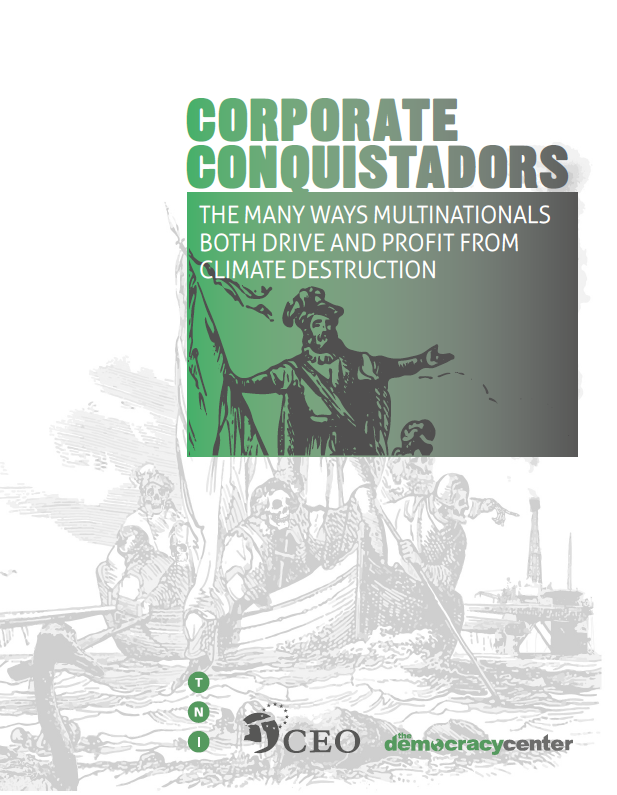 Multinational corporations are relentlessly expanding their operations into ever more vulnerable and remote regions of the planet. As they do so they both drive the climate crisis and exacerbate its impacts. They bear responsibility for a global crisis which affects us all, and they bring social and environmental destruction to the local communities where they operate. A further legacy of their oil drilling, industrial mining and mega hydroelectric projects is the erosion of those communities’ resilience just as the impacts of climate change begin to take effect. These same multinationals are also the biggest barrier to meaningful action on climate change, blocking urgently needed regulations and genuine transformational solutions.
The Fine Print I:
Disclaimer: The views expressed on this site are not the official position of the IWW (or even the IWW’s EUC) unless otherwise indicated and do not necessarily represent the views of anyone but the author’s, nor should it be assumed that any of these authors automatically support the IWW or endorse any of its positions.
Further: the inclusion of a link on our site (other than the link to the main IWW site) does not imply endorsement by or an alliance with the IWW. These sites have been chosen by our members due to their perceived relevance to the IWW EUC and are included here for informational purposes only. If you have any suggestions or comments on any of the links included (or not included) above, please contact us.
The Fine Print II:
Fair Use Notice: The material on this site is provided for educational and informational purposes. It may contain copyrighted material the use of which has not always been specifically authorized by the copyright owner. It is being made available in an effort to advance the understanding of scientific, environmental, economic, social justice and human rights issues etc.
It is believed that this constitutes a 'fair use' of any such copyrighted material as provided for in section 107 of the US Copyright Law. In accordance with Title 17 U.S.C. Section 107, the material on this site is distributed without profit to those who have an interest in using the included information for research and educational purposes. If you wish to use copyrighted material from this site for purposes of your own that go beyond 'fair use', you must obtain permission from the copyright owner. The information on this site does not constitute legal or technical advice.
 This site is not the official webpage of the Industrial Workers of the World.