You are here

climate change

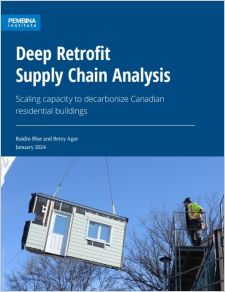
Deep Retrofit Supply Chain Analysis

By Raidin Blue and Betsy Agar - Pembina Institute, January 17, 2024

Canada’s buildings sector is the third-largest contributor to the country’s emissions at 87 Mt CO2e. That’s 13% of the total. Retrofitting existing buildings is the only climate action that can both drive down emissions and protect Canadians from weather events that are increasing in severity and frequency as our climate changes.

A deep retrofit goes beyond simple renovations, encompassing upgrades to various building systems and equipment, including the envelope, HVAC, lighting and building controls. Retrofits could also integrate renewable energy systems to enhance sustainability by reducing reliance on grid electricity, especially while Canada’s electricity grid continues to decarbonize, thus freeing up grid capacity to enable electrification of other sectors of the economy.

Work on retrofits needs to go deeper and scale up until 4% to 6% of Canada’s building stock is being decarbonized yearly if we are to meet our 2050 decarbonization goals. Investment in retrofitting is an investment in local economies and jobs, and an opportunity to grow the workforce by improving access to equity-deserving groups. The research in this report aims to support the supply chain needed to make these deep retrofits happen.

Recommendations

  • Recommendation 1: Provide market certainty by implementing regulations that require deep building decarbonization.
  • Recommendation 2: Drive demand by clarifying the benefits of deep retrofits, helping to build trust in industry, and helping reduce complexity.
  • Recommendation 3: Work with utilities and other levels of government to increase grants and incentives to help reduce the high cost of innovative, low-carbon technologies used in deep retrofits that is holding back market growth.
  • Recommendation 4: Foster a more inclusive industry culture and practice by raising awareness and removing barriers to access for equity-deserving groups, and by requiring the employment of equity-deserving groups.

Download a copy of this publication here (PDF).

Renewable Energy is (Mostly) Green and Not Inherently Capitalist, Volume 1: Wind Power (REVISED)

By That Green Union Guy - IWW Eco Union Caucus, Revised January 16, 2024

Is renewable energy actually green? Are wind, solar, and storage infrastructure projects a climate and/or envi­ronmental solution or are they just feel-good, greenwashing, false "solutions" that either perpetuate the deep­ening climate and environmental crisis or just represent further extractivism by the capitalist class and the privileged Global North at the expense of front-line communities and the Global South? 

This document argues that, while there is no guarantee that renewable energy projects will ultimately be truly "green", there is nothing inherent in the technology itself that precludes them from being so. Ultimately the "green"-ness of the project depends on the level of rank-and-file, democratic, front-line community and working-class grassroots power with the orga­nized leverage to counter the forces that would use renewable energy to perpetuate the capitalist, colonialist, extractivist system that created the cli­mate and environmental crisis in which we find ourselves.

In‌ order to do that, we mustn't fall prey to the misconceptions and inaccuracies that paint renewable energy infrastructure projects as inherently anti-green. This series attempts to do just that. This first Volume, on utility scale wind power addresses several arguments made against it, including (but not limited to) the following misconceptions:

  • Humanity must abandon electricity completely;
  • Degrowth is the only solution;
  • New wind developments only expand overall consumption;
  • Wind power is unreliable and intermittent;
  • Wind power is just another form of "green" capitalism;
  • The extraction of resources necessary to build wind power negates any of their alleged green benefits;
  • Wind power is an extinction-level event threat to birds, bats, whales, and other wildlife (and possibly humans);
  • Only locally distributed renewable energy arrayed in microgrids should be built without any--even a small percentage--of utility scale wind developments;
  • Only nationalized and/or state-owned utility scale renewable energy developments should be built;
  • No wind power developments will be green unless we first organize a socialist revolution, because eve­rything else represents misplaced faith in capitalist market forces.

In fact, none of the above arguments are automatically true (and the majority are almost completely untrue). However, they're often repeated, sometimes ignorantly, but not too infrequently in bad faith. This document is offered as an inoculation and antidote to these misconceptions and misinformation.

Download a copy of this publication here (PDF).

Jeremy Brecher on How Labor and Climate Movements Build Power from Below

By Bob Buzzcanco, Scott Parkin, and Jeremey Brecher - Labor Network for Sustainability, January 14, 2023

In the latest Green and Red Podcast, Bob and Scott talk with author, labor historian and activist Jeremy Brecher who’s been engaged at the intersection of labor, the environment, and the climate for decades. Over 50 years ago, Jeremy authored “Strike,” a labor history classic. And then more recently he’s worked at the intersection of the labor and climate movements. We talk with Jeremy about strikes, unions, and union leadership since he first published “Strike;” the recent “Hot Labor Summer” of 2023; the labor-climate movements and much more.

Jeremy Brecher is a writer, historian, and activist who is the author of more than a dozen books on labor and social movements. His works include the labor history classic “Strike” and “Against Doom: A Climate Insurgency Manual.” Jeremy is also a Senior Advisor for the Labor Network for Sustainability.

Peasants at the frontline of the climate struggle share testimonies

By Jang Su-ji - La Via Campesina, January 10, 2024

Peasants around the globe find themselves at the forefront of the intensifying climate crisis, grappling with scorching droughts, heatwaves, torrential downpours, typhoons, and hailstorms. The adverse impacts of climate change is escalating rapidly, posing a direct threat to agriculture and food production worldwide. The 8th International Conference of La Via Campesina, held in Bogotá, Colombia, in December, provided a space for its members – small-holder farmers from more than 80 countries – to highlight the ongoing crises in their territories.

Chilean beekeepers, who spoke during the meeting, explained how they were among those who bore the brunt of this crisis. Extreme droughts had ignited forest fires, wreaking havoc on their livelihoods. In Turkey, according to peasant accounts, agricultural production plummeted by 50-60% in 2023 due to climate change effects, and the government’s responses, such as investing in solar panels on farmland and promoting electric vehicles, faced criticism for their inadequacy and unintended consequences – as they often came up on greenfield and fertile lands. In Sri Lanka, floods and droughts regularly disrupt farming, exacerbated by the government’s sale of natural resources to multinational corporations, leading to deforestation and hindering tea cultivation. Cambodian peasants explained how they grapple with the fallout of repeated typhoons, floods, and severe droughts, causing a 30% decline in agricultural production and forcing rural youth to migrate, jeopardizing food security.

Senegalese peasants also shared about their challenges. Fisherfolk and farmers are losing jobs due to flooding, prompting calls for international prosecution of transnational corporations responsible for climate impacts. Guatemalan peasants recounted how they are combating water resource depletion and forest loss, promoting agroecological farming to respond to climate change. Paraguayan peasants, facing deforestation and fires, are also advocating for agroecology as a solution. Those who came from Niger shared their experiences of severe food crises due to temperature increases, drought, and flooding, emphasizing the need to reduce carbon emissions and produce locally accessible agricultural products.

In Palestine, the combination of war and occupation accelerated climate change, diminishing agricultural production and food sovereignty. Palestinian peasants confront the accelerated impact of climate change under Israeli occupation, with olive trees being cut down, water resources seized, and high water prices imposed.

The Korean peasants who spoke at the Conference urged global unity against capitalist forces and multinational corporations to address the social and environmental aspects of the climate crisis. They also reflected on the global impact of the climate crisis, highlighting unpredictable losses for farmers and advocating against agrochemicals. This found echo among the French peasants who also called for international solidarity, prioritizing agroecology, and exposing false solutions and colonialist land grabs. Brazilian peasants who spoke at the event decried transnational corporations exploiting land and people, emphasizing the importance of concrete proposals and alternative solutions.

Congolese peasants asserted that the fight against climate change was a collective struggle, emphasizing biodiversity conservation and ecological agriculture for healthy food and planet protection. Honduran peasants stressed the importance of supporting agroecology schools and international aid to combat climate change. Peasants in the Dominican Republic emphasized the need to mobilize against neoliberal policies, capitalism, and imperialism in both rural and urban areas, advocating for large-scale campaigns to shift to ecological agriculture and achieve food sovereignty.

These testimonies of peasants worldwide revealed a shared struggle against the escalating climate crisis. From South America to Asia and Africa, the call for sustainable alternatives, such as agroecology, and the denouncement of inadequate responses and corporate exploitation echoed a united plea for global action to safeguard the future of agriculture and food production.

Remining for the Energy Transition

By Ann S. Maest - Earthworks, January 9, 2024

In this report, Earthworks, Transport and Environment, and Earthjustice highlight the potential of remining to help meet the increasing demand for transition minerals. However, further study and stronger regulations are necessary before this new innovation can support a safe, just, and sustainable clean energy transition.

Developed to assist policy makers and technical experts in initiating discussions with environmental and human rights leaders, as well as representatives of impacted communities, “Remining for the Energy Transition” dissects what is known and unknown about remining today: how renewable energy minerals can be recovered from mine waste deposits, its possible benefits and dangers, and practices that best reinforce gains and mitigate risks.

Remining mine waste is touted as an alternative to virgin extraction for its promise to deliver better community, conservation, and climate outcomes.

But is remining the silver bullet many deem it to be? 

This report highlights its potential to meet some of the demand for transition minerals. Remined cobalt, for example, could power more than 185,000 electric vehicles. However, more work is still needed to ensure remining is safe and sustainable for people, communities, and our planet.

Download a copy of this publication here (PDF).

Big Oil's Dark Money Ad Campaign Exposed

By Staff - Center for Biological Diversity, January 8, 2024

This is an ongoing pillar of the fossil fuel industry’s playbook in California: front groups organized and funded by the oil companies masquerade as “broad coalitions” of concerned citizens and business representatives but are functionally opaque entities with a single mission: furthering the oil and gas industry’s agenda in the state.

Usually organized as 501(c)(4) nonprofits (“social welfare organizations”), such groups are referred to as “dark money” because they’re able to spend money on certain types of campaigns without revealing their donors. Under California law, these types of groups are legally permitted to spend funds on “issue advocacy” campaigns without revealing their donors.

Because these “issue advocacy” campaigns don’t explicitly advocate for or against ballot measures or referenda, millions of dollars can be spent to subtly influence voters without disclosing the true funders behind the messaging campaign. Because of the lack of donor disclosure, we refer to these groups as “dark money groups.”

This report profiles three such groups that have been actively pushing an oil industry ad campaign to promote anti-SB1137 talking points (higher gas prices, losing good jobs, foreign oil); all three track back to the California Independent Petroleum Association (CIPA) and to the Western States Petroleum Association (WSPA), the top lobbyist for the oil industry in the western United States.

Download a copy of this publication here (link).

Turner heat study finds workers at risk even on ‘cooler’ summer days

By Zachary Phillips - Constructive Dive, January 4, 2024

Dive Brief:

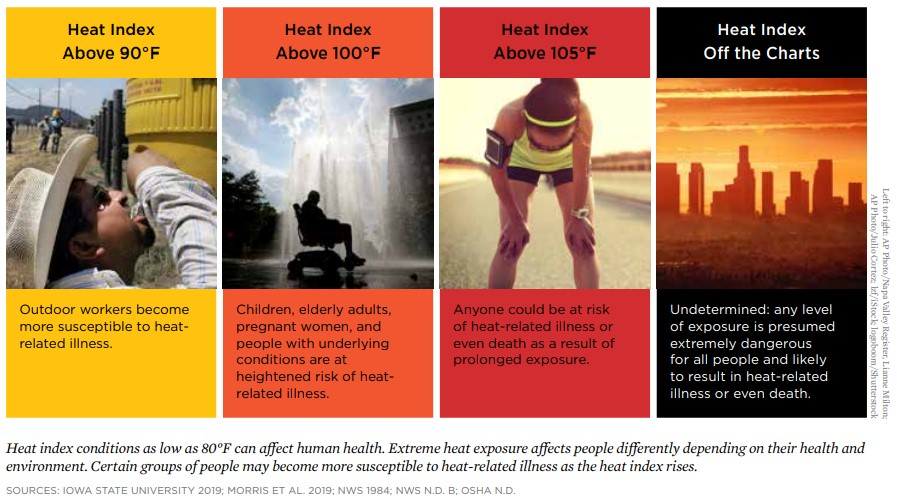
  • A study looking at the effects of working outside in hot weather by New York City-based Turner Construction discovered many workers’ core body temperatures reached risky levels even on moderate summer days.
  • The heat pilot study, conducted over three days last summer with an average peak temperature of 88 degrees Fahrenheit, found that 43% of the 33 workers monitored had core temperatures reach over 100.4 F, even in “cooler than typical summer conditions.” OSHA lists 100.4 F as the benchmark for an elevated risk of heat stress.
  • In partnership with the University of New Mexico, Indiana University and La Isla Network — an Alpharetta, Georgia-based organization researching the effects of heat on workers — the study was designed to better understand how increased temperatures affect jobsite safety.

What’s Next for the Teamsters?

How Green New Deal from Below Programs Integrate Climate, Jobs, and Justice

By Jeremy Brecher - Labor Network for Sustainability, January 3, 2024

The appeal of the Green New Deal lies in its drawing together the varied needs of diverse constituencies into a common program that realizes them all. Here’s how that works at the sub-national level.

Heat Waves and Wildcat Strikes

By Jeff Shantz - LibCom, January 4, 2024

Green syndicalism puts the connectedness of ecological crises and crises of working-class life at the center of analysis—as outcomes of capitalism. It emphasizes ways in which exploitation of labor and the exploitation of nature go hand in hand and develop together. It also centers the importance of working-class resistance in ending the capitalist social system that causes, and thrives on, both.

Climate crises, which have moved beyond crisis to pose an existential threat to numerous life forms on the planet, disproportionately impact the working class—especially the poorest, most precarious, racialized sectors of the working class globally. Appropriately, heat waves have become a focus of labor action in a range of industries.

According to data from the US Bureau of Labor Statistics, 53 workers died in the US due to temperature extremes in 2019, and the climate crisis is creating more, and new, hazardous conditions for workers, as heat waves, heat domes, and extreme heat become more regular and extensive. Between 1992 and 2017, heat stress killed 815 US workers while seriously injuring more than 70,000. Extreme heat kills more people each year than floods, hurricanes, and tornadoes, all of which are also becoming more frequent, in the US, according to the National Weather Service. On the whole, about 700 people die from heat-related illnesses each year. And the situation is only getting worse.

The number of “hot days” recorded in the United States has been increasing over decades. The 2018 National Climate Assessment, a major scientific report by 13 federal agencies, found that the frequency of heat waves increased from an average of two per year in the 1960s to six per year by the 2010s. It is not only the frequency of heat waves that is increasing, but the duration of each heat wave. The National Climate Assessment concluded that the season for heat waves is now a full 45 days longer than it was in the 1960s.

The impacts of capitalist climate crises, which disproportionately harm working class people, impel new strategies and tactics for working class organizing, as well as novel deployments of tried-and-true actions—such as wildcat strikes. Notably, we are seeing a revival of walkouts and wildcats against unsafe and unhealthy working conditions in the context of heat waves and heat domes, especially as these become more intense and more frequent.

Pages

The Fine Print I:

Disclaimer: The views expressed on this site are not the official position of the IWW (or even the IWW’s EUC) unless otherwise indicated and do not necessarily represent the views of anyone but the author’s, nor should it be assumed that any of these authors automatically support the IWW or endorse any of its positions.

Further: the inclusion of a link on our site (other than the link to the main IWW site) does not imply endorsement by or an alliance with the IWW. These sites have been chosen by our members due to their perceived relevance to the IWW EUC and are included here for informational purposes only. If you have any suggestions or comments on any of the links included (or not included) above, please contact us.

The Fine Print II:

Fair Use Notice: The material on this site is provided for educational and informational purposes. It may contain copyrighted material the use of which has not always been specifically authorized by the copyright owner. It is being made available in an effort to advance the understanding of scientific, environmental, economic, social justice and human rights issues etc.

It is believed that this constitutes a 'fair use' of any such copyrighted material as provided for in section 107 of the US Copyright Law. In accordance with Title 17 U.S.C. Section 107, the material on this site is distributed without profit to those who have an interest in using the included information for research and educational purposes. If you wish to use copyrighted material from this site for purposes of your own that go beyond 'fair use', you must obtain permission from the copyright owner. The information on this site does not constitute legal or technical advice.