You are here
E1. Indigenous
Summit Gathers Indigenous and Local Communities to Save Peatlands in Thunder Bay
Living Peatlands Gathering in Thunder Bay, Ontario, October 3 to 5, 2026 brings delegates from the South Pacific, Aotearoa, Canada, Finland, Alaska, the UK, California and other geographies to gather and discuss the urgency of protection and restoration of peatlands as a part of the Snowchange Climate Breakthrough Initiative.
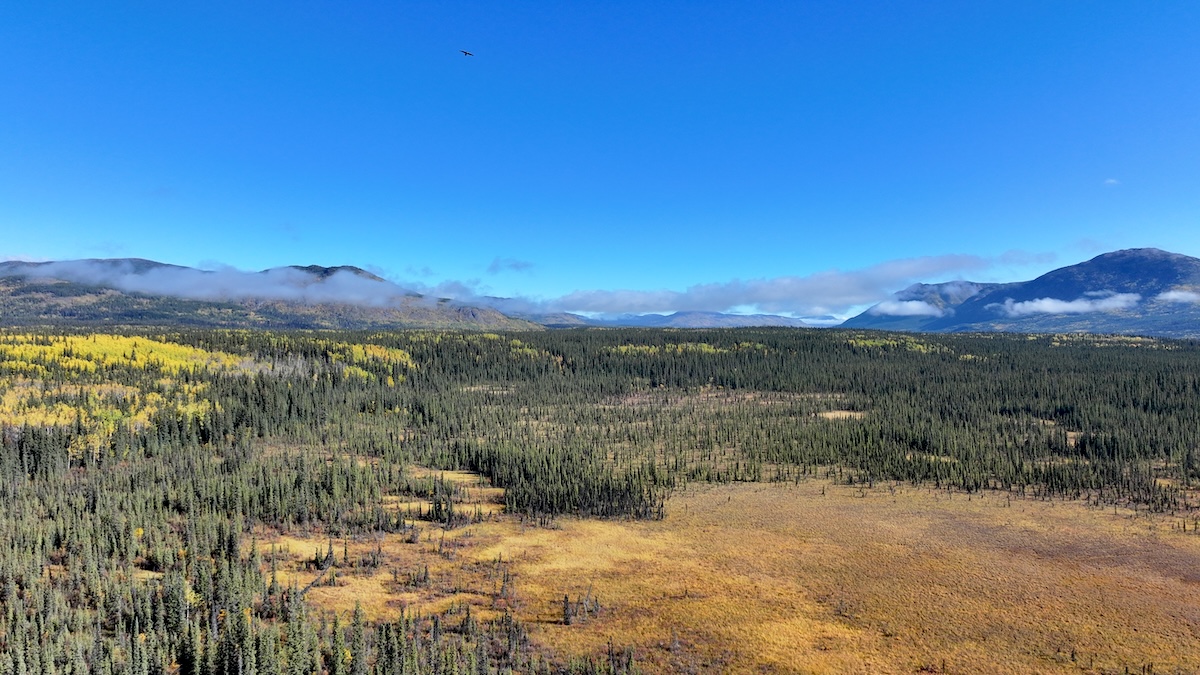
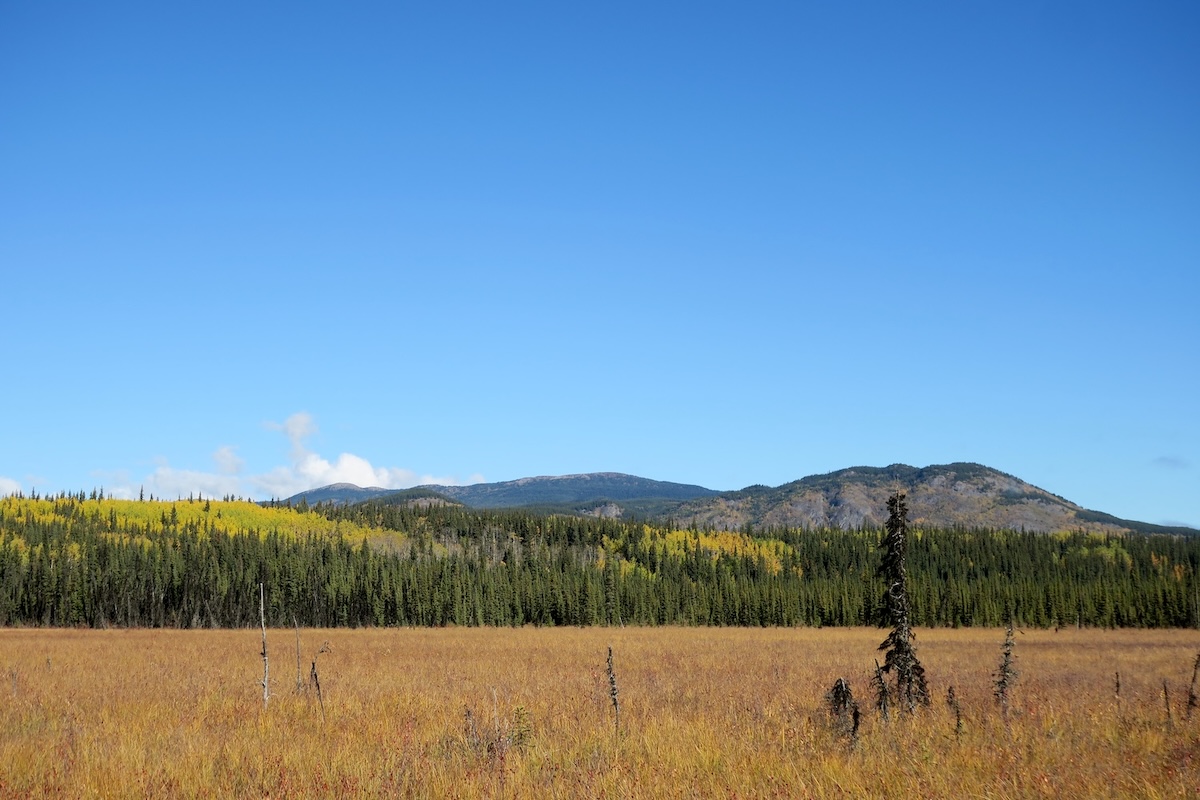
Tahltan peatland at 30 mile, BCWe’ll learn about important methods and approaches to peatland and wetland conservation and restoration from across the Living Peatlands Initiative network. We hope to not only learn from each other, but also to identify ways to deepen coordination to support healthy peatlands and wetlands across the circumpolar region and worldwide.
In 2024, Snowchange Cooperative received a Climate Breakthrough Initiative Award to expand on its successful peatland restoration work in Finland through a circumpolar and circumboreal network.
This network connects local efforts and action to conserve and restore peatlands by supporting the work of hubs in Canada, northern MN, northern Europe, and the Pacific. By linking these hubs, Snowchange aims to foster knowledge sharing, strengthen Indigenous and local governance, and protect and restore peatlands to preserve or renew their healthy ecosystem function.
In 2025, the first Living Peatland hubs in northern MN (Sax Zim Bog) and northern Canada (Gwich’in settlement area) were announced and an exchange visit was held in Finland, where representatives from North America learned about Snowchange’s approach to peatland restoration.
In 2026, we have been broadening connections, developing a website and communication campaign, and deepening discussions in anticipation of the gathering in Thunder Bay.
We will report the results from the gathering in October and look forwards to all delegations to Thunder Bay!
30-mile peatland, BCProtecting the Record: Indian Residential School Litigation and the Right to Truth
The most comprehensive archive that exists of Survivor testimony is set to be destroyed next year … .and a lot of people don’t know that these records are about to be destroyed1. – Connie Walker
CANADIANS AND INDIGENOUS PEOPLE alike, have the right to know the truth about what happened at Indian Residential Schools. This right to know the truth is an internationally recognized legal right for victims, families, affected communities and society as a whole. The right to know the truth places a corresponding obligation on the state to protect the truth. Yet, in Canada, this is not the case. In 2017, a Supreme Court ruling authorized the destruction of 38,000 Indian Residential School Survivor’s records, including their testimonies2. This destruction is set to occur after September 19, 2027. To circumvent the destruction of their records and testimonies, Survivors can provide consent to have their files transferred to the National Centre for Truth and Reconciliation (NCTR) – an archive housed at the University of Manitoba3. But this process has not been made clear to Survivors and only a small fraction have done so.
How, then, do we protect the right to truth?
Confidentiality and theIndependent Assessment Process
As part of the Indian Residential School Settlement Agreement, the Independent Assessment Process (IAP)4 was created; an adjudicative process whereby Survivors who had experienced sexual or physical abuse, or any other wrongful acts that resulted in serious psychological consequences, could seek redress. As part of this process, more than 38,000 Survivors participated, providing documentary and oral evidence about the abuses they endured, largely at the hands of those in charge of their care. Prior to testifying at their hearings, Survivors were promised confidentiality over what they shared. This promise of confidentiality was later interpreted by the courts to mean that their records and testimonies should be destroyed, unless Survivors choose to preserve them at the NCTR. Contained in these records and testimonies are individual and collective truths about: the extent and nature of physical and sexual abuse5 perpetrated on children; the names of perpetrators and officials that permitted these abuses to occur; in depth first-hand accounts of the daily occurrences of neglect, cruelty and wrongdoings within the institutions, and possibly the deaths and burials of the children that died. All these truths are evidence of the genocide and crimes against humanity, that today, a growing group of Canadians deny occurred.
Following the Supreme Court decision in 2017, the records and testimonies of Survivors were to be retained for a specified number of years to allow for the development and implementation of a notice program to advise Survivors of their rights regarding their IAP records and testimony.
To date, less than 100 files have been transferred to the NCTR, raising questions regarding the adequacy and effectiveness of the court-monitored notice program. Protecting the TruthSince the Supreme Court of Canada decision, new information continues to emerge about missing and disappeared Indigenous children, unmarked graves and burial sites. In my report as Independent Special Interlocutor for Missing Children and Unmarked Graves and Burial Sites Associated with Indian Residential Schools6, I expressed my concerns that Canada is failing to comply with its international obligations by allowing the impending destruction of the IAP records to occur. This concern was echoed by the Permanent People’s Tribunal7 and several First Nations leaders across Canada have also called for a postponement of the destruction to allow for a more robust, accessible, and Indigenous-led notice program8.
For years prior to the signing of the Indian Residential Schools Settlement Agreement (IRSSA)9, thousands of lawsuits were filed against the federal government and the church entities that operated the institutions. These lawsuits were filed in courts across the country, in every province and territory and most were finally resolved through the national IRSSA. These court files contain documents such as statements of claim and defence, transcripts of testimony in civil and criminal trials, affidavits of Survivors, and expert reports – all of which shed further light on what occurred behind the closed doors of Indian Residential Schools. These records are also evidence of Survivor resistance and agency. They are public (unless the court issued a sealing order) and are stored within court records centres until they will be destroyed, pursuant to provincial and territorial government disposition policies.
The Indian Residential Schools Records ProjectWith support from the Law Foundation of Ontario (LFO),the Social Sciences and Humanities Research Council (SSHRC), and Yellowhead Institute, the Indian Residential School Records Project: Legal and Investigative Research for Justice (IRSRP) is a response to the need to protect the truth. Co-led by Pulitzer Prize-winning Cree journalist Connie Walker and Mohawk Lawyer, Kimberly Murray, the project responds to the pending destruction of the thousands of Survivor’s records and testimonies .
The project is a continuation of the work that Connie Walker undertook in Stolen: Surviving St. Michael’s10, an investigative podcast exploring the Indian Residential School where her father was taken in Duck Lake, Saskatchewan. During Connie’s investigation, she was able to access over 400 statements of claim that revealed important truths of Survivors.
The IRSRP has two interrelated goals. The first is to find, gather, and protect the thousands of lawsuits filed by Survivors against the federal government and church entities across the country to create an Indigenous-led archive. This archive will support Indigenous Peoples’ efforts to obtain accountability, further Indigenous data sovereignty, and breathe life into the United Nations Declaration on the Rights of Indigenous Peoples’ rights to truth, justice, redress, access to information, and the right to maintain, control, and protect their knowledge and historical records. The second is to produce an investigative national podcast to help raise awareness about and inform Survivors, their families and Indigenous communities of the pending destruction of 38,000 accounts of abuse collected through the Independent Assessment Process and of Survivors’ rights to have their records preserved at the NCTR.
The IRSRP will be a five-year investigation, and will work closely with Survivors, their families and communities.
Combatting DenialismThe scheduled destruction of IAP records is occurring while Indian Residential School denialism is on the rise. In my Final Report as the Independent Special Interlocutor for Missing Children and Unmarked Graves, it is pointed out that:
It is not the existence of the Indian Residential School System that is being denied: it is the intent, outcomes, and impacts of that System.
Denialism relies on rejecting or misrepresenting the well-established facts about the Indian Residential School System. It relies on the techniques of historical research and analysis and falsely presents itself as a correction of the historical record.
Denialism is not a simple misunderstanding of the facts; whether consciously or unconsciously, denialists are working towards the accomplishment of psychological, practical, or political goals.
Indian Residential School denialism must be taken seriously because it puts at risk the important work of truth and reconciliation. It should not be dismissed as a harmless fringe phenomenon.11
When people dispute documented histories of abuse, question Survivors’ accounts, or demand documentary proof while records containing that proof are being destroyed, protecting whatever we can becomes especially urgent. The Truth and Reconciliation Commission wrote that there was an urgent need to develop “historically literate citizens who understand why and how the past is relevant to their own lives and the future of the country”12 while “examin(ing) concrete examples of historical injustice to learn from the past in order to prevent repetition in the present and future.”13 This, along with the preservation of records, can combat denialism.
ConclusionThe Indian Residential School Records Project: Legal and Investigative Research for Justice (IRSRP) and its efforts to preserve Indian Residential School litigation records and testimonies cannot replace the Survivors’ accounts that will be destroyed with the IAP records. But it can ensure that another significant body of Survivors’ truths is not also lost.
The lawsuits filed by Survivors are more than court records. They not only document what happened inside Indian Residentials Schools, but they also document Survivor resistance.Long before the Settlement Agreement was reached, Survivors went to court, told their truths, named those responsible, demanded accountability, and forced the government and churches to respond. Protecting these records is more than preserving evidence. It is about protecting the historical record created by Survivors themselves and ensuring that Survivors, families, Indigenous Nations and future generations can continue to access these truths. As September 2027 approaches, we must ask ourselves, what truths must we protect to ensure that the gross violations of human rights and other atrocities that occurred against Indigenous children never happen again?
Learn more.Register today for our September 30th event, The Right To Truth: Protecting Indian Residential School Records (in-person & online) featuring Kimberly Murray, Connie Walker, Marie Wilson and Stephen Kakfwi.
Endnotes1Testimony of Connie Walker before the Permanent Peoples Tribunal on Missing and Disappeared Indigenous Children and Unmarked Graves in Canada, May 27, 2026.
2Canada (Attorney General) v. Fontaine, 2017 SCC 47, [2017] 2 S.C.R. 205
3National Centre for Truth and Reconciliation. “IAP/ADR Records.” 2026. https://nctr.ca/archives-and-collections/iap-adr-records/
4Indian Residential School Settlement. “Court Official Notice.” n.d. https://www.residentialschoolsettlement.ca/settlement.html; Indian Residential Schools Adjudication Secretariat. “The IAP Story.” n.d. https://www.iap-pei.ca/story-eng.php.
5Indian Residential Schools Adjudication Secretariat. “The IAP Story.” n.d. https://www.iap-pei.ca/story-eng.php; National Centre for Truth and Reconciliation. “IAP/ADR Records.” 2026. https://nctr.ca/archives-and-collections/iap-adr-records.
6Office of the Independent Special Interlocutor for Missing Children and Unmarked Graves and Burial Sites Associated with Indian Residential Schools. Sacred Responsibility: Searching for the Missing Children and Unmarked Burials, Interim Report Findings June 2023. https://osi-bis.ca/wp-content/uploads/2023/07/OSI_InterimReport_FINDINGS_June-2023_web.pdf. ; Office of the Independent Special Interlocutor for Missing Children and Unmarked Graves and Burial Sites Associated with Indian Residential Schools. Final Report October 2024. https://osi-bis.ca/report/final-report-october-2024-2/.
7Permanent People’s Tribunal. “PPT Preliminary Statement: 57th Session on Missing and Disappeared Indigenous Children and Unmarked Graves in Canada.” May 31, 2026. https://permanentpeoplestribunal.org/ppt-preliminary-declaration-57th-session-on-missing-and-disappeared-children-and-unmarked-graves-in-canada/?lang=en.
8https://www.cbc.ca/news/indigenous/petition-residential-school-files-9.7114976
9Explain plaintiffs could opt out of IRSSA and continue their actions.
10Walker, Connie. 2024. “Stolen: Surviving St. Michael’s.” Gimlet Media. https://open.spotify.com/episode/2BllRP1ZQRKq2lxfpLUhzA.
11Upholding Sacred Obligation: Reparations for Missing and Disappeared Indigenous Children and Unmarked Burials in Canada, v 2, p. 1099. (Office of the Independent Special Interlocutor for Missing Children and Unmarked Graves and Burial Sites Associated with Indian Residential Schools, 2024)
12TRC Reconciliation Volume p. 137.
13Upholding Sacred Obligations, p.1098.
Citation:
Murray, Kimberly. “Protecting the Record: Indian Residential School Litigation and the Right to Truth,” Yellowhead Institute. Sept 17 2026. https://yellowheadinstitute.org/2026/protecting-the-record-indian-residential-school-litigation-and-the-right-to-truth
Photo by Yumi Numata
The post Protecting the Record: Indian Residential School Litigation and the Right to Truth appeared first on Yellowhead Institute.
The Fine Print I:
Disclaimer: The views expressed on this site are not the official position of the IWW (or even the IWW’s EUC) unless otherwise indicated and do not necessarily represent the views of anyone but the author’s, nor should it be assumed that any of these authors automatically support the IWW or endorse any of its positions.
Further: the inclusion of a link on our site (other than the link to the main IWW site) does not imply endorsement by or an alliance with the IWW. These sites have been chosen by our members due to their perceived relevance to the IWW EUC and are included here for informational purposes only. If you have any suggestions or comments on any of the links included (or not included) above, please contact us.
The Fine Print II:
Fair Use Notice: The material on this site is provided for educational and informational purposes. It may contain copyrighted material the use of which has not always been specifically authorized by the copyright owner. It is being made available in an effort to advance the understanding of scientific, environmental, economic, social justice and human rights issues etc.
It is believed that this constitutes a 'fair use' of any such copyrighted material as provided for in section 107 of the US Copyright Law. In accordance with Title 17 U.S.C. Section 107, the material on this site is distributed without profit to those who have an interest in using the included information for research and educational purposes. If you wish to use copyrighted material from this site for purposes of your own that go beyond 'fair use', you must obtain permission from the copyright owner. The information on this site does not constitute legal or technical advice.
 This site is not the official webpage of the Industrial Workers of the World.