You are here

extractivism

Unifor Calls for National Moratorium on Fracking

By Staff - Unifor, November 14, 2013

Disclaimer - Unifor is not affiliated with the IWW. This statement is posted here for information purposes only.

Unifor, Canada's largest energy union, is calling for a Canada-wide moratorium on all new oil and gas fracking. Already the provinces of Quebec and Newfoundland and Labrador have introduced moratoriums on fracking. Nova Scotia has banned fracking while undertaking a review. Unifor is now pushing for a national moratorium.

Unifor is raising concerns about the safety and environmental risks associated with fracking as well as the lack of informed consent by First Nations about fracking activities on traditional lands.

In the statement unanimously passed by the 25-person Unifor National Executive Board, the union expressed support for the non-violent protest efforts by First Nations to resist fracking activity on their lands. The Unifor National Executive Board is made up of elected representatives  from across the country and a variety of economic sectors, including energy.  

“Unconventional gas fracking has the potential to have catastrophic effects on our environment and economy. The safety risks are also a major concern for our union,” said Unifor National President Jerry Dias.  “Just because we can carry out this activity does not mean we should. We must enact a national moratorium on fracking activity.”  

Dias also noted that it would be folly for Canada to reorient our entire energy infrastructure around a short-term surge in an unsustainable energy supply.

From the statement:

“Any resource extraction industry in Canada must confront the problem of unresolved aboriginal land claims, and the inadequate economic benefits (including employment opportunities) which have been offered to First Nations communities from resource developments.  This problem is especially acute with fracking because of the widespread land which would be affected by the activity, and the heated, profit-hungry rush which the industry is set to quickly unleash.  Many Canadians share these concerns with the potential economic, social, and environmental damage of an unregulated fracking industry. 

Instead of being guided by short-term swings in prices and profits for private energy producers, Canada’s federal and provincial governments must develop and implement (in cooperation with other stakeholders) a national plan for a stable, sustainable energy industry that respects our social and environmental commitments, and generates lasting wealth for all who live here.”

Read the resolution (PDF)

South Africa’s Untold Tragedy of Neoliberal Apartheid

By Jérôme Roos - Notes toward an International Libertarian Eco-Socialism, November 12, 2013

Disclaimer: The views expressed here are not the official position of the IWW (or even the IWW’s EUC) and do not necessarily represent the views of anyone but the author’s.

Author's Introduction: In light of the recent death of Nelson Mandela, the “father” of post-Apartheid South Africa, I am reposting this excellent reflection by Jérôme E. Roos on a recent trip to the country.  The essay was originally published in Reflections on a Revolution (ROAR) on 12 November 2013.

Twenty years after apartheid, the old freedom fighters of the ANC have come to reproduce the same structures of oppression against which they once arose.

We were driving down the N3 highway on our way back home from the Eastern port city of Durban, passing by the endless lines of improvised shacks that constitute the Katlehong township just outside Johannesburg, when we saw the flashing blue lights of a police car in the distance. As we approached, a horrific scene revealed itself. A local slumdweller, probably somewhere in his thirties, lay dead on the side of the road, his body awkwardly twisted into an impossible position, his eyes still wide open. Some two hundred meters ahead, a car had pulled over on the curb, its driver casually leaning on the vehicle while talking to a policeman. No one had even bothered to cover up the body. This man just lay there like a dead animal — another road kill in endless wave of needlessly extinguished lives.

Every year, more than 14.000 people are killed on the road in South Africa, an average of 38 per day — nearly half of whom are pedestrians. Of the other half, many die as overloaded buses, micro-vans or so-called bakkies crash during the daily commute from the townships to the city to work as waiters, clerks or house maids. Just today, a bus full of commuters slammed into a truck on a narrow and potholed road to Pretoria, killing 29. But in the aggregate, tragedies like these are only numbers in a cold statistical series. The front pages of the country’s newspapers remain splattered with horror stories and graphic photos of brutal killings, as fifty people are murdered daily. Another 770 people die from AIDS every day. A total of 5.7 million, or 18% of South Africans, is HIV/AID infected, the highest infection rate in the world. Needless to say, one of the bloody red lines that runs through the broken social fabric of this heartbreakingly beautiful country is that human life is accorded shockingly little value.

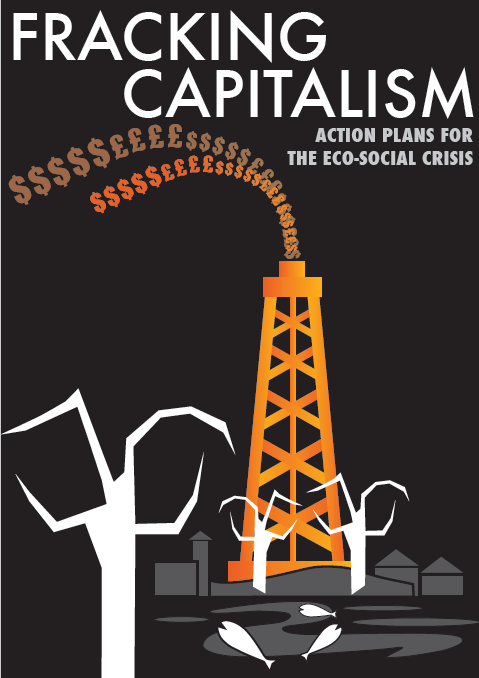
Fracking Capitalism: Action plans for the eco-social crisis

By staff - A World to Win, November 2013

The message has gone out to corporations everywhere: Britain is open for fracking. In response, campaign groups now exist the length and breadth of Britain in opposition to the plans to industrialise the countryside with tens of thousands of drilling sites. They are taking legal action, lobbying their representatives and protesting and occupying sites at considerable risk of police brutality.

But this grass roots movement is up against formidable adversaries. Corporations have the backing of the state and a public relations campaign led by the government is promoting the lie that fracking is safe and will lead to cheaper energy.

Yet public support for shale gas extraction continues to fall while backing for renewables grows. Government claims about jobs and lower gas prices are exposed for the grand deceptions they are. None of this will deter the Cameron government, however, which has thrown the weight of the state behind the frackers.

Read the report (Link).

Reinventing the Wheel - The Question of “Rare” Earths

By x356039 - June 26, 2013

Disclaimer: The views expressed here are not the official position of the IWW (or even the IWW’s EUC) and do not necessarily represent the views of anyone but the author’s.

Rare earths often have the same effect on a conversation on renewable energy as a bucket of cold water to the face. With China's near-total monopoly on their production and refinement coupled with their necessity for producing green energy technology such as wind turbines many see rare earths as a question of trading Saudi oil barons for Chinese mining magnates. Others decry the environmental damage done by the mining and refinement processes, arguing the cost outweighs any benefit from green energy. In the eyes of many the issue of rare earths makes solar and wind power dead ends, effectively short-circuiting any green energy revolution. Such preconceptions are based on incomplete, inaccurate, and insufficient reporting on the real story behind rare earths.

The Impact of Tar Sands Pipeline Spills on Employment and the Economy

By Lara Skinner and Sean Sweeney - Cornell University Global Labor Institute, March 2012
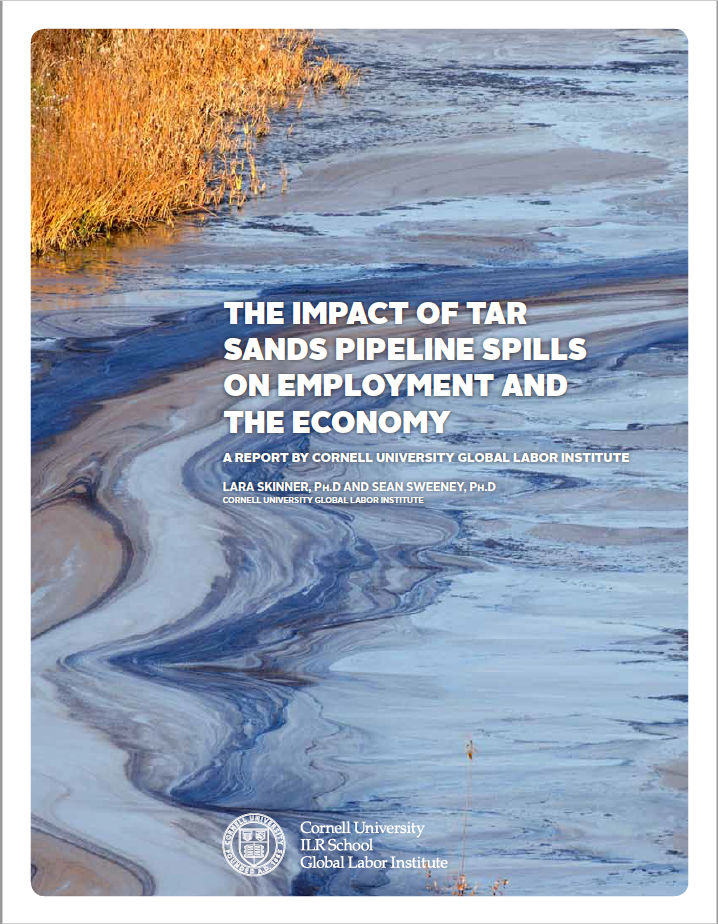
In debates over proposed tar sands pipelines such as the TransCanada corporation’s Keystone XL, little attention has been given to the potentially negative impacts of pipeline spills on employment and the economy. The proposed route for the 1,700-mile Keystone XL pipeline cuts through America’s agricultural heartland, where farming, ranching, and tourism are major employers and economic engines. Ground or surface water contamination from a tar sands oil spill in this region could inflict significant economic damage, causing workers to lose jobs, businesses to close, and residents to relocate. Such a spill could also negatively impact the health of residents and their communities.

A Closer Look at Keystone XL’s Threat to Existing Jobs and Economic Sectors:

» The negative impacts on employment and the economy of tar sands pipelines like the Keystone XL have largely been ignored. To date, a comprehensive risk assessment for the proposed Keystone XL pipeline oil spill has not been conducted. Such an assessment would provide an independent review of the risk of spills and their economic consequences. Since the first Keystone pipeline began operation in June 2010, at least 35 spills have occurred in the U.S. and Canada. In its first year, the spill frequency for Keystone’s U.S. segment was 100 times higher than TransCanada forecast.

» The Keystone XL pipeline would cut through America’s breadbasket. Agricultural land and rangeland comprise 79 percent of the land that would be affected by the proposed Keystone XL pipeline. It would cross more than 1,700 bodies of water, including the Missouri and Yellowstone rivers and the Ogallala and Carrizo-Wilcox aquifers. The Ogallala Aquifer alone supplies 30 percent of the groundwater used for irrigation in the U.S. It also supplies two million people with drinking water.

» Farming, ranching, and tourism are major sources of employment along the Keystone XL pipeline’s proposed route. Water contamination resulting from a Keystone XL spill, or the cumulative effect of spills over the lifetime of the pipeline, would have significant economic costs and could result in job loss in these sectors. Approximately 571,000 workers are directly employed in the agricultural sector in the six states along the Keystone XL corridor. Total agricultural output for these states is about $76 billion annually.

» Many of the land areas and bodies of water that Keystone XL will cross provide recreational opportunities vital to the tourism industry. Keystone XL would traverse 90.5 miles of recreation and special interest areas, including federal public lands, state
parks and forests, and national historic trails. About 780,000 workers are employed in the tourism sector in the states along the Keystone XL pipeline. Tourism spending in these states totaled more than $67 billion in 2009.

» Recent experience has demonstrated that tar sands spills pose additional dangers to the public and present special challenges in terms of clean up. There is strong evidence that tar sands pipeline spills occur more frequently than spills from pipelines carrying conventional crude oil because of the diluted bitumen’s toxic, corrosive, and heavy composition. Tar sands oil spills have the potential to be more damaging than conventional crude oil spills because they are more difficult and more costly to clean up, and because they have the potential to pose more serious health risks. Therefore both the frequency and particular nature of the spills have negative economic implications.

» The Kalamazoo River tar sands spill affected the health of hundreds of residents, displaced residents, hurt businesses, and caused a loss of jobs. The largest tar sands oil spill in the U.S. occurred on the Kalamazoo River in Michigan in 2010. This spill is the most expensive tar sands pipeline oil spill in U.S. history, with overall costs estimated at $725 million.

» The public debate around Keystone XL has focused almost exclusively on job creation from the project, yet existing jobs and economic sectors could suffer significantly from one or more spills from Keystone XL. According to the U.S. State Department, the six states along the pipeline route are expected to gain a total of 20 permanent pipeline operation jobs. Meanwhile, the agricultural and tourism sectors are already a major employer in these states. Potential job losses to these sectors resulting from one or more spills from Keystone XL could be considerable.

» Renewable energy provides a safer route to creating new jobs and a sustainable environment. The U.S. is leading the world in renewable energy investments, and employment in this sector has expanded in recent years. For every $1 million invested in renewable and clean energy, 16.7 jobs are created. By contrast, $1 million invested in fossil fuels generates 5.3 jobs.

Read the report (PDF).

Coal’s Assault on Human Health

By Alan H Lockwood, Kristen Welker-Hood, Molly Rauch, and Barbara Gottlieb - Physicians for Social Responsibility, November 2009

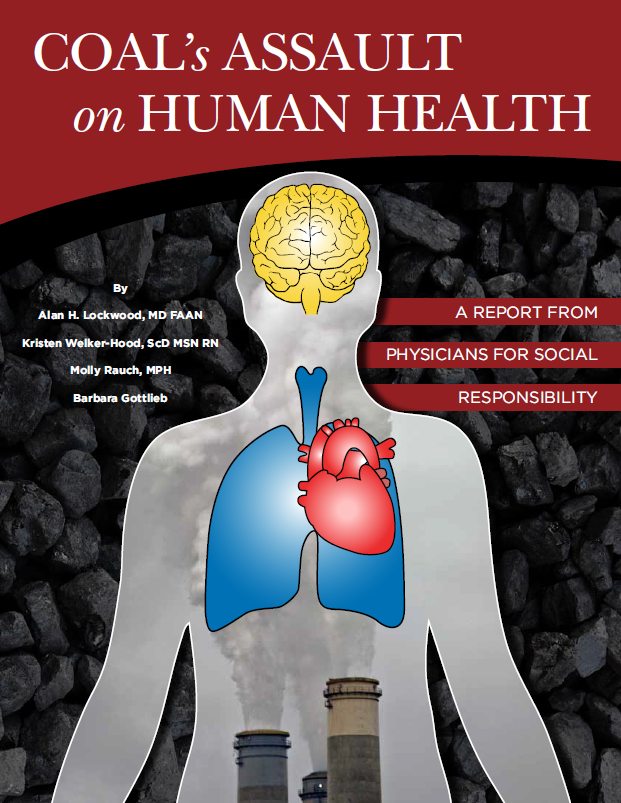
Coal pollutants affect all major body organ systems and contribute to four of the five leading causes of mortality in the U.S.: heart disease, cancer, stroke, and chronic lower respiratory diseases. This conclusion emerges from our reassessment of the widely recognized health threats from coal. Each step of the coal lifecycle—mining, transportation, washing, combustion, and disposing of postcombustion wastes—impacts human health. Coal combustion in particular contributes to diseases affecting large portions of the U.S. population, including asthma, lung cancer, heart disease, and stroke, compounding the major public health challenges of our time. It interferes with lung development, increases the risk of heart attacks, and compromises intellectual capacity.
Oxidative stress and inflammation are indicated as possible mechanisms in the exacerbation and development of many of the diseases under review. In addition, the report addresses another, less widely recognized health threat from coal: the contribution of coal combustion to global warming, and the current and predicted health effects of global warming.

Read the report (PDF).

Towards a Just and Sustainable Solar Energy Industry

Towards a Just and Sustainable Solar Energy Industry - A Silicon Valley Toxics Coalition White Paper, January 14, 2009.

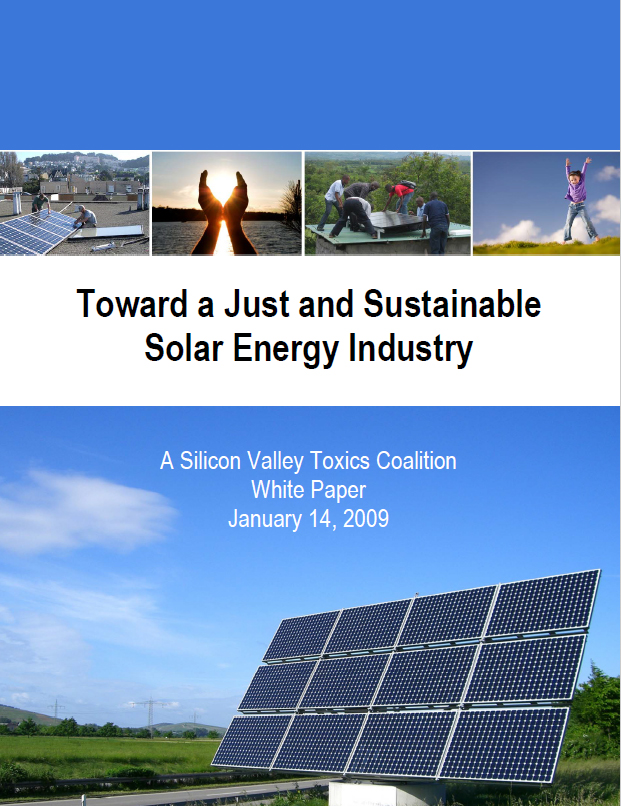
Every hour, enough solar energy reaches the Earth to meet human energy needs for an entire year. Solar photovoltaic (PV) technology is widely seen as a “win-win” solution that can harness this “free energy” to address global warming, reduce U.S. dependence on energy imports, create “green jobs,” and help revitalize the U.S. economy.

Solar energy will play an essential role in meeting these challenges, but as the solar PV sector expands, little attention is being paid to the potential environmental and health costs of that rapid expansion. The most widely used solar PV panels are based on materials and processes from the microelectronics industry and have the potential to create a huge new wave of electronic waste (e-waste) at the end of their useful lives, which is estimated to be 20 to 25 years. New solar PV technologies are increasing cell efficiency and lowering costs, but many of these use extremely toxic materials or materials with unknown health and environmental risks (including new nanomaterials and processes).

With the solar PV sector still emerging, we have a limited window of opportunity to ensure that this extremely important industry is truly “clean and green,” from its supply chains through product manufacturing, use, and end-of-life disposal. The solar industry has taken a leadership role in addressing the world’s pressing energy and environmental challenges and will serve as a model for how other innovative “green” industries address the lifecycle impacts of their products.

In this white paper, the Silicon Valley Toxics Coalition (SVTC) provides an overview of the health and safety issues faced by the solar PV industry, including the toxic materials used in manufacturing and the potential end-of-life disposal hazards of solar PV products. The report also lays out recommendations to immediately address these problems to build a safe, sustainable, and just solar energy industry. These recommendations include:

  • Reduce and eventually eliminate the use of toxic materials and develop environmentally sustainable practices.
  • Ensure that solar PV manufacturers are responsible for the lifecycle impacts of their products through Extended
    Producer Responsibility (EPR).
  • Ensure proper testing of new and emerging materials and processes based on a precautionary approach.
  • Expand recycling technology and design products for easy recycling.
  • Promote high-quality “green jobs” that protect worker health and safety and provide a living wage throughout the
    global PV industry, including supply chains and end-of-life recycling.
  • Protect community health and safety throughout the global PV industry, including supply chains and recycling.

Read the report (PDF)

Notes on the miners strike, 1984-1985

By Steven - LibCom, January 11, 2007

The miners strike of 1984-85 will always be remembered in British working class history as the most significant turning point in the power relationship between the working class organisations of the trade unions, and the state representing the interests of the privileged minority in the late twentieth century. The losses endured by the working class and their organisations as a whole with the defeat of the miners are still to this day attempting to be rebuilt, as are the shattered communities of the ex-pit towns. Understanding the struggle and the lessons that can be drawn from it during the months of 1984-85 are of utmost importance if these organisations are to be rebuilt, as well as the working class movements as a whole.

In 1974 the then Conservative government had been replaced with a Labour one, brought down by the miners strike of the same year. The Labour government realised that the working class, particularly the miners, had political power to exercise, and that if exercised correctly could force change in even the leadership of the country. Obviously wanting to avoid this in future, Labour set up think tank groups to decide the best course of action to stop this happening again, bringing an end to their term of power. The think tanks set up pinpointed the idea of national pay bargaining (a centralised structure where issues on pay and conditions could be discussed by miners across the country, which had ended area disputes over wages and other such inequalities) as a main factor in the power that the miners wielded. Their power was in their unified strength behind the organisation and the unifying nature of this structure was recognised as the reason for the successful strikes of 1969, 1972 and 1974. Labour introduced 'Area Incentive Schemes' alongside the structure of national pay bargaining and against national ballots in an attempt to split the miners. This meant now that wages and conditions would be decided locally, and the area was given the higher degree of importance than the national. The scheme was most well received in Nottinghamshire and the Midlands (against national ballot decisions), where as we will see, sought to consolidate its own interests ahead of that of the majority of miners on strike during 1984-85. However, Labour lost the next general election, and the Conservatives again came to power in 1979 with Margaret Thatcher at the helm and the Area Incentive Schemes carried on as the Labour government had initiated them.

The events of 1984 were a culmination of many years of struggle by the miners to raise wages and conditions, and in the years immediately previously to the great strike to prevent earlier attempts of pit closures, the most obvious attempt being in 1981 by the still new Thatcher government. The threat of strike action had however, caused the Thatcher government to abandon this and led to the Yorkshire miners to pass a resolution declaring that if a pit was to be closed for any reason other than exhaustion or geological difficulties, then a strike would take place to defend it.

What happened to Teamsters & Turtles? Arctic Drilling, the Labor Movement, and the Environment

By Alexis Buss - Industrial Worker, October 2001

"They couldn't have done it without the unions," is the sentiment echoed across the environmental movement, as U.S. President George Bush's energy plan passed 240-189 in the House. Although few expect the plan to drill for domestic oil in the Alaska National Wildlife Refuge to pass the Senate (although with the potential for war around the comer, political dynamics are bound to change), many are left scratching their heads, wondering what the future will be for a fledgling environmentalist-labor coalition dubbed "Teamsters and Turtles" during 1999's anti-WIO protests in Seattle.

Media pundits had long labeled the ANWR drilling plan as politically unviable because of the Democrats' control of the Senate. A last-minute intervention by the Teamsters played a major part in pushing the plan through the House, and Teamster President James Hoffa plans to help target the Senate when the bill hits the floor in late September.

The Teamsters came aboard as a lobby group for the plan after a closed-door meeting in May with Vice President Dick Cheney and Labor Secretary Elaine Chao. Leaders from over twenty labor organizations were present, mostly from construction and maritime. The AFL-CIO also endorsed the Bush plan late in the game, which came as an unexpected move as several power-hitters in the federation including the Service Employees International Union and the Communication Workers of America had stated their opposition to the scheme. (The AFL-ClO's 1993 convention passed a resolution that, in part, called on the country to explore ANWR for oil with safeguards to protect the environment.)

Bush's energy plan - supposedly instigated by the California energy crisis [1] and unstable gasoline prices - calls for building almost 2,000 new power plants and 18,000 miles of fuel pipelines over the next two decades. The Bush teams figures indicated that each new power plant would create 1,000 construction jobs and 200 permanent jobs, while every 1,000 miles of pipeline would bring with it another 5,000 jobs. And there would be another job boom if nuclear power plants came back into the picture. All told, over 700,000 jobs would be created, according to a 1990 report of the Wharton Econometric Institute, paid for by the American Petroleum Institute. (Not to mention the plethora of jobs to be had cleaning up from environmental disasters, guarding radioactive wastes for tens of thousands of years, and such.)

Unions at the Cheney meeting have joined a business-led coalition called "Job Power: Americans for Energy Employment." It's worth noting that Cheney earned more than $20 million last year as CEO of Halliburton, an oil-field services company that would benefit greatly from loosening regulations on refineries and pipelines.

The Mutants are Coming

By Steve Hastings - June 29, 1999

The development of the technology of Genetic Modification (G.M.) stretches back decades but most people have started to become aware of its implications during the 90’s.First in the mid 90’s Monsanto introduced rB.S.T. a G.M. growth hormone designed to increase milk yields in the U.S. After some controversy the E.U. decided to ban its import into Europe, a decision which is likely to be overturned by the World Trade Organisation (W.T.O.) soon. Then in 1996 shipments of soyabeans genetically modified to be resistant to Monsanto’s herbicide Roundup started to arrive in this country prompting the first major signs of public disquiet. More recently the sacking of Dr Puzstai from the Rowett Institute for claiming that consuming G.M. potatoes harmed rats provoked quite a food scare frenzy in the capitalist media. Pictures of a green faced Tony Blair with bolts through his neck under the headline "The Prime Monster" probably made all but the hardest of us chuckle but the whole "Frankenstein Foods" paranoia tended to obscure the environmental and social disasters which will follow if the corporations carry out their plans to introduce G.M. on a large scale.

"LET THEM EAT OIL".

G.M. is only the latest stage in the the industrialisation of food production which has been going on throughout the whole post war period under the control of the petro-chemical-pharmaceutical multinationals that have come to dominate the global economy. More powerful than many nation states (in 1995 of the 100 most powerful ‘economies’ in the world 48 were multinational corporations) they, along with the international financial institutions (IMF, World Bank, W.T.O. etc) constitute the economic side of the New World Order with N.A.T.O. taking on the role of political centralisation.

The process of industrialising food production which they have been imposing on us over the last few decades consists of destroying subsistence and organic farming and replacing it with a system based on:

  • Massive inputs of petro-chemicals in the form of fuel for machinery, artificial fertilisers and biocides (herbicides and pesticides).
  • Production for a global market rather than for direct consumption (subsistence) or local markets.
  • More dependence on animal products and the intensification of animal exploitation (factory farming).
  • The concentration of land ownership into fewer hands.
  • Dependence on multinational corporations for seed. Major chemical, pharmaceutical and oil multinationals have taken over more than 120 seed companies since the 60,s. The top 5 seed producers now control 75% of the world market. Hybrid, so-called ‘High Yielding Varieties’, have yields 20-40% lower in the second generation if replanted and are hence economically sterile’.
  • The replacement of mixed cropping systems suitable to local conditions with monocultures.

The results of this process (sometimes known as the ‘Green Revolution’) have been landlessness, poverty & starvation for many in the so-called ‘Third World’ as well as massive degradation of the natural world through chemical pollution and loss of biodiversity.

Pages

The Fine Print I:

Disclaimer: The views expressed on this site are not the official position of the IWW (or even the IWW’s EUC) unless otherwise indicated and do not necessarily represent the views of anyone but the author’s, nor should it be assumed that any of these authors automatically support the IWW or endorse any of its positions.

Further: the inclusion of a link on our site (other than the link to the main IWW site) does not imply endorsement by or an alliance with the IWW. These sites have been chosen by our members due to their perceived relevance to the IWW EUC and are included here for informational purposes only. If you have any suggestions or comments on any of the links included (or not included) above, please contact us.

The Fine Print II:

Fair Use Notice: The material on this site is provided for educational and informational purposes. It may contain copyrighted material the use of which has not always been specifically authorized by the copyright owner. It is being made available in an effort to advance the understanding of scientific, environmental, economic, social justice and human rights issues etc.

It is believed that this constitutes a 'fair use' of any such copyrighted material as provided for in section 107 of the US Copyright Law. In accordance with Title 17 U.S.C. Section 107, the material on this site is distributed without profit to those who have an interest in using the included information for research and educational purposes. If you wish to use copyrighted material from this site for purposes of your own that go beyond 'fair use', you must obtain permission from the copyright owner. The information on this site does not constitute legal or technical advice.